
How to Prevent Slips, Trips, and Falls
Learn practical tips to prevent workplace slips, trips, and falls. Keep your team safe and steady with these essential strategies for safety managers.
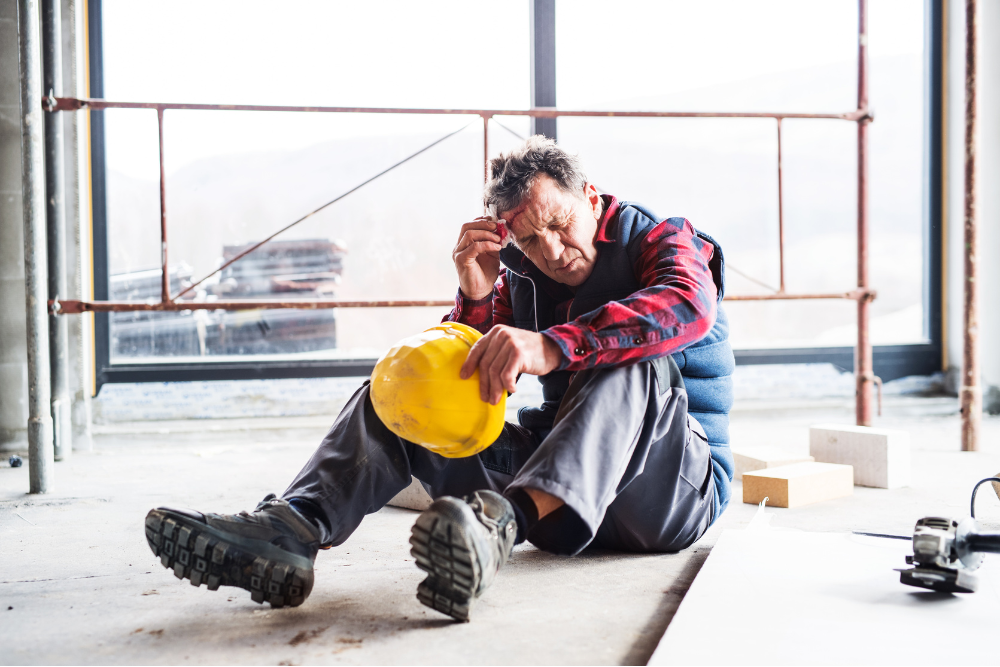
They happen in an instant. A wet floor, an uneven threshold, a cluttered aisle, a misjudged step off a ladder, and a worker is on the ground. Slips, trips, and falls are the most consistently reported cause of workplace injuries across virtually every industry, every year. They account for roughly one-third of all non-fatal occupational injuries in the United States, generate billions of dollars in workers' compensation costs annually, and are responsible for a significant share of workplace fatalities — particularly when falls from elevation are involved.
What makes this category of hazard especially frustrating for safety professionals is that the vast majority of these incidents are preventable. They are not freak accidents or unavoidable consequences of dangerous work. They result from identifiable conditions, and those conditions can be found, fixed, and controlled before someone gets hurt.
This article covers everything safety professionals, supervisors, and workers need to know about slips, trips, and falls: how they happen, where they happen, how to prevent them, and how to build a workplace culture where walking surfaces, housekeeping standards, and fall protection are treated with the seriousness they deserve.
Understanding the Difference: Slips, Trips, and Falls
The three terms are often lumped together, but they describe distinct mechanisms of injury, and understanding the difference matters for prevention.
Slips
A slip occurs when there is too little friction between a worker's footwear and the walking surface. The foot loses traction and the body's center of gravity shifts unexpectedly. Slips are most commonly caused by wet or oily surfaces, spilled liquids, recently mopped floors, ice or frost, and loose mats or rugs that shift underfoot. The injury doesn't always result from the slip itself — it often comes from the fall that follows, or from the muscle strains workers sustain trying to catch themselves.
Trips
A trip occurs when a worker's foot contacts an unexpected object or surface change, causing them to lose balance. Common trip hazards include electrical cords running across walkways, uneven flooring or damaged thresholds, objects left in aisles, raised edges on mats or carpeting, and steps or curbs that aren't clearly visible. Poor lighting is a major contributing factor to trips — workers can't avoid what they can't see.
Falls
A fall is the result of either a slip or trip, or it can occur independently, particularly falls from elevation. Falls from height are categorically more dangerous than same-level falls and include falls from ladders, scaffolding, roofs, loading docks, mezzanines, and elevated platforms. OSHA treats falls from elevation as one of the "Fatal Four" leading causes of construction fatalities, and they are a leading cause of death in general industry and agriculture as well.
The True Cost of Slips, Trips, and Falls
Before diving into prevention strategies, it's worth understanding the full scope of what these incidents cost — because budget-focused decision makers sometimes need more than injury statistics to drive investment in prevention.
Direct and Indirect Costs
The direct costs of a slip, trip, or fall injury include medical treatment, emergency response, workers' compensation claims, and any OSHA fines if a violation is found. These costs are substantial — the average workers' compensation claim for a slip and fall injury runs into tens of thousands of dollars, and serious fall injuries can generate claims exceeding six figures.
But the indirect costs often dwarf the direct ones. Indirect costs include lost productivity during the worker's absence, overtime paid to other workers covering the injured person's duties, administrative time spent on incident investigation and reporting, damage to equipment or property, reduced team morale, and the management time consumed by the aftermath of a serious injury. Industry research consistently estimates that indirect costs run anywhere from two to ten times the direct costs of an injury, depending on the severity.
Article Spotlight: The Direct and Indirect Costs of a Workplace Accident
Regulatory Exposure
OSHA's fall protection standards — 1926.502 for construction and 1910.23 for general industry — are among the most frequently cited regulations in the country. Fall protection in construction has been the single most cited OSHA standard for over a decade. Citations can carry penalties ranging from thousands to tens of thousands of dollars per violation, and willful violations can reach into the hundreds of thousands. Beyond financial penalties, a serious fall incident can trigger enhanced OSHA scrutiny, programmed inspections, and significant reputational damage.
Where Slips, Trips, and Falls Happen Most
High-Risk Areas in Every Workplace
Certain areas consistently generate disproportionate numbers of slip, trip, and fall incidents regardless of industry. Stairways are among the most hazardous — they combine elevation change with the opportunity for distraction, and are often the site of both same-level missteps and more serious fall injuries. Loading docks present edge hazards, vehicle interaction risks, and frequently wet or contaminated surfaces. Parking lots and exterior walkways are often overlooked in indoor-focused safety programs but account for a significant share of injuries, particularly in wet or icy conditions.
In manufacturing and warehouse environments, high-traffic aisle intersections, areas around machinery, and zones where forklifts and pedestrians share space are consistently problematic. In healthcare, patient care areas — where spills are frequent, staff move quickly, and attention is divided — have particularly high rates of slip and trip incidents. In restaurants and food service, kitchen floors represent one of the most chronically hazardous surfaces in any industry due to grease, water, and rapid movement.
Industry-Specific Hotspots
Construction workers face the most severe fall risks due to the nature of the work — open edges, unguarded floor holes, scaffolding, and ladders are endemic to the environment. Roofing is statistically the most dangerous occupation in construction from a fall perspective. The combination of sloped surfaces, weather exposure, and the physical demands of the work creates conditions where fall protection is not optional but it is the difference between a normal workday and a fatality.
Agriculture and utilities present unique fall risks tied to equipment — working from or around tractors, combines, utility poles, and towers. Retail environments see significant slip-and-fall claims, particularly in grocery and food retail where spills are constant and customer traffic is high. Office environments are not immune — same-level falls on stairs and from chairs are among the most common office injury mechanisms.
Prevention Strategies: The Hierarchy of Controls Applied to Fall Hazards
Elimination and Substitution
The most effective way to prevent a fall is to remove the hazard entirely. Can a task that currently requires working at height be redesigned to be performed at ground level? Can materials be pre-assembled on the ground and hoisted into position rather than assembled at height? Can remote operation or extended-reach tools replace tasks that require a worker to climb? When elevation cannot be eliminated, substituting a safer access method — replacing a portable ladder with a fixed stairway and handrail, or a stepladder with a purpose-built work platform — reduces risk substantially.
Engineering Controls
Where elimination is not possible, engineering controls provide the next layer of protection. For same-level hazards, engineering controls include slip-resistant flooring materials and surface treatments, drainage systems that remove water from work areas, anti-fatigue matting in standing work zones, and clearly delineated walkways that separate pedestrian and vehicle traffic.
For fall-from-height hazards, engineering controls include guardrails and safety railings at open edges, covers over floor openings and holes, and fixed ladder systems with cage guards or personal fall arrest anchor points. Guardrails are generally considered a higher level of protection than personal fall arrest systems because they prevent the fall from occurring rather than arresting it after it has started — a worker stopped by a guardrail never falls; a worker stopped by a harness and lanyard has already fallen several feet and may have sustained injury from the arrest forces themselves.
Administrative Controls
Administrative controls address how work is organized and managed. Housekeeping is the foundational administrative control for slip and trip prevention, and it is chronically undervalued. Spills cleaned up immediately, cords routed away from walkways, materials stored rather than staged in aisles, and debris removed at the end of each shift address the conditions that generate the majority of same-level incidents. Housekeeping is not a janitorial function — it is a safety function, and it requires supervisory enforcement and accountability to be effective.
Scheduling is another administrative control. Performing elevated work during calmer weather conditions, scheduling maintenance tasks that require working at height during lower-traffic periods, and ensuring adequate lighting for tasks performed in naturally low-light areas all reduce risk without requiring capital expenditure.
PPE and Personal Fall Protection
Personal protective equipment for fall prevention falls into two main categories: footwear and fall arrest systems. Slip-resistant footwear is one of the highest-value, lowest-cost interventions available for same-level fall prevention. Footwear should be matched to the specific surface hazard — oil-resistant soles for kitchen and manufacturing environments, waterproof and cleated soles for outdoor and wet conditions. Where the employer requires specific footwear, reimbursement programs or employer-supplied footwear improve compliance.
Personal fall arrest systems — comprising a full-body harness, connecting lanyard or self-retracting lifeline, and an anchor point — are required when working at unprotected heights of six feet or more in construction, and four feet or more in general industry. Harnesses must be inspected before each use, fit correctly to the individual worker, and connected to an anchor point capable of supporting 5,000 pounds. Workers must be trained not only in how to don and adjust the harness but in how to identify a suitable anchor point and, critically, what to do if a fall occurs and they are suspended in the harness, since suspension trauma can become life-threatening within minutes.
Ladder Safety: A Category That Demands Its Own Attention
Ladders are involved in a disproportionate share of fall injuries and fatalities relative to their ubiquity in the workplace. They are used casually, often by workers with minimal training, and their hazards are consistently underestimated.
Selecting the Right Ladder
Ladder selection is the first line of defense. The ladder must be appropriate for the task — the right height, the right duty rating for the combined weight of the worker and their tools and materials, and the right type for the access required. Extension ladders are not suitable for work that requires both hands free for extended periods; a scaffold or aerial lift is the appropriate tool. Stepladders must never be used in the fully closed position leaning against a wall.
Setting Up and Using Ladders Safely
Extension ladders must be set at the correct angle — a 4:1 ratio, meaning one foot of base distance for every four feet of working height. The top of the ladder must extend at least three feet above the landing point when used for roof or elevated surface access. The base must be on a stable, level surface and secured against movement. The worker must maintain three points of contact at all times when climbing — two hands and one foot, or two feet and one hand. Tools and materials should be carried in a tool belt or raised by rope, not carried in the hands while climbing.
Article Spotlight: Ladder Safety 101
Inspection, Reporting, and Investigation
Prevention programs fail without feedback loops. Regular inspections of walking surfaces, stairways, ladders, and elevated work areas allow hazards to be identified and corrected before incidents occur. Inspection checklists should be specific to the hazards of each area, a generic checklist applied to every location misses the nuanced hazards of particular environments.
Equally important is near-miss reporting. Most workplaces that experience serious fall injuries have a history of unreported near-misses — incidents where a worker slipped without falling, or caught themselves on a railing, or noticed a hazard and worked around it without reporting it. Near-misses are the most valuable leading indicator available to safety managers. A culture that encourages and rewards near-miss reporting without blame creates the data needed to fix conditions before they produce injuries.
When a slip, trip, or fall incident does occur, thorough investigation is essential. Root cause analysis should go beyond the immediate physical cause — a wet floor, a cord across an aisle — to identify the systemic reasons the condition existed. Was there no spill reporting procedure? Was the cord there because there wasn't an adequate power outlet nearby? Was the lighting inadequate because a bulb had been out for weeks without anyone reporting it? Addressing root causes is what prevents recurrence.
Building a Slip, Trip, and Fall Prevention Culture
Rules and checklists matter, but culture is what determines whether safety procedures or standards are actually followed when no one is watching. Building a genuine prevention culture around slips, trips, and falls requires a few consistent elements.
Leadership must visibly prioritize it — supervisors who walk past trip hazards without addressing them send a message louder than any safety poster. Workers must feel empowered to report hazards and stop work when conditions are unsafe, without fear of being seen as difficult or causing delays. Recognition of good safety behavior — a worker who stops to clean up a spill they didn't cause, or flags a damaged floor mat — reinforces the norms that make workplaces safer.
Training must be specific and practical, not generic. Workers who understand exactly why the cord across the aisle is dangerous, and who have practiced identifying hazards in their own work area, are far more likely to act on that knowledge than workers who sat through a generic slideshow about slip and fall statistics.
Frequently Asked Questions Around Slips, Trips, and Falls
What is the most common cause of slip and fall injuries in the workplace, and how can it be addressed systematically?
Wet and contaminated walking surfaces are consistently the leading cause of workplace slip injuries. Water, oil, grease, cleaning products, and food substances create low-friction conditions that footwear cannot compensate for. Addressing this systematically requires a multi-layered approach rather than relying on any single control. At the surface level, flooring materials should be selected with appropriate slip resistance ratings for the environment — coefficient of friction (COF) testing can objectively compare flooring options. In environments where wet conditions are unavoidable, such as commercial kitchens, food processing facilities, and some manufacturing settings, drainage systems built into the floor design can remove liquid at the source rather than relying on mopping. Anti-slip surface treatments and floor coatings are available for existing flooring and can substantially improve traction. At the procedural level, spill response procedures must define not just that spills should be cleaned up but how quickly, by whom, and how the area should be guarded during cleanup. Wet floor signage is a control, but it is a warning control — it tells workers to be careful, it does not remove the hazard. The goal is to combine rapid spill response with surface treatments that reduce the hazard severity, footwear requirements that add a layer of personal protection, and inspections that catch chronic problem areas before they generate injuries.
When is fall protection required, and what are the height thresholds under OSHA standards?
OSHA's fall protection requirements vary by industry sector, reflecting the different nature of work and risk in each environment. In general industry — covered under OSHA 29 CFR 1910 — fall protection is required at heights of four feet or more above a lower level. In construction — covered under 29 CFR 1926 — the threshold is six feet. In maritime and shipyard employment, the threshold is five feet. These height thresholds trigger the requirement to provide fall protection, but they do not define what form that protection must take. Acceptable methods include guardrail systems, safety net systems, personal fall arrest systems, positioning systems, and in some cases warning line systems combined with safety monitoring. The choice of method depends on the nature of the work, the feasibility of each option, and in some cases worker preference where multiple compliant options are available. Importantly, these thresholds are minimums — employers are not prohibited from providing fall protection below these heights, and best practice is to assess any elevated work situation regardless of whether it technically triggers the regulatory requirement. A fall from eight feet onto concrete is life-threatening; a fall from three feet onto sharp equipment can be equally catastrophic depending on the landing conditions.
How should a workplace conduct a slip, trip, and fall hazard assessment?
A thorough hazard assessment begins with a systematic walkthrough of every area where workers travel, work, or access — including areas that are not obvious production or work zones, such as parking areas, stairways, restrooms, break rooms, and storage areas. The assessment should be conducted by someone with specific knowledge of slip, trip, and fall hazards, and ideally should involve workers from each area who are familiar with conditions that exist at different times of day, in different weather, and during different operational phases. The assessment should evaluate walking surfaces for contamination risk, drainage adequacy, and surface condition; stairways for handrail integrity, tread condition, and lighting; elevated work areas for edge protection, access methods, and anchor point availability; and housekeeping conditions for clutter, cord management, and storage practices. Findings should be documented with photographs, prioritized by risk level, assigned to responsible parties for correction, and tracked to completion. The assessment is not a one-time event — it should be repeated at defined intervals, after any significant incident, and whenever work conditions change significantly. Seasonal assessments are particularly valuable, as conditions in winter and summer introduce hazards — ice, wet leaves, heat-related fatigue — that may not be apparent during other times of year.
What training do workers need on fall protection, and how often should it be refreshed?
OSHA requires that workers exposed to fall hazards be trained by a competent person to recognize fall hazards and understand the procedures to minimize them. For personal fall arrest systems specifically, training must cover the correct use and limitations of the equipment, how to inspect it before use, the proper method of donning and adjusting the harness, the importance of anchor point selection, and what to do following a fall, including the risks of suspension trauma if the worker is left suspended in a harness. General training requirements do not specify a mandatory refresher interval, but OSHA does require retraining when there is reason to believe a worker does not understand the hazards or the procedures, which can arise following an incident, a near-miss, an observed unsafe behavior, or a change in work conditions or equipment. Best practice is to conduct fall protection refresher training annually, with additional targeted training whenever new equipment is introduced or when workers are assigned to unfamiliar elevated work environments. Ladder safety training deserves particular attention as a distinct training topic — many workers have never received formal training on ladder selection, setup, and use and apply habits learned informally that do not meet safety standards.
What are the legal obligations of an employer if a worker is injured in a slip, trip, or fall?
When a worker is injured in a slip, trip, or fall, employer obligations are triggered across several regulatory frameworks simultaneously. Under OSHA, any work-related injury that results in days away from work, restricted duty, job transfer, medical treatment beyond first aid, loss of consciousness, or diagnosis of a significant injury must be recorded on the OSHA 300 log within seven calendar days. Fatalities must be reported to OSHA within eight hours; hospitalizations, amputations, and loss of an eye must be reported within 24 hours. OSHA may open an inspection following a reported serious injury or fatality, and the employer has the right to participate in that inspection and respond to any citations issued. Under workers' compensation law — which varies by state — employers are generally required to report injuries to their workers' compensation carrier within a defined timeframe, provide medical treatment, and maintain the worker's coverage during recovery. Beyond regulatory compliance, employers have a duty to conduct a prompt and thorough incident investigation to identify and correct the conditions that led to the injury, both to prevent recurrence and to demonstrate good-faith safety management. Failing to investigate and correct identified hazards after an injury has occurred can significantly increase legal and regulatory exposure if a subsequent similar incident occurs.
SafetyIQ brings incidents, inspections, training, journey management, lone worker safety and fatigue into one mobile app. Tell us about your crews and sites for tailored pricing.
Safety insights, straight to your inbox
New guides, monthly safety topics and SafetyIQ updates for EHS and operations leaders. Unsubscribe anytime.



Get a demo built around your sites, your teams, and the way your people work.
EHS, journey, and fatigue management software for field-heavy teams.

.png)

.png)