
How to Conduct a Safety Audit With an Example Audit Template
Learn the essentials of safety audits and get hands-on with our example audit template. Keep your workplace safe for everyone.
Have you ever stopped to consider the sobering statistics on workplace accidents?
Every year, millions of injuries occur on the job, leading to lost productivity, financial strain, and even worse, human suffering.
The U.S. Bureau of Labor Statistics says that more than 2.8 million people got injured or sick at work in 2022. Also, every year in the United States alone, more than 2 million people get injuries on the job. Even more alarming is that many of these incidents result in severe consequences, such as long-term disability or even death.
Regular safety audits are one of the best ways to make sure everyone stays safe at work.
In this article, we’ll show you:
- Why safety audits matter
- Planning: Getting ready for the audit
- Preparations: Setting the stage for success
- Checklist Creation: Making a tailored guide
- Audit Steps: How to conduct the audit
- Hazard Identification: Spotting workplace risks
- Findings Categorization: Organizing for action
- Report Generation: Documenting and recommending
So, let’s dive in and learn how to conduct a safety audit effectively!
Planning the Safety Audit
The first step in conducting a successful safety audit is planning the scope and logistics.
This involves deciding which areas, processes, and hazards will be included, getting buy-in from management, assembling the right audit team, and communicating with staff.
These are the steps in this phase:
Step 1: Decide on Scope
As a safety manager, you should determine the physical areas, departments, and processes that will be examined.
A comprehensive audit would cover an entire facility, while a focused audit may hone in on high-risk areas or recent incidents.
For example, you can consider machinery, equipment, tools, hazardous materials, workstations, storage areas, traffic routes, facilities, and any other potential hazards.
Prioritize auditing higher-risk departments and areas first if unable to cover everything at once. Be sure to include office areas in addition to production floors and warehouses.
Step 2: Get Management Approval
Now, review the proposed scope and secure formal approval from company leadership before proceeding.
Management support is crucial for implementing any recommended changes post-audit.
You can present the business case for a safety audit, including reducing incidents and costs, improving morale, and avoiding regulatory fines. Offer to share results and recommendations with management throughout the process to maintain engagement.
Step 3: Assemble Audit Team
Identify staff across departments and levels to participate, looking for diversity of perspective.
Include representatives from:
- Operations/production
- Engineering and maintenance
- Environment, health and safety (EHS)
- Human resources
- Leadership/management
- Staff-level production workers
Industrial hygienists and other experts in their field are the best people to deal with specific risks like noise, air quality, and ergonomics.
It is best to have a team of 5 to 8 people so that tasks can be split up and checks can be done thoroughly. Larger groups might miss potential hazards.
Pre-Audit Preparations
Conducting the proper preparations before an audit will help ensure it goes smoothly and identifies the most pressing hazards and risks.
Here are some key steps for pre-audit preparations:
Review Previous Audits and Inspection Records
Look back at previous safety audits and workplace inspection records. This will give you an idea of what hazards and issues have been found before, and whether they were adequately addressed. Have certain problems persisted over multiple audits? That indicates a need for more robust corrective actions.
Examine Accident and Injury Data
Analyze what accidents and injuries have occurred in the workplace since the last audit.
Do the accidents suggest any emerging risks or inadequately controlled hazards?
Are injuries concentrated in certain departments or job roles?
When you understand accident trends, it will help you determine what to focus on during the upcoming audit.
Ensure Audit Tools/Checklists Are Ready
Prepare and update any audit tools, forms or checklists needed to conduct the audit. Review regulatory requirements and internal policies to ensure the audit will properly cover all applicable standards and rules.
Make sure to include issues that have arisen in past audits or incident investigations as well. The audit tools should be comprehensive while also customized to the workplace.
With the proper pre-audit preparations completed, the safety audit will be more efficient, thorough and effective. Taking these steps helps maximize the value of the audit process.
You can also get help from this Guide to Safety Audits and Inspections
Creating The Audit Checklist
The audit checklist is one of the most important components of a safety audit. This checklist will serve as your guide during the actual inspection, ensuring you cover all areas thoroughly and consistently.
When creating your checklist, include all areas you want to evaluate for safety hazards and risks.
Walk through your entire facility during the planning stage to identify zones or departments to inspect.
Customize your checklist to your specific work environment.
For an office, you may want to inspect things like:
- Workstations
- Walkways and aisles
- Stairways
- Kitchen and breakroom
- Bathrooms
- Electrical rooms
- Storage areas
For a manufacturing facility or warehouse, your checklist may include:
- Production floor
- Assembly lines
- Machinery
- Conveyors
- Forklifts and lifting equipment
- Chemical storage
- Inventory racks and shelves
- Shipping and receiving docks
The sections can be broken down room-by-room or area-by-area. Within each section list what you want to evaluate.
For example:
Workstations:Stairways:Desks and chairs in good conditionCables and wires securedAdequate leg roomMonitor at eye levelHandrails present and secureAnti-slip tread in good conditionAdequate lightingVisible edge markings
Example of Audit Checklist

You can also download our EHS Audit Checklist, which is an Ultimate Template for Internal EHS Audits.
Conducting the Audit in 9 Quick Steps
Once you have created your audit checklist and assembled your team, it's time to conduct the actual safety audit. This involves having team members physically inspect the workplace to identify any hazards or areas of non-compliance.
When conducting the audit:
Step 1: Assign inspection areas
Divide up sections of the workplace for auditors to inspect individually. This ensures all areas are covered sufficiently. Provide maps if needed.
Step 2: Take notes
Auditors should take detailed notes during inspections describing any hazards, risks or non-compliance observed. Notes should include location, description, severity, and recommended actions.
Step 3: Take photos
Photos provide useful visual evidence of any issues. They also help jog auditors' memories when compiling findings later.
Step 4: Be thorough
Inspect all areas, equipment, materials, processes etc. identified in the audit plan. Look high and low. Open cabinets and storage areas.
Step 5: Observe activities
Watching people work can reveal unsafe behaviors or procedures.
Step 6: Talk to workers
Employees often have insights into risks. Their feedback provides valuable perspective.
Step 7: Use tools
Devices like light meters, noise dosimeters, gas detectors etc. provide objective data.
Step 8: Check compliance
Verify all policies, procedures, training, postings, permits, etc. are in place.
Step 9: Document everything
Comprehensive notes and photos facilitate analysis and reporting.
Taking the time to be systematic and meticulous during the inspection process leads to more robust findings and recommendations.
Identifying Hazards
The audit process involves carefully examining the workplace to identify any hazards or risks that could lead to injuries, incidents, or non-compliance issues.
Some key things to look for when conducting your walkthrough inspection include:
- Safety hazards
Look for slip, trip, and fall hazards such as uneven flooring, obstructed walkways, poor lighting, lack of guardrails on stairs, etc. Also look for any fire hazards, electrical issues, lack of emergency exits, and improper chemical storage.
- Mechanical & equipment hazards
Inspect machinery and equipment for proper guards and safety mechanisms. Look for frayed cords, damaged parts, lack of maintenance, etc. that could pose risks.
- Ergonomic hazards
Check workstations and processes for awkward postures, highly repetitive actions, improper seating, and other factors that could lead to strains and sprains.
- Non-compliance issues
Note any instances where regulatory standards or company policies are not being followed in terms of signage, personal protective equipment (PPE), lockout procedures, etc.
- New or altered processes
Determine if any new equipment, materials, or processes have been implemented without proper hazard analysis and risk assessment.
As you identify hazards, gauge their severity level so higher-risk items can be prioritized for corrective action.
Categorizing Findings
Once you've identified all the hazards and issues, it's important to categorize your findings in a logical way.
This helps determine which problems are most severe and require immediate action.
Grouping findings by location or department helps you quickly see where hazards tend to cluster. This makes it easier to direct resources to the areas that need the most attention.
Organize by Area
Grouping findings by location or department helps you quickly see where hazards tend to cluster. This makes it easier to direct resources to the areas that need the most attention.
For example, you may notice the loading dock has several tripping hazards, while the office area has repeated issues with blocked fire exits. Categorizing by area highlights patterns and helps focus corrective actions where they’ll have the greatest impact.
Example findings by area:
- Tripping hazards — Loading dock — Physical — Multiple objects
- Blocked exits — Office area — Fire safety — Boxes in way
- Missing guard — Assembly line — Mechanical — Machine X
- Chemical storage — Maintenance room — Chemical — Improperly stored
Organize by Severity
Sorting hazards from most to least severe ensures the biggest risks are addressed first. You can use a simple High / Medium / Low scale or a numeric rating (e.g., 1–5).
Severity is based on factors like likelihood of injury, potential impact, and whether immediate action is required. High-severity hazards—such as exposed electrical wiring or missing machine guards—pose serious risks and should be prioritized.
Example severity ratings:
- Exposed electrical wiring — High — Severe injury/fire risk — Immediate action needed
- Missing machine guard — High — Risk of injury — Immediate action needed
- Noisy environment — Medium — Hearing damage — Action required
- Uneven floor — Low — Simple trip risk — No urgent action
Organize by Required Actions
Another useful approach is grouping hazards by the type of corrective action needed. This is especially helpful for planning workload, budgeting, and assigning responsibilities.
By categorizing findings by action type—repair work, equipment purchasing, procedure updates, or staff training—you can spot related tasks and streamline improvement efforts.
Example required action categories:
- Exposed electrical wiring — Repair work — Maintenance — High priority
- Missing machine guard — Equipment purchase — Operations — High priority
- Blocked fire exits — Update procedures — Safety/Compliance — Medium priority
- Chemical storage issues — Improved training — All staff — Medium priority
Generating the Safety Audit Report
The audit report is the key deliverable that documents your findings and provides recommendations.
A good audit report should clearly convey the following:
- Summary of Audit Scope
Briefly summarize the scope of the audit, including:
- Areas, processes, and equipment covered
- Time period audited
- Audit team members
- Overview of Findings
Provide an overview of the number and types of findings identified during the audit. You can break this down by hazard category or severity level.
- Detailed Findings
List each finding along with these key details:
- Location observed
- Description of unsafe condition or hazard
- Applicable regulations or standards violated
- Recommended corrective actions
- Assigned owner and target due date for corrections
- Priorities & Recommendations
Summarize the most serious findings and priority recommendations for corrective action based on severity and potential risk. Provide guidance on which findings should be addressed immediately.
- Conclusion & Follow-up
Wrap up with next steps for implementing corrective actions and following up on this audit. You may recommend conducting more frequent inspections or audits in problem areas.
Example of Safety Audit Report of a Construction Site
Summary of Audit Scope
This safety check was done to see how safe things are at our construction site. We looked at scaffolding, electrical systems, and heavy machines. The audit covered the period from February 1, 2024, to April 30, 2024. The team included Mark Johnson (Operations Manager), Lisa Carter (Safety Officer), and Raj Patel (Site Supervisor).
Overview of Findings
We found 12 problems in total: 3 serious fall risks with the scaffolding, 5 medium-level electrical safety issues, and 4 minor problems with workers not using their safety gear properly.
Detailed Findings
One big problem was at the main construction site where scaffolding wasn’t secured well, which could lead to falls. This goes against the OSHA safety rules. We need to make sure all scaffolding is properly anchored and checked daily. Jose Martinez (Scaffolding Supervisor) will handle this by June 10, 2024. Another issue was exposed wires near the temporary office, which could cause electrocution and breaks OSHA rules. We need to cover all exposed wires and check them regularly. Alan Smith (Electrical Supervisor) will fix this by June 5, 2024.
Priorities & Recommendations
The most serious problem is the unsecured scaffolding, and it should be fixed right away to prevent falls. Exposed electrical wiring should also be fixed immediately. We should also have regular training for everyone to use their safety gear properly.
Conclusion & Follow-up
To improve safety, all fixes must be done by the given deadlines. We will do another safety check in two months to make sure everything is fixed. We will also do monthly inspections of scaffolding and electrical systems until there are no serious problems for three months in a row.
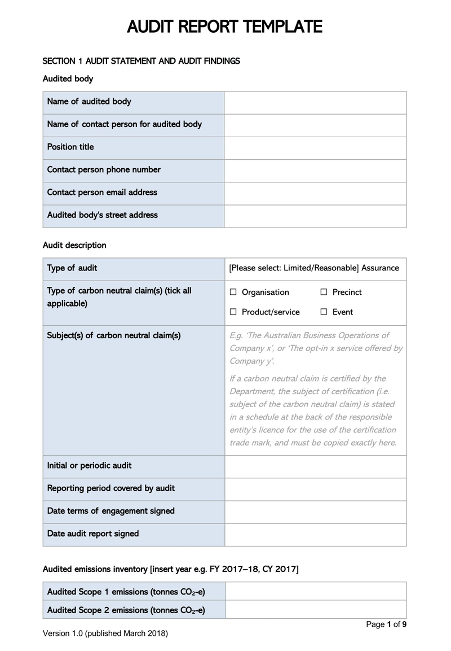
Audit Report Template
How SafetyIQ Streamines the Process of Conducting Safety Audits
SafetyIQ’s audit and inspection software streamlines the process of conducting safety audits, making it more efficient and effective. Here are the key features:
Digital Transformation
SafetyIQ replaces paper-based audits and inspections with digital forms accessible via an app. This transition reduces data entry time and allows for real-time reporting.
Configurable Forms
The software offers customizable forms that mimic existing processes. Users can schedule and assign standardized audits and inspections, capturing critical information efficiently.
Task Assignment and Tracking
Safety managers can assign corrective actions based on importance and urgency. Stakeholders receive automatic reminders, preventing tasks from falling through the cracks.
Analytics and Insights
SafetyIQ provides actionable insights through data visualizations and reports. Incident data analysis helps identify trends and assess risks, enabling informed decision-making.
Hence, SafetyIQ’s software enhances safety programs by streamlining audits, improving productivity, and promoting a preventative safety strategy.
SafetyIQ brings incidents, inspections, training, journey management, lone worker safety and fatigue into one mobile app. Tell us about your crews and sites for tailored pricing.
Safety insights, straight to your inbox
New guides, monthly safety topics and SafetyIQ updates for EHS and operations leaders. Unsubscribe anytime.


Get a demo built around your sites, your teams, and the way your people work.
EHS, journey, and fatigue management software for field-heavy teams.

.png)

.png)