
Safety Policies and Procedures (With Examples)
See real workplace safety policy and procedure examples, including PPE, emergency response, hazard reporting, and lockout/tagout policies.
Workplace safety policies and procedures form the backbone of an effective safety management system. They provide clear expectations for employees, supervisors, and contractors while establishing consistent processes that reduce risk and prevent workplace incidents. Without well-defined policies, organizations often rely on informal practices or inconsistent safety habits, which can lead to confusion, regulatory violations, and increased workplace injuries.
Every organization, regardless of size or industry, benefits from documented safety policies and procedures. These documents outline how safety responsibilities are shared, how hazards are identified and controlled, and how employees should respond to emergencies or unsafe conditions. When safety policies are implemented effectively, they create a culture where safety becomes part of daily operations rather than a reactive response to incidents.
Workplace safety policies and procedures also play a critical role in regulatory compliance. Agencies such as OSHA require organizations to maintain safe working environments and implement procedures that protect workers from recognized hazards. Well-developed policies demonstrate that a company has established formal processes to manage safety risks and protect employees.
This guide explores the importance of workplace safety policies and procedures, how organizations develop effective policies, and examples of common workplace safety policies that support safer operations.
Why Workplace Safety Policies and Procedures Matter
Safety policies and procedures serve as a foundation for consistent workplace safety practices. They define expectations for behavior, responsibilities, and safety protocols that employees must follow during daily operations.
Without documented procedures, employees may approach tasks differently, which can introduce unnecessary risk. For example, one worker may follow proper lockout procedures when servicing equipment while another worker may skip those steps due to lack of awareness. Written policies eliminate ambiguity by providing clear instructions and expectations.
Another important role of safety policies is improving communication across teams. Employees, supervisors, and management can all reference the same documented procedures when addressing safety issues. This shared understanding strengthens safety culture and helps organizations respond quickly to hazards.
Organizations with well-developed safety policies also benefit from improved incident prevention. By clearly outlining hazard identification, reporting procedures, and emergency response protocols, employees are better prepared to address potential risks before incidents occur.
Safety policies also support employee confidence. When workers know that safety procedures exist and are consistently enforced, they are more likely to feel supported and protected in their workplace.
Understanding the Difference Between Safety Policies and Procedures
Although the terms are often used together, workplace safety policies and procedures serve different but complementary purposes.
Safety policies represent the organization's commitment to safety. These policies define the company's expectations, values, and responsibilities related to workplace safety. A policy often establishes high-level rules that apply to the entire organization.
Safety procedures, on the other hand, provide step-by-step instructions for performing tasks safely. Procedures translate policies into actionable guidance that employees can follow during specific activities.
For example, a workplace safety policy may state that all hazardous energy sources must be controlled before maintenance work begins. The related procedure would outline the specific steps employees must follow to lock out and tag out equipment before servicing it.
Together, policies and procedures create a structured framework that supports safe operations across the organization.
Developing Effective Workplace Safety Policies
Creating workplace safety policies requires careful planning, collaboration, and continuous evaluation. Policies must reflect the specific hazards, regulatory requirements, and operational activities present within the organization.
Identifying Workplace Hazards
The first step in developing safety policies is understanding the hazards present in the workplace. Organizations must evaluate potential risks associated with equipment, materials, processes, and environmental conditions.
Hazard assessments allow safety leaders to identify where policies are needed to protect workers. For example, organizations operating heavy machinery may require equipment safety policies, while companies handling chemicals may need hazardous material handling procedures.
Aligning Policies with Regulations
Many safety policies must align with regulatory standards established by organizations such as OSHA or industry-specific governing bodies. These regulations often require employers to implement safety training, hazard communication programs, and protective equipment policies.
Aligning workplace safety policies with regulatory standards ensures compliance while also improving worker protection.
Involving Employees in Policy Development
Employees who perform daily tasks often have valuable insights into workplace hazards and practical safety solutions. Involving employees in the policy development process helps ensure that procedures are realistic and applicable to actual work environments.
Employee participation also encourages greater adoption of safety policies, as workers are more likely to follow procedures they helped shape.
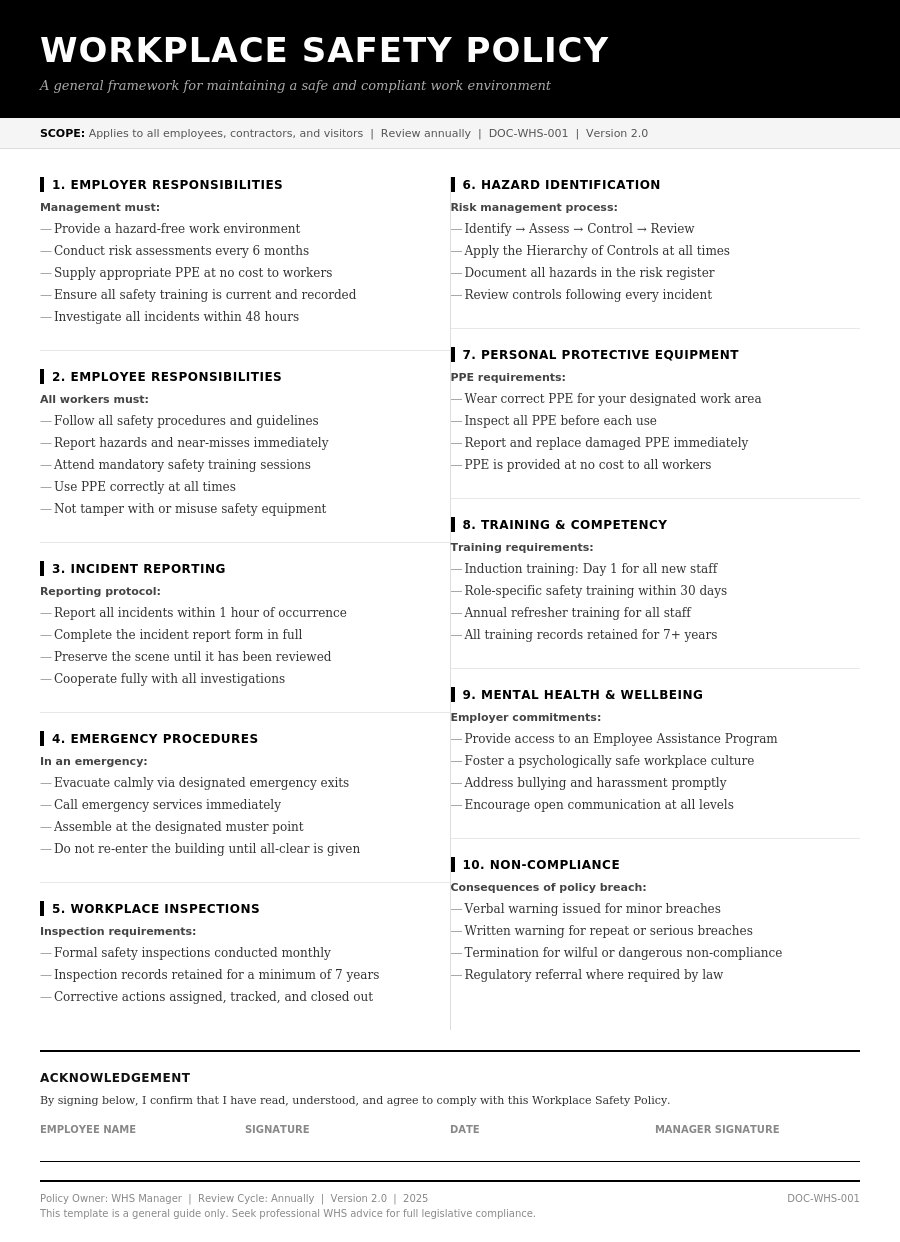
Example Workplace Safety Policies and Procedures
Workplace safety policies can vary significantly depending on the industry and work environment. However, several core safety policies appear in most organizations because they address common workplace hazards.
Below are examples of workplace safety policies and procedures commonly implemented across industries.
Personal Protective Equipment (PPE) Policy
A personal protective equipment (PPE) policy outlines when employees must wear protective gear and what equipment is required for specific tasks.
Example PPE policy statement
All employees working in designated operational areas must wear appropriate personal protective equipment, including safety glasses, protective footwear, and high-visibility clothing when applicable.
Example PPE procedure
Before entering production areas, employees must inspect PPE to ensure it is in good condition. Safety glasses must be worn at all times in manufacturing zones. Employees handling chemicals must wear chemical-resistant gloves and protective face shields. Damaged PPE must be replaced immediately and reported to a supervisor.
This policy ensures that employees consistently use protective equipment to reduce exposure to hazards.
Hazard Reporting Policy
Hazard reporting policies encourage employees to identify and communicate potential safety risks before incidents occur.
Example hazard reporting policy statement
Employees must report any unsafe conditions, hazards, or near-miss incidents immediately to their supervisor or the safety department.
Example hazard reporting procedure
If an employee observes a safety hazard, they must document the condition using the organization's hazard reporting form or digital reporting system. Supervisors must review the report within 24 hours and initiate corrective actions when necessary.
Encouraging hazard reporting strengthens proactive safety management and prevents incidents from escalating.
Emergency Response Policy
Emergency response policies prepare employees to respond quickly and effectively during workplace emergencies such as fires, medical incidents, or natural disasters.
Example emergency response policy statement
All employees must follow established emergency procedures during any workplace emergency and participate in emergency evacuation drills.
Example emergency response procedure
During a fire alarm, employees must immediately stop work and proceed to the nearest designated exit. Employees should not attempt to retrieve personal belongings or use elevators. Once outside, workers must report to the designated assembly area for headcount verification.
Clear emergency procedures help minimize confusion and improve response times during critical situations.
Lockout Tagout (LOTO) Policy
Lockout Tagout policies protect workers from hazardous energy sources when equipment is serviced or maintained.
Example LOTO policy statement
Equipment must be properly isolated and locked out before maintenance or repair work begins.
Example LOTO procedure
Before servicing equipment, authorized employees must disconnect power sources, apply lockout devices, attach identification tags, and verify energy isolation before beginning work.
These procedures protect employees from accidental equipment startup or energy release.
Workplace Violence Prevention Policy
Workplace violence policies address threats, harassment, or aggressive behavior that may affect employee safety.
Example workplace violence policy statement
The organization maintains a zero-tolerance policy for workplace violence, including threats, harassment, intimidation, or physical aggression.
Example workplace violence procedure
Employees experiencing or witnessing threatening behavior must report the incident immediately to management or human resources. Investigations will be conducted promptly, and corrective actions will be implemented when necessary.
Establishing clear expectations helps prevent workplace conflicts from escalating into safety threats.
Training Employees on Safety Procedures
Even the most comprehensive workplace safety policies are ineffective if employees do not understand or follow them. Training plays a crucial role in ensuring that workers understand safety expectations and procedures.
Safety training programs should introduce new employees to company safety policies during onboarding. Employees must understand hazard identification procedures, emergency response plans, and reporting expectations.
Ongoing training (and safety training tracking via software) ensures that employees remain familiar with safety procedures as workplace conditions evolve. Refresher training sessions, safety meetings, and drills reinforce safety practices and help employees maintain awareness of workplace hazards.
Training should also include practical demonstrations and real-world scenarios. Employees often retain safety information more effectively when they see how policies apply to their daily tasks.
Monitoring and Enforcing Safety Policies
Implementing safety policies requires consistent oversight and enforcement. Organizations must monitor safety performance to ensure policies are followed and procedures remain effective.
Supervisors and safety professionals should regularly observe workplace activities to verify compliance with safety procedures. Inspections, audits, and safety observations help identify gaps in policy implementation.
When violations occur, organizations must respond promptly with corrective actions. Enforcement should focus on improving behavior and reinforcing safety expectations rather than simply assigning blame.
Clear documentation of inspections, incidents, and corrective actions allows organizations to track safety performance and identify trends that require policy updates.
Continuous Improvement of Safety Policies
Workplace safety policies should evolve as organizations learn from experience and respond to new risks. Continuous improvement ensures that safety programs remain effective and relevant.
Organizations should review safety policies periodically to incorporate lessons learned from incidents, regulatory changes, and operational adjustments. Employee feedback can also highlight areas where policies require clarification or improvement.
Regular updates ensure that workplace safety policies continue to protect employees while supporting efficient operations.
FAQs About Workplace Safety Policies and Procedures
What are workplace safety policies and procedures?
Workplace safety policies and procedures are documented guidelines that define how organizations manage workplace safety risks. Policies establish the organization's commitment to safety and outline expectations for employee behavior, while procedures provide detailed instructions for performing tasks safely. For example, a safety policy may require employees to wear protective equipment, while the procedure explains how and when that equipment must be used. Together, these documents create a structured system that helps organizations prevent injuries and maintain regulatory compliance.
Why are workplace safety policies important?
Workplace safety policies help organizations reduce workplace injuries, maintain regulatory compliance, and create a culture of accountability. When safety expectations are clearly documented, employees understand their responsibilities and supervisors can enforce consistent standards. Policies also provide guidance during emergencies or hazardous situations, helping employees respond quickly and appropriately. Without formal safety policies, organizations often experience inconsistent practices that increase the likelihood of incidents.
How often should workplace safety policies be updated?
Workplace safety policies should be reviewed at least once per year to ensure they remain accurate and relevant. Updates may also be required whenever new equipment, processes, or regulations are introduced. Incident investigations may reveal weaknesses in existing policies that require adjustments. Regular reviews ensure that safety procedures continue to reflect current workplace conditions and best practices.
What is an example of a workplace safety procedure?
An example of a workplace safety procedure is a ladder safety procedure used in construction or maintenance work. The procedure may require employees to inspect ladders before use, ensure ladders are placed on stable surfaces, maintain three points of contact while climbing, and avoid standing on the top rung. These steps provide clear guidance that helps employees use ladders safely and prevent falls.
What should be included in a workplace emergency policy?
A workplace emergency policy should outline how employees respond to fires, medical emergencies, severe weather events, and other critical situations. The policy should identify evacuation routes, emergency contact numbers, assembly points, and communication procedures. For example, employees may be instructed to exit through designated emergency routes and gather at a specific assembly area where supervisors conduct headcounts to ensure everyone has evacuated safely.
How can companies ensure employees follow safety procedures?
Organizations can encourage compliance with safety procedures through training, supervision, and consistent enforcement. Employees must understand why safety procedures exist and how they protect workers from harm. Supervisors should regularly observe work activities and provide feedback when safety practices need improvement. Recognition programs that reward safe behavior can also reinforce positive habits and strengthen safety culture.
What role does management play in workplace safety policies?
Management plays a critical role in establishing and enforcing safety policies. Leaders must allocate resources for safety programs, provide training opportunities, and ensure that supervisors enforce safety standards consistently. When management demonstrates commitment to safety through visible actions and communication, employees are more likely to follow safety policies and procedures.
How do workplace safety policies improve overall operations?
Workplace safety policies contribute to smoother operations by reducing disruptions caused by accidents or injuries. When employees follow standardized procedures, tasks are performed more consistently and efficiently. Safety policies also improve communication and accountability across teams. Over time, organizations with strong safety programs often experience fewer incidents, improved employee morale, and better operational performance.
SafetyIQ brings incidents, inspections, training, journey management, lone worker safety and fatigue into one mobile app. Tell us about your crews and sites for tailored pricing.
Safety insights, straight to your inbox
New guides, monthly safety topics and SafetyIQ updates for EHS and operations leaders. Unsubscribe anytime.


Get a demo built around your sites, your teams, and the way your people work.
EHS, journey, and fatigue management software for field-heavy teams.

.png)

.png)