
Holy Schnikes! 'Tommy Boy' Safety Lessons
If you haven't seen Tommy Boy — the 1995 comedy classic starring Chris Farley and David Spade — stop what you're doing, add it to your watch list, and come back. We'll wait.
For those of you already nodding along with a grin, you know exactly what we're talking about. Tommy Callahan III is loveable, chaotic, well-meaning, and — if we're being completely honest — a walking, talking, car-destroying, deer-hitting safety incident report. And yet, buried beneath all the slapstick and shouting, Tommy Boy is practically a masterclass in what not to do in the workplace. And what happens when you finally get it right.
The film was released in 1995, tanked at the box office, and then became one of the most beloved comedies of its generation on home video. There's a lesson in that too — sometimes the most important things get overlooked the first time around. Sound like any safety culture you know?
Let's break it down, scene by scene, lesson by lesson.
1. The Deer in the Back Seat
The Scene
One of the film's most iconic moments involves Tommy and Richard hitting a deer on the highway. Assuming it's dead, they load it into the back seat of the car and drive on. It was not dead. What follows — a panicked, very-much-alive deer thrashing around inside a moving vehicle at speed — is one of the funniest scenes in 90s comedy. The car is destroyed. Everyone nearly dies. And it was entirely, completely, one-hundred-percent preventable.
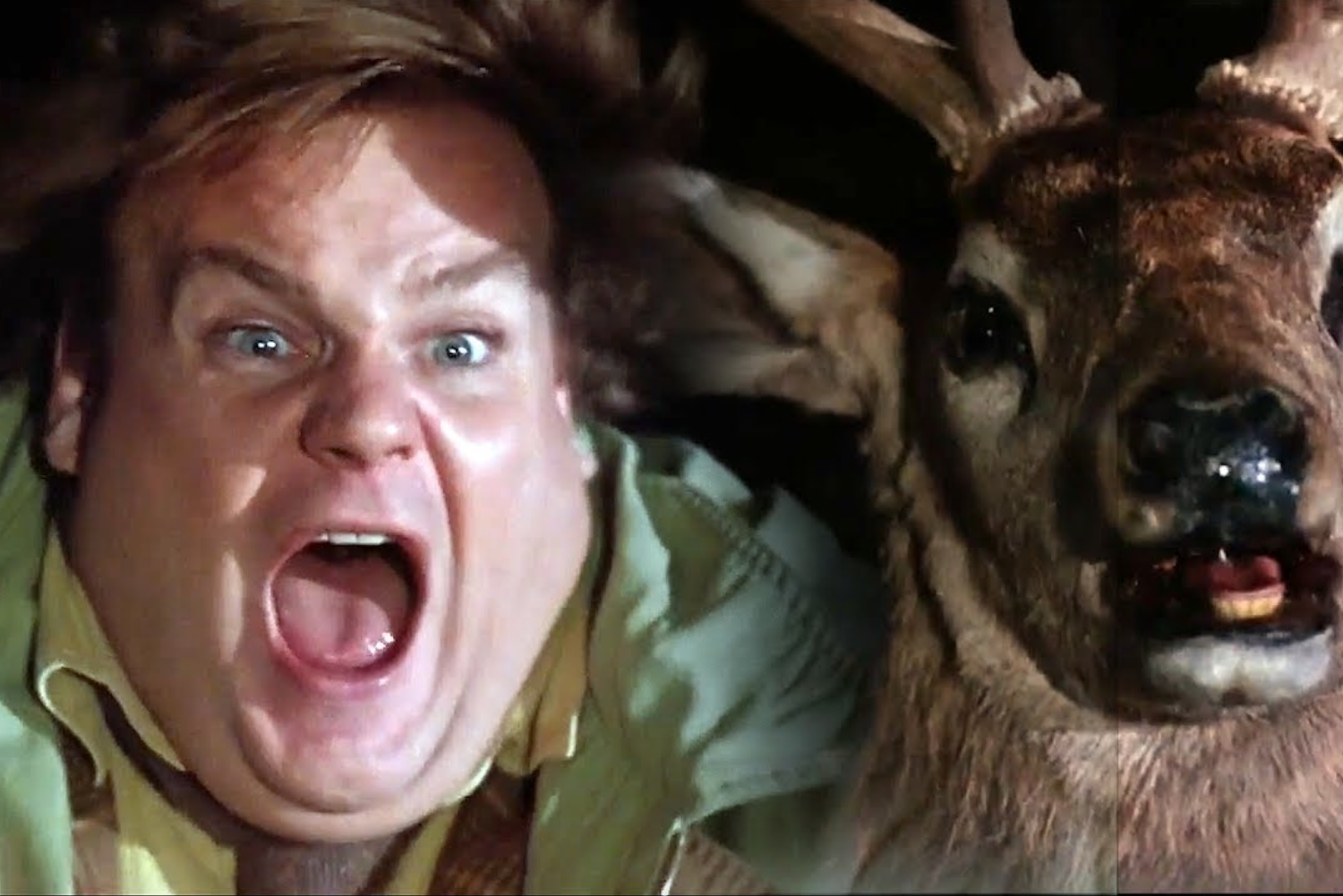
The error here isn't hitting the deer. That's just bad luck. The error is the assumption that followed. Nobody verified. Nobody checked. They just moved on because it seemed fine, and "seemed fine" was good enough.
The Safety Lesson: Verify Before You Move On
In workplace safety, the failure to verify is behind more incidents than almost any other single behavior. We power down a machine and assume it's de-energized without locking it out. We declare a confined space safe without retesting the atmosphere. We assume a spill has been cleaned up because someone said they'd handle it.
Verify. Every time. No exceptions. Lockout/tagout procedures, confined space atmospheric testing, pre-start equipment checks — these aren't bureaucratic box-ticking exercises. They exist because "seemed fine" has a long and painful history of being catastrophically wrong. The deer always wakes up eventually.
2. The Burning Sales Pitch
The Scene
In one of the film's early set pieces, Tommy attempts to close a deal with a client and accidentally sets a decorative model on fire mid-presentation. Rather than calmly managing the situation, he panics, grabs a tablecloth, and spreads the fire dramatically across the entire table. The room is destroyed. The client is appalled. Richard watches in silent, dead-eyed horror.
Nobody files a report. Nobody debriefs. Nobody asks how a sales call turned into a structure fire. Tommy and Richard simply pack up, walk out, and drive to the next town. The incident is never revisited, never investigated, and — surprise — the chaos continues throughout the film.
The Safety Lesson: Every Near-Miss is a Message
This is textbook near-miss reporting failure. Or in Tommy's case, direct-hit reporting failure. The point isn't the fire itself — it's what comes after. A workplace with a strong safety culture treats every incident, near-miss, and close call as data. It asks: what happened, why did it happen, and what do we change so it doesn't happen again?
Near-miss reporting isn't about punishment. It isn't about finding someone to blame. It's about pattern recognition. If Tommy's team had a proper reporting culture, someone might have noticed early on that Tommy plus enclosed spaces plus flammable materials equalled a recurring hazard — and they could have mitigated it before the body count of destroyed hotel rooms got any higher. Log it. Investigate it. Act on it. The near-miss you ignore today is the incident you're explaining to a regulator tomorrow.
3. Fat Guy and a Little Coat: PPE Fit Matters
The Scene
You know this one. In a moment of pure physical comedy gold, Tommy squeezes himself into Richard's tiny coat, announces "fat guy in a little coat" with tremendous joy, and then the seams spectacularly give way and the whole thing falls apart. It's arguably the most quoted scene in the film. It is also, from a safety standpoint, a perfect visual metaphor for ill-fitting personal protective equipment.
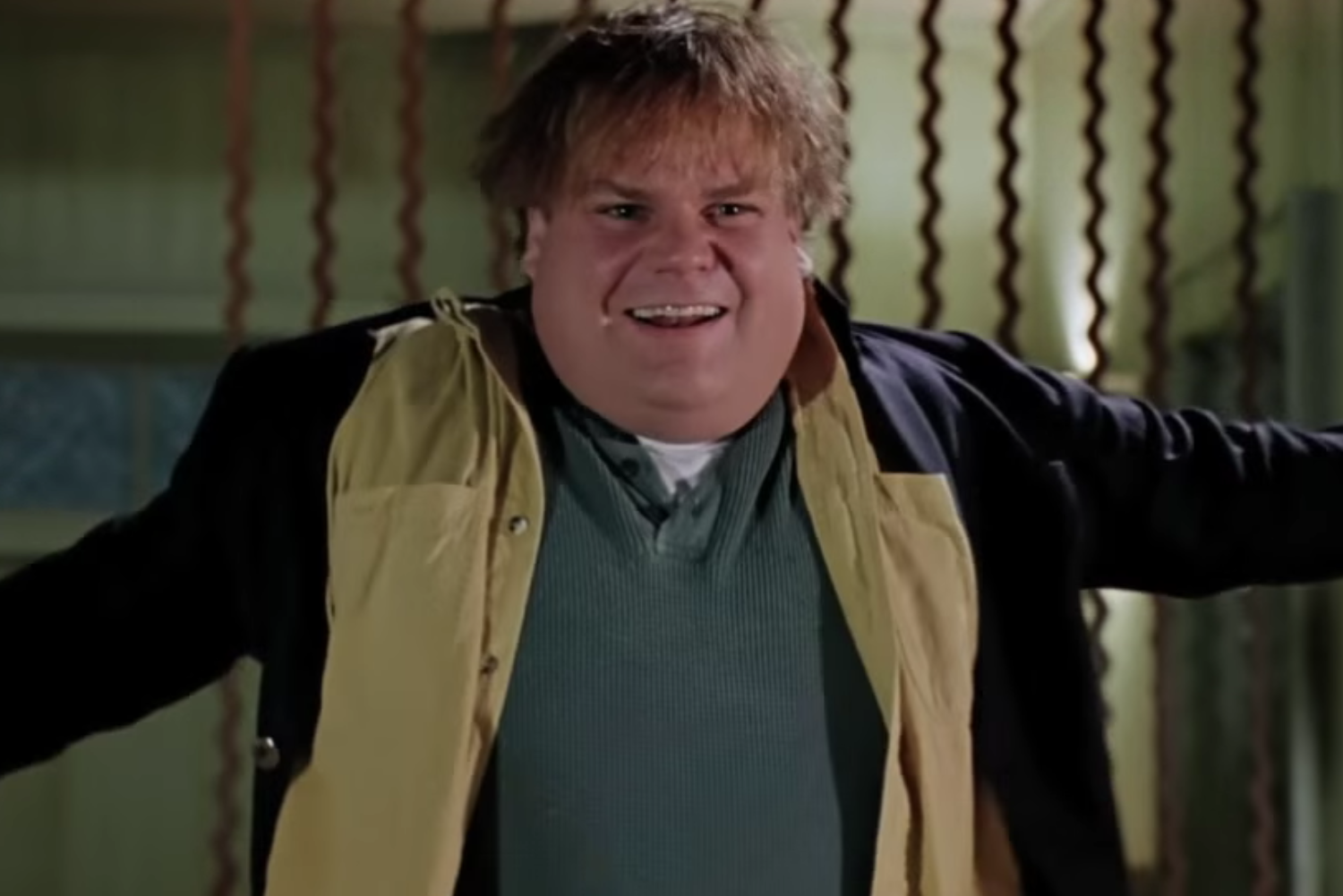
The Safety Lesson: PPE That Doesn't Fit Doesn't Work
This one sounds simple but it's overlooked constantly in workplaces across every industry. A hard hat that's too large shifts and slips on impact. A harness that's incorrectly sized won't arrest a fall correctly — or worse, will cause injury on its own when it does engage. Gloves that are too big reduce dexterity and dramatically increase the risk of caught-in incidents. Respirators that don't seal properly offer essentially no protection at all.
PPE is not a one-size-fits-all proposition, and treating it like one is a compliance and duty-of-care failure. Your safety program needs proper sizing assessments for every worker, fit-testing protocols for respiratory equipment, and a culture where people feel comfortable saying "this doesn't fit right" rather than just wearing something that technically counts as wearing it. If the seams are straining, something has gone wrong before you even start the job.
4. The Never-Ending Road Trip
The Scene
The core of Tommy Boy is a cross-country sales mission. Tommy and Richard spend weeks living out of a steadily deteriorating car, skipping sleep, running on stress and desperation, and driving hundreds of miles in conditions that would make any fleet safety manager weep. Doors fall off. The car catches fire. They keep driving. The vehicle by the end of the film is barely a vehicle in any meaningful sense, and neither character is in much better shape.
It's played for laughs. In real life, it's a fatigue and vehicle safety incident waiting to happen — and often, it does happen. Fatigued driving is one of the most significant risks for workers whose roles involve travel, and it's one of the most consistently underestimated ones.
The Safety Lesson: Fatigue is a Workplace Hazard, Full Stop
Research from the AAA Foundation for Traffic Safety has shown that being awake for 20 consecutive hours produces driving impairment comparable to a blood alcohol level above the legal limit. Yet many organizations still have scheduling practices, delivery expectations, and on-call requirements that routinely put workers behind the wheel in exactly that condition.
If your people drive for work — whether they're field technicians, sales representatives, delivery drivers, or anyone else — you need a fit-for-duty and fatigue management framework. That means realistic journey scheduling, mandatory rest breaks, clear policies on maximum driving hours, and critically, a culture where someone can say "I'm not safe to drive right now" without fear that it'll cost them a shift, a bonus, or their job. A late delivery is a commercial inconvenience. A fatigued driving incident is a life. The maths isn't complicated.
5. Richard Hayden: Portrait of a Bystander
The Scene
David Spade's Richard is one of cinema's great reluctant observers. Throughout Tommy Boy, he watches catastrophe after catastrophe unfold with a pained, withering expression and delivers devastating one-liners after the fact. He sees the problems coming. He narrates the destruction. He is almost never the one who steps in before things go wrong.
Richard is not a villain. He's not lazy or malicious. He's a bystander, and in workplace safety, the bystander is one of the most common and most costly figures in the whole ecosystem. He knows. He watches. He does not act.
The Safety Lesson: Stop-Work Authority Only Works if People Use It
Every safety program worth its paperwork includes stop-work authority — the right of any worker, at any level, to halt an activity they believe is unsafe. It's a foundational principle. It's also frequently undermined by workplace cultures where using it feels socially risky, professionally dangerous, or simply pointless because "management won't listen anyway."
Building a genuine speak-up culture means more than putting stop-work authority in the safety policy document. It means leadership that visibly rewards people for raising concerns. It means supervisors who respond to safety flags without defensiveness. It means workers at every level believing that their intervention is wanted, valued, and will lead to action. Richard Hayden could have saved a lot of hotel rooms, rental cars, and client relationships if he'd felt empowered to step in rather than just step back. Don't let your safety culture produce Richards.
6. The Callahan Auto Parts Stakes
The Scene
Underneath all the comedy, Tommy Boy is a film about a business on the brink. Callahan Auto Parts employs hundreds of people in Sandusky, Ohio. If it fails, those people lose their livelihoods. Their families feel it. The whole town feels it. Tommy's quest isn't abstract — it's deeply, personally connected to real human consequences.
Safety professionals sometimes have to fight the perception that safety is a cost centre: a drag on productivity, a source of friction, a compliance obligation to be managed and minimized. Tommy Boy — unintentionally, chaotically — makes the opposite case.
The Safety Lesson: Safety Protects More Than Bodies
Every recordable incident has a cost. There's the direct cost — medical treatment, workers' compensation, equipment damage. Then there's the indirect cost, which research consistently shows is three to ten times the direct cost: lost productivity, recruitment and retraining, damaged morale, regulatory scrutiny, reputational harm. For a business like Callahan Auto Parts — already under pressure, already fighting for survival — a serious safety incident isn't just a tragedy. It could be the thing that closes the doors.
Organizations that treat safety as a value rather than a variable don't just have better safety outcomes. They have better business outcomes. Lower turnover. Higher engagement. Stronger operational discipline. Better relationships with clients and regulators. The evidence is substantial and it keeps growing. Safety isn't the thing that slows your business down. It's the thing that keeps it running.
7. Tommy Callahan Figures It Out
The Scene
Here's what gets overlooked in the rush to quote the best lines: Tommy gets better. Not immediately, not without significant collateral damage, and not without help — but he grows. He goes from a man who couldn't finish a pitch without triggering an insurance claim to someone who delivers a barn-burner of a speech that saves the company. He learns to read people. He finds his confidence. He becomes, against all reasonable expectation, genuinely good at his job.
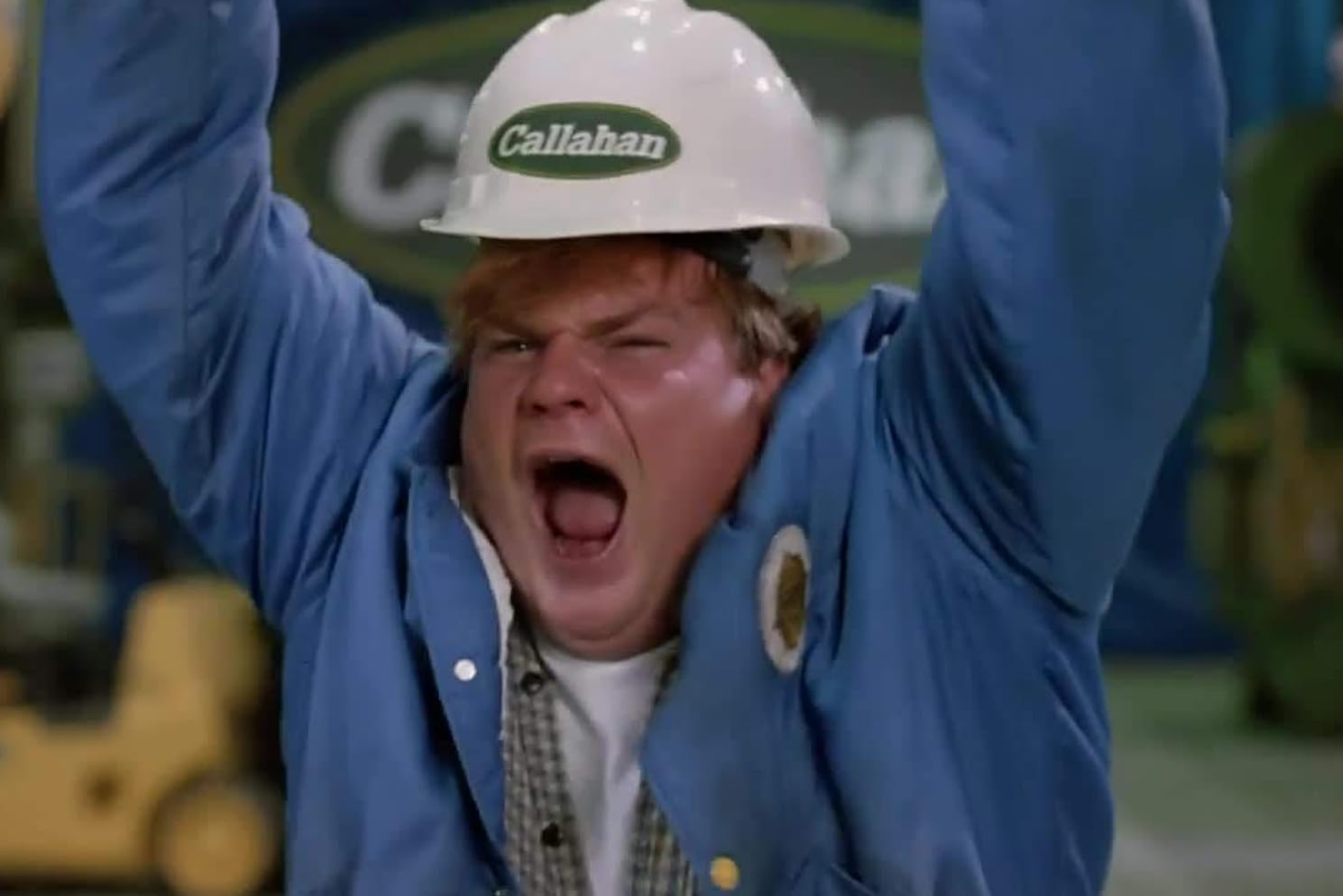
The film doesn't treat this as a miracle. It treats it as the result of experience, failure, feedback, and persistence. Tommy didn't need to be written off. He needed to be developed.
The Safety Lesson: Invest in Your People
The worker who seems most likely to cause an incident isn't necessarily a lost cause. They may be undertrained. They may be in the wrong role. They may be dealing with pressures nobody has thought to ask about. They may simply be early in their development and in need of structured support rather than a performance management process.
Safety training that works isn't a one-hour induction video and a signature on a form. It's ongoing. It's practical. It's delivered by people who are good at teaching, not just good at the task. It includes feedback loops, observation, coaching, and a genuine investment in the individual's growth. Your Tommy Callahan — the one who keeps showing up on the incident register — might be one well-designed training intervention away from becoming your safest worker. Don't give up before you find out.
The Takeaway
Tommy Boy is a film about a good-hearted person causing tremendous chaos in the absence of the right systems, support, and structure. Which, if we're honest, describes a lot of workplace safety failures. It's rarely malice. It's usually a combination of unclear processes, inadequate training, poor culture, and a series of assumptions that nobody thought to question.
The best safety programs build environments where doing the right thing is also the easiest thing. Where hazards get verified, not assumed away. Where near-misses get reported, not buried. Where PPE fits properly and people actually wear it. Where fatigue is taken seriously. Where anyone can speak up without fear. Where the business understands that safety and success move in the same direction.
So the next time you watch Tommy Callahan reduce a motel room to rubble, set a client meeting on fire, or transport a live deer in a sedan — don't just laugh. Audit.
Because somewhere in your organization, there's a Tommy. And the question is whether your safety culture is set up to help them succeed — or just waiting for the incident report.



See how SafetyIQ helps simplify EHS management and builds a stronger safety culture.

.png)

.png)