
Types of Fall Protection Systems Explained
Everything you need to know about fall arrest systems, personal fall arrest protection equipment, and fall protection. OSHA requirements, system selection, and rescue planning covered in full.
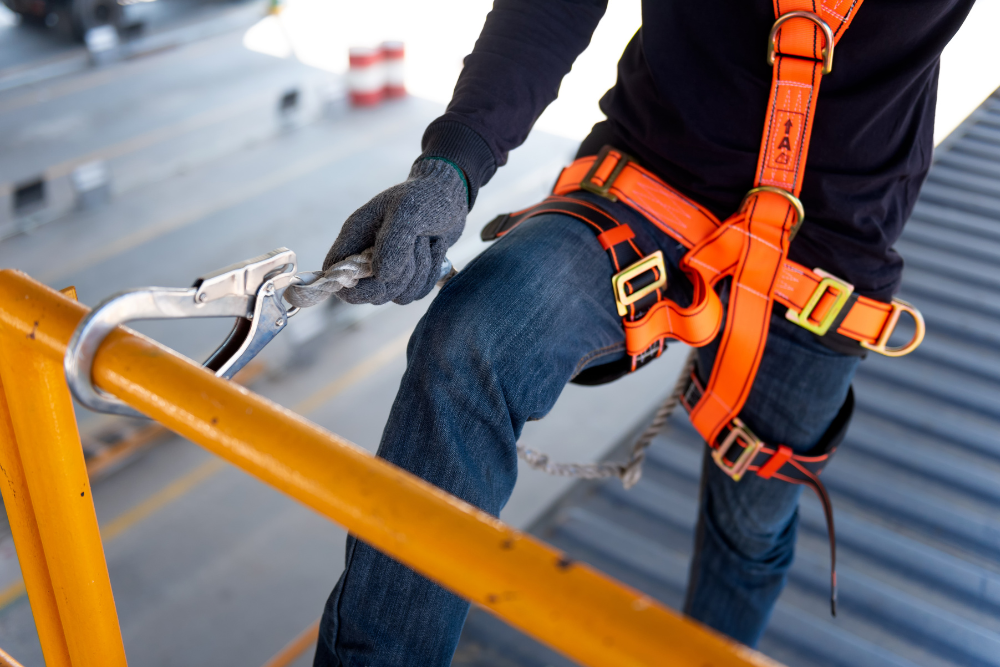
Every year, falls from height claim hundreds of lives in American workplaces and send tens of thousands of workers to hospital emergency rooms. They are the leading cause of death in construction and a top-five killer across general industry, agriculture, and utilities. And yet the technology to prevent the vast majority of these fatalities exists, is widely available, and is legally required on most job sites.
Personal fall arrest systems are the last line of defense between a worker and the ground. When guardrails aren't feasible, when safety nets can't be installed, and when the work demands proximity to an unprotected edge, a fall arrest system is what stands between a worker and a fatal or life-altering injury. Understanding how these systems work, what they consist of, how to select and use them correctly, and what their limitations are is foundational knowledge for every worker at height and every safety professional managing elevated work.
This guide covers everything you need to know about fall arrest systems — from the basic components and how they interact, to inspection, common mistakes, regulatory requirements, and the critical planning that needs to happen before anyone clips in.
What Is a Fall Arrest System?
A fall arrest system is a combination of equipment designed to safely stop a worker who has fallen from an elevated surface before they strike a lower level. The term "arrest" is precise — the system does not prevent the fall from starting, but it arrests, or stops, the fall after it begins.
This distinguishes fall arrest systems from two other categories of fall protection that are often confused with them. Fall restraint systems prevent a worker from reaching a fall hazard in the first place — the lanyard is short enough that the worker physically cannot get to the edge. Fall positioning systems allow a worker to lean into the harness and work hands-free at height, supported by the harness against a structure. Fall arrest is the system that catches a worker after they have gone over the edge.
The Hierarchy of Fall Protection
OSHA's fall protection standards establish a clear hierarchy: elimination first, then passive protection such as guardrails and safety nets, and then personal fall arrest systems as the final control. This hierarchy matters because personal fall arrest systems require correct selection, fitting, inspection, use, and rescue planning to be effective. Passive systems like guardrails protect workers regardless of whether they remembered to clip in. Fall arrest systems only protect workers who are wearing and using them correctly.
This is not an argument against fall arrest systems — it is context for understanding that they carry a greater training and compliance burden than passive controls, and that burden must be met for the protection to be real.
Types of Fall Protection: Where Fall Arrest Fits In
Fall protection is not a single solution but it is a category of controls that spans several distinct approaches, each suited to different work environments, tasks, and risk levels. Understanding the full range helps safety managers and workers make informed decisions about which control is most appropriate, and helps workers understand why a fall arrest system is sometimes the right answer and sometimes not the first choice.
Elimination and Substitution
The highest level of fall protection is removing the fall hazard entirely. Can the task be redesigned to be performed at ground level? Can materials be pre-fabricated on the ground and hoisted into place rather than assembled at height? Can remote-operated equipment replace a worker on an elevated surface? When elimination is feasible it is always the preferred solution because it protects every worker regardless of training, compliance, or equipment condition. In practice, many elevated work tasks cannot be eliminated — but the question should always be asked first.
Passive Fall Protection
Passive fall protection systems protect workers without requiring any action on the worker's part. Guardrail systems are the most common form — a physical barrier at the edge of an elevated surface that prevents workers from falling over. OSHA specifies guardrail requirements including top rail height of 42 inches plus or minus three inches, mid-rail at approximately 21 inches, and strength requirements of 200 pounds of force applied in any direction.
Safety nets are another passive system, installed below elevated work areas to catch workers who fall. They are common in construction where large open areas make individual tie-off impractical. Like guardrails, safety nets protect workers regardless of whether they remembered to clip in — which is precisely their advantage over personal fall arrest systems.
Passive systems are always preferable to personal fall arrest when they are feasible. They remove the human compliance variable entirely.
Fall Restraint Systems
A fall restraint system connects a worker to an anchor via a lanyard short enough that the worker cannot physically reach the unprotected edge. No fall occurs — the lanyard becomes taut and stops forward movement before the hazard is reached. Fall restraint systems are simpler, cheaper, and carry less physiological risk than fall arrest because arrest forces are never generated and suspension trauma is never a concern. When the geometry of the work area permits restraint, it is generally preferred over fall arrest.
Fall Positioning Systems
Fall positioning systems allow workers to support themselves in a harness against a structure while working hands-free at height. Common applications include ironworkers leaning back against a column, telecommunications workers on utility poles, and window installers on elevated platforms. Side D-rings on the harness connect to short lanyards or positioning straps attached to the structure. Positioning systems are not designed to arrest a free fall — they are work support tools that must be used in combination with fall arrest protection where a fall hazard exists.
Personal Fall Arrest Systems
Personal fall arrest systems are the active last line of defense, they allow a fall to begin and then stop it before the worker reaches a lower level. They are required when passive protection and restraint are not feasible, and they carry the greatest training, inspection, planning, and rescue burden of any fall protection method. As the sections below cover in detail, their effectiveness depends entirely on correct selection, fitting, use, and rescue planning.
Components of a Personal Fall Arrest System
A personal fall arrest system has three essential components that must work together as a system: the full-body harness, the connecting subsystem, and the anchor point. Each component has specific requirements, and the failure of any one of them compromises the entire system.
The Full-Body Harness
The full-body safety harness is the component worn by the worker. It consists of straps that pass over the shoulders, around the torso, and around the thighs and pelvis, distributing the forces of fall arrest across the strongest parts of the body. The primary attachment point for fall arrest is the dorsal D-ring — the metal ring located between the shoulder blades on the back of the harness.
Full-body harnesses are the only harness type approved for fall arrest under OSHA standards. Body belts — single straps worn around the waist — are prohibited for fall arrest because they concentrate arrest forces on the abdomen, where they can cause severe and fatal internal injuries. Body belts may still be used for positioning and restraint applications but never for fall arrest.
Harnesses must be correctly sized and fitted to the individual worker. A harness that is too large will not distribute arrest forces correctly and can allow a worker to partially slip through the leg straps during a fall. A harness that is too small will restrict movement and may not close or adjust properly. Every harness should be re-fitted from scratch each time it is donned, following the manufacturer's fitting instructions and applying the two-finger test to every strap.
The Connecting Subsystem
The connecting subsystem is the link between the harness's dorsal D-ring and the anchor point. This is where the most variation exists in fall arrest equipment, and where selection decisions have the greatest impact on system performance.
Shock-absorbing lanyards are the most common connecting device. A standard shock-absorbing lanyard is typically six feet long and incorporates a deceleration device — usually a pack of folded webbing that tears apart in a controlled manner during fall arrest, extending to reduce the peak arrest force transmitted to the worker's body. OSHA limits the maximum arrest force on a worker to 1,800 pounds, and shock absorbers are designed to keep forces within this limit.
The trade-off with a six-foot lanyard is fall distance. A worker on a six-foot lanyard, attached to an anchor at dorsal D-ring height, can fall up to approximately 12 feet before the arrest system fully engages and stops the fall — accounting for free fall, lanyard deployment, shock absorber extension, and the worker's own height. This total fall distance must be calculated and verified to ensure there is sufficient clearance above any lower level. Using a six-foot lanyard on a platform only eight feet above the ground means the system cannot arrest the fall before the worker strikes the ground.
Self-retracting lifelines (SRLs) address the fall distance problem. An SRL contains a spring-loaded spool of webbing or cable that pays out freely as the worker moves and retracts when the worker stops or moves back toward the anchor. When a fall occurs, a braking mechanism engages within the first few inches of fall, arresting the fall almost immediately. SRLs dramatically reduce total fall distance compared to lanyards and are preferred in situations where fall clearance is limited or where the work requires frequent movement.
SRLs come in two configurations — leading edge and standard. Standard SRLs are designed for use when the anchor is overhead, perpendicular to the work surface. Leading edge SRLs are engineered for use when the worker may fall over a sharp edge — such as a floor opening or roof edge — which can cut the cable of a standard SRL during arrest. Using a standard SRL in a leading edge application is a potentially fatal selection error.
Twin-leg lanyards are used when continuous attachment is required — situations where a worker must move past anchor points and needs to clip the second leg before unclipping the first, maintaining 100% tie-off at all times. They are common in steel erection and communication tower work. Each leg is rated independently for fall arrest, and only one leg should ever be loaded in a fall.
The Anchor Point
The anchor point is the fixed point to which the connecting subsystem attaches. It must be capable of supporting a minimum of 5,000 pounds per attached worker, or must be designed and installed by a qualified person as part of a certified fall protection system rated for at least twice the maximum arrest force.
Anchor point selection is one of the most commonly mishandled elements of fall arrest system setup. Workers frequently attach to convenient points — a structural bolt, a railing post, a piece of HVAC equipment — without any knowledge of whether that point can support the required load. An anchor that fails during fall arrest provides no protection at all, and the failure is often more violent than the fall itself because the worker has already fallen the length of the lanyard before the anchor pulls out.
Anchor points should be at or above dorsal D-ring height whenever possible. An anchor below dorsal D-ring height increases free fall distance and can change the orientation of the worker during arrest in ways that increase injury risk. The geometry of the anchor relative to the work position also affects swing fall risk — if the worker moves laterally from the point directly below the anchor and then falls, the resulting pendulum swing can cause a worker to strike a structure with significant force before the lanyard fully loads.
Fall Arrest Protection Equipment: Selection and Compatibility
Matching the System to the Hazard
Fall arrest protection equipment must be selected to match the specific hazard environment. There is no universal fall arrest system that is appropriate for every elevated work scenario. The selection process should consider fall clearance available below the work position, whether leading edges are present, the required range of worker movement, environmental conditions such as heat, moisture, and chemical exposure, and the practicality of rescue from the specific suspension position a fall would create.
A construction crew installing steel decking on an upper floor needs a different system than a maintenance technician servicing rooftop HVAC equipment, which is different again from a window cleaning crew on a high-rise or a technician climbing a communication tower. Generic fall arrest programs that specify one system for all elevated work miss the critical site-specific analysis that makes the difference between adequate and inadequate protection.
Equipment Compatibility
All components of a personal fall arrest system must be compatible with each other and must be used together as a system as intended by the manufacturer. Mixing components from different manufacturers or using components in ways not specified by the manufacturer can compromise the system's performance in ways that are not visible during pre-use inspection.
Compatibility considerations include connector size — snap hooks and carabiners must be sized and rated for the D-rings they are connecting to. Rollout is a particular concern: a snap hook that is too large relative to the D-ring can roll out under load, releasing the connection. All connectors must have a locking mechanism that requires at least two deliberate actions to open and must be fully closed and locked before use.
Inspection Before Every Use
Every component of a personal fall arrest system must be inspected by the user before each use. This inspection is not a formality — it is the final opportunity to identify equipment that should not be used before a life depends on it.
Harness inspection covers webbing condition, stitching integrity, hardware function, and label legibility. Lanyard and SRL inspection covers webbing or cable condition, housing integrity for SRLs, snap hook and carabiner function and locking, and the condition of the shock absorber pack. Any component showing cuts, abrasion, chemical contamination, heat damage, corrosion, deformation, or that has arrested a previous fall must be immediately removed from service.
The inspection takes two to three minutes and should be as automatic as a pre-drive check. A component that fails inspection should be tagged out of service, reported to the supervisor, and replaced before work begins.
Fall Arrest and Fall Protection: Understanding OSHA Requirements
Coverage and Thresholds
OSHA's fall protection requirements apply across industry sectors with different height thresholds reflecting the risk profiles of different work environments. In construction under 29 CFR 1926, fall protection including fall arrest systems is required at heights of six feet or more above a lower level. In general industry under 29 CFR 1910, the threshold is four feet. In shipyards it is five feet, and in longshoring operations it is eight feet.
These thresholds define when fall protection is legally required — not when falls become dangerous. A fall from any height can cause serious injury, particularly if the landing surface is hard, involves equipment or materials, or if the worker lands awkwardly. The regulatory thresholds are minimums, and best practice is to assess fall risk at any height and apply appropriate protection.
Training Requirements
OSHA requires that workers exposed to fall hazards be trained by a competent person before exposure. For personal fall arrest systems specifically, training must cover recognition of fall hazards, the procedures to minimize them, the correct use and limitations of fall arrest equipment, the proper method of donning and adjusting the harness, anchor point selection, and post-fall rescue procedures.
Training records must be maintained and retraining provided when there is reason to believe a worker has not retained the required knowledge or skill — after an incident, a near-miss, or when equipment or work conditions change significantly.
Pro Tip: Tracking retraining triggers manually is one of the most common compliance gaps in fall protection programs. Safety training tracking software like SafetyIQ automatically flags workers due for retraining, logs completed sessions, and generates audit-ready records, so nothing falls through the cracks when conditions change or an incident occurs.
Rescue Planning
OSHA requires that employers provide for prompt rescue of employees following a fall arrest. Rescue planning must be specific to the work location and system in use, must identify responsible personnel and available equipment, and must be capable of achieving rescue within a timeframe that prevents suspension trauma from becoming life-threatening. Generic rescue plans that rely entirely on calling 911 are not adequate for elevated work scenarios where suspension trauma can become critical in minutes.
Common Fall Arrest System Mistakes
The same errors appear consistently in fall incident investigations across industries. Understanding them is the first step to eliminating them.
Failure to calculate fall clearance before deploying a lanyard is among the most dangerous and most common errors. Workers and supervisors assume that having a six-foot lanyard on a six-foot-high platform is adequate — it is not, because total fall distance includes free fall, deceleration, and the worker's own height.
Clipping to inappropriate anchor points remains endemic despite decades of regulatory attention. The anchor is the component workers most often select without formal training or engineering input, and it is the component most likely to fail if incorrectly selected.
Using equipment that has arrested a previous fall is a persistent problem in workplaces where fall protection equipment is shared or stored without clear service records. Equipment that has arrested a fall may appear undamaged but must be retired from fall arrest service.
Failing to maintain 100% tie-off during movement — unclipping to move past an anchor point without attaching a second leg first — creates a window of unprotected exposure that is exactly when a fall is most likely, as the worker is moving.
Fall Protection and Fall Arrest Systems: Frequently Asked Questions
What is the difference between a fall arrest system and a fall restraint system, and when should each be used?
Fall arrest and fall restraint are both forms of personal fall protection, but they operate on fundamentally different principles and are appropriate for different scenarios. A fall restraint system prevents a worker from reaching the fall hazard — the lanyard connecting the worker to the anchor is short enough that when the worker moves toward the unprotected edge, the lanyard becomes taut and stops them before they can go over. No fall occurs, no arrest forces are generated, and the physiological risks of fall arrest — including suspension trauma — never come into play. Fall restraint systems are simpler to implement, require less sophisticated equipment, and eliminate the need for fall clearance calculations because the worker never falls. They are appropriate when the geometry of the work area allows the anchor to be positioned such that a correctly sized lanyard physically prevents access to the edge.
Fall arrest systems, by contrast, allow the worker to go over the edge and catch them before they hit a lower level. They are necessary when the work requires the worker to be at or near the edge — when they need to look over it, work from it, or when the nature of the task means restraint is not practical. Fall arrest systems require more complex selection, greater fall clearance, rescue planning, and training than restraint systems. When both options are feasible, restraint is generally the preferred choice because it eliminates rather than manages the fall. When the work position demands proximity to the edge that restraint cannot accommodate, fall arrest is the required control.
How do I calculate whether I have enough fall clearance for my fall arrest system?
Fall clearance calculation is one of the most critical and most frequently skipped steps in fall arrest system setup. The total fall distance — the distance a worker will travel from the moment a fall begins to the moment they come to rest — must be less than the available clearance between the worker's feet and the nearest lower level. For a standard six-foot shock-absorbing lanyard, total fall distance is calculated as follows: free fall distance (the distance fallen before the lanyard becomes taut, which depends on anchor height relative to the dorsal D-ring — up to six feet if the anchor is at D-ring height, more if the anchor is below) plus deceleration distance (the distance over which the shock absorber deploys, typically three and a half feet maximum) plus the worker's height (typically around six feet) plus a safety factor (usually two feet).
For a worst-case scenario with a six-foot lanyard anchored at dorsal D-ring height, total fall distance can approach 18.5 feet. This means a worker using a standard six-foot lanyard needs at least 18 to 19 feet of clearance below their feet for the system to arrest the fall before ground contact. Many work platforms and elevated surfaces do not provide this clearance, which is precisely why SRLs — which arrest falls within the first few inches — are preferable in limited-clearance situations. Always use the manufacturer's clearance calculator for the specific equipment being deployed, as values vary between products and configurations. When in doubt, use a shorter connecting device or an SRL rather than assuming clearance is adequate.
What should I do if my self-retracting lifeline locks up while I'm working?
An SRL that locks during normal movement — rather than during a fall — is most commonly caused by one of several conditions, each requiring a different response. The most frequent cause is exceeding the SRL's maximum extension speed during normal movement: if you move quickly enough that the SRL's inertia brake interprets the motion as a fall, it locks. Slowing down and moving more deliberately typically releases it. Another common cause is a dirty or damaged internal mechanism — dust, debris, ice, and corrosion can all affect the braking mechanism and cause false lockouts or prevent release after locking. If the SRL locks and does not release after a brief pause and gentle retraction tension, do not force it. Move back toward the anchor to reduce the load on the device and attempt to release it gently. If it does not release, treat it as a potential equipment failure, secure your position by other means if possible, and report it to your supervisor immediately.
Never use an SRL that has locked without inspection and servicing by a qualified person, even if it eventually releases. An SRL that locks unpredictably during normal use may not perform correctly during an actual fall. After any fall arrest event — even a minor stumble that loads the SRL — the device must be removed from service and returned to the manufacturer or a qualified inspector before reuse, as the internal braking mechanism may have been damaged in ways that are not externally visible.
Can the same anchor point be used by multiple workers simultaneously?
The short answer is: only if the anchor has been specifically designed, engineered, and rated for multi-worker use. The 5,000-pound minimum anchor strength requirement under OSHA standards is per attached worker. An anchor point used by two workers simultaneously must therefore be capable of supporting 10,000 pounds, or must be designed as part of a certified fall protection system by a qualified person that accounts for the combined load. Most field-installed temporary anchors — roof anchors, beam anchors, and anchor straps — are rated for a single worker. Using a single-worker anchor for two workers is a serious violation that compromises the protection of both. Horizontal lifeline systems — cable systems installed along a work area that allow multiple workers to attach and travel — are designed for multi-worker use and are engineered to account for the dynamic loads generated by simultaneous falls.
They require design and installation by a qualified person and load calculations that account for the number of attached workers, the cable span, and the anchor loads generated at each end under worst-case loading. If you are working in a situation where multiple workers need fall arrest protection in the same area, consult a qualified fall protection engineer to design the appropriate system rather than assuming that a single anchor point will serve multiple users.
What happens to fall arrest equipment after it has been used in a fall, and can it ever be reused?
Any component of a personal fall arrest system that has been subjected to fall arrest forces must be immediately removed from service and must not be reused for fall arrest purposes. This rule is absolute and applies regardless of the apparent condition of the equipment after the fall. The forces generated during fall arrest — even a relatively short fall arrested by a high-quality shock-absorbing lanyard — stress the harness webbing, hardware, and stitching in ways that may not produce visible damage but that compromise the component's ability to perform in a subsequent fall.
A harness that has arrested one fall may look identical to an unused harness but may fail at a fraction of its rated load in a second event. Shock absorber packs that have been deployed cannot be reset or reused — the energy-absorbing material has been consumed in the first arrest. SRLs that have arrested a fall must be returned to the manufacturer or a qualified service center for inspection before any determination can be made about their serviceability, and in most cases they are taken out of fall arrest service permanently. The correct procedure after any fall arrest event is: remove all involved components from service immediately, tag them clearly as out of service, report the event to the supervisor, initiate an incident investigation, and replace all involved components before the affected worker or any other worker returns to elevated work. Equipment removed from fall arrest service should be rendered unusable — cut webbing, deformed hardware — to prevent it from being accidentally returned to service by someone who is unaware of its history.
When are guardrails required for fall protection and what are the OSHA specifications they must meet?
Guardrails are OSHA's preferred method of fall protection for most elevated work situations because they are a passive control — they protect every worker in the area regardless of whether that worker has been trained in fall arrest, fitted a harness correctly, or remembered to clip in. Under OSHA's general industry standard 29 CFR 1910.29, guardrails are required at any walking or working surface with an unprotected edge four feet or more above a lower level where a worker could fall. In construction under 29 CFR 1926.502, the trigger height is six feet. When guardrails are used as the selected fall protection method, they must meet specific construction requirements to be compliant. The top rail must be between 39 and 45 inches in height above the walking or working surface — 42 inches is the standard target. The top rail must be capable of withstanding a force of at least 200 pounds applied in any downward or outward direction at any point along the top edge.
A mid-rail must be installed at approximately the midpoint between the top rail and the walking surface — typically around 21 inches — and must withstand 150 pounds of force applied in any direction. If screens, mesh, or intermediate vertical members are used instead of a mid-rail, they must be capable of withstanding 200 pounds of force. Openings in the guardrail system must be small enough that a 19-inch sphere cannot pass through at any point between the top rail and the walking surface. Where guardrails incorporate wire rope, the rope must be flagged with high-visibility material at intervals not exceeding six feet. Steel banding and plastic banding are explicitly prohibited as top rails or mid-rails. Toe boards — vertical barriers at floor level — are required where tools, equipment, or materials could be kicked or knocked off the elevated surface onto workers below; they must be at least 3.5 inches high and capable of withstanding 50 pounds of force. Guardrails must be maintained in good condition for the duration of their use — a guardrail that has been struck by equipment, partially dismantled for material access, or damaged in any way must be repaired or replaced before workers are exposed to the edge it is meant to protect.
One of the most common guardrail compliance failures on active construction sites is temporary removal for material loading or equipment movement without an equivalent temporary fall protection measure in place during the period of removal. OSHA requires that whenever a guardrail is removed, an alternative fall protection method — such as a personal fall arrest system or a designated safety monitor for specific low-slope roofing operations — must be in place for any worker exposed to the unprotected edge during that period.
SafetyIQ brings incidents, inspections, training, journey management, lone worker safety and fatigue into one mobile app. Tell us about your crews and sites for tailored pricing.
Safety insights, straight to your inbox
New guides, monthly safety topics and SafetyIQ updates for EHS and operations leaders. Unsubscribe anytime.



Get a demo built around your sites, your teams, and the way your people work.
EHS, journey, and fatigue management software for field-heavy teams.

.png)

.png)