
Amputation Report: What 12 Months of OSHA Data Reveals
2,352 amputations in 12 months, mostly in manufacturing and often during machine maintenance. What OSHA data shows and how to prevent them.
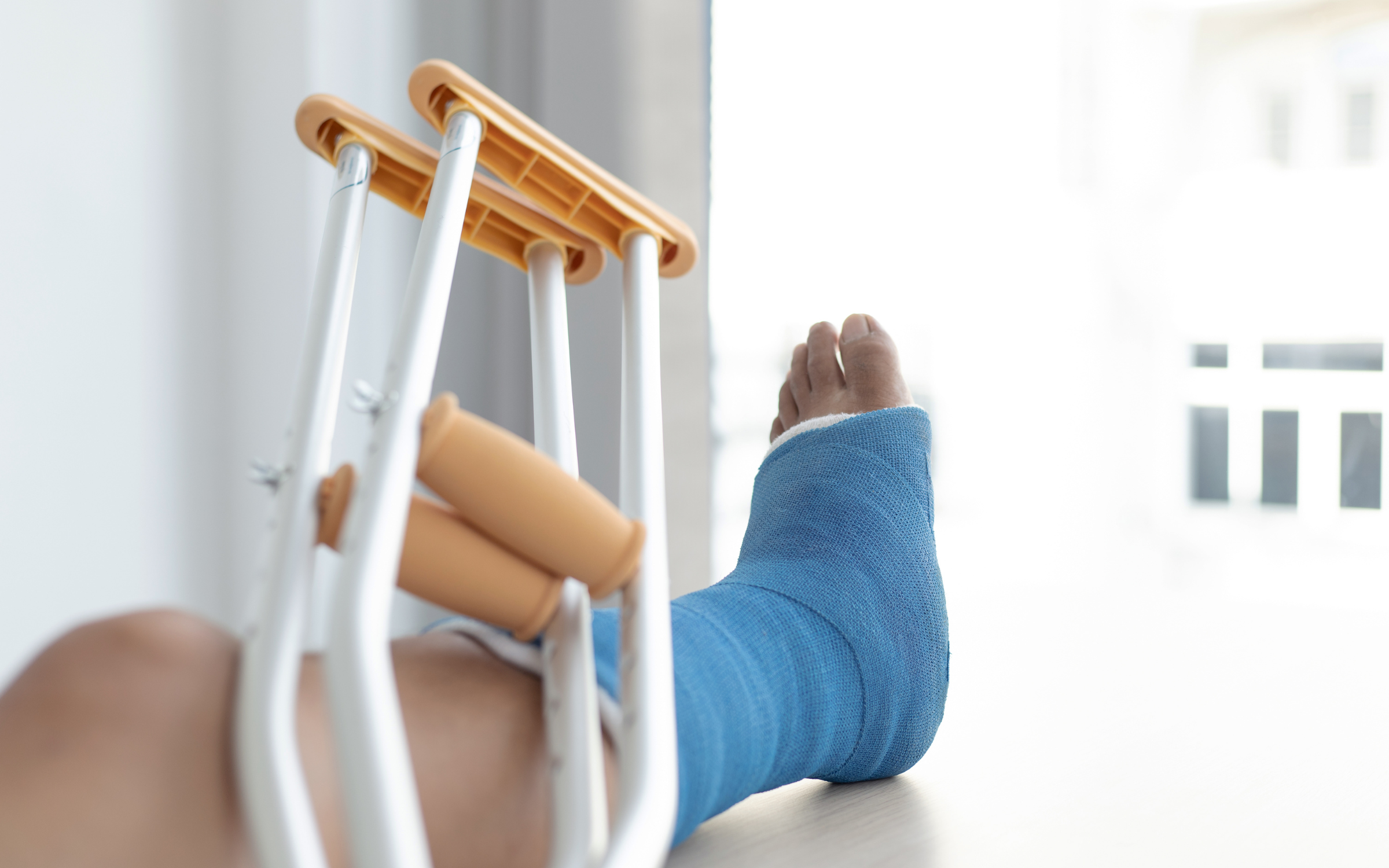
Every day in the US, about six workers lose part of their body at work. Between December 2024 and November 2025, employers reported 2,352 amputations to OSHA. That is one in every four severe injury reports filed in that period, and it is a number that has barely moved in a decade.
We went through every line of OSHA's Severe Injury Report data to understand where these injuries happen, what causes them and what the patterns say about prevention. The short version: most amputations happen in manufacturing, almost all of them take fingers, and a large share happen not while a machine is producing, but while someone is cleaning, clearing or fixing it.
The headline numbers
Here is what 12 months of OSHA data shows (December 2024 to November 2025, federal OSHA states):
- 2,352 amputations reported, out of 9,406 severe injury reports. That is 25% of all reports, or about 6.4 amputations every day.
- 53% happened in manufacturing (1,241 amputations). Construction was a distant second with 284.
- 95% involved fingers, thumbs or hands. Fingertips alone accounted for 1,164 cases.
- 59% involved running powered equipment, either being struck by it or caught in it.
- 611 amputations (26%) happened during maintenance, cleaning or testing of running equipment. In manufacturing, that rises to 444 of 1,241, or 36%.
Since OSHA began requiring employers to report every amputation within 24 hours in January 2015, there have been 27,961 amputation reports in the dataset. The yearly count peaked at 2,870 in 2018, dropped during 2020, and has hovered around 2,300 to 2,400 a year since. Through the first 11 months of 2025 there were 2,171 reports, about 3% fewer than the same period in 2024. That is progress, but slow progress.
Where amputations happen
Manufacturing carries most of the risk
Manufacturing accounts for more than half of all amputations, even though it employs a far smaller share of the US workforce. Here is how the 12 months break down by sector:
- Manufacturing: 1,241
- Construction: 284
- Retail: 134
- Wholesale trade: 129
- Transportation and warehousing: 111
- Administrative and waste services: 101
- Mining, quarrying and oil and gas: 62
Drilling down further, the individual industries with the most amputations were:
- Meat and poultry processing (94), where butchering machinery, grinders and saws are part of daily work
- Plastics products manufacturing (74), where injection molding machines and presses dominate
- Architectural and structural metals (70), with heavy use of press brakes, shears and punches
- Building equipment contractors (59), a construction subsector
- Grocery stores (50), largely from meat slicers, saws and compactors
The food sector stands out. Meat processing, other food manufacturing and bakeries all appear in the top 12 industries, and food and beverage manufacturing overall reported 268 amputations, 46% of all its severe injury reports. If you run a food plant, amputation is not a rare event. It is your most likely serious injury.
Where in the country
Texas reported the most amputations (415), followed by Ohio (206), Illinois (177), Florida (170), Georgia (148) and Pennsylvania (147). These numbers follow industrial employment closely, so they say more about where manufacturing happens than about which states are less safe. They also only cover states where federal OSHA collects the reports. States with their own OSHA plans, such as California, Michigan and Washington, are largely missing from the data. The real national total is higher.
You can explore state by state numbers on our US Workplace Injury Tracker.
How amputations happen
The machines involved
When we look at the equipment named in each report, a clear list of high-risk machines emerges:
- Stamping machinery and presses (98 cases)
- Conveyors of all types (104 cases combined)
- Metal, woodworking and special material machinery (67)
- Forklifts and powered industrial trucks (62)
- Butchering machinery (60)
- Saws, including table saws and stationary sawing machinery (115 across categories)
- Packaging, wrapping and bundling machinery (29 in manufacturing alone)
None of these are surprising. They share a common feature: points of operation where metal meets metal, nip points where belts meet rollers and blades that move faster than a hand can react.
The single biggest pattern: maintenance on running equipment
The most common event type in the entire dataset is "struck by running powered equipment during maintenance, cleaning or testing." It accounts for 611 amputations in 12 months, more than any other cause. The second most common, "caught or entangled in running equipment during normal operation," accounts for 457.
Read a few of the narratives and the pattern becomes painfully familiar. A worker reaches in to clear a jam on a conveyor. An operator wipes down a slicer that is still spinning down. A maintenance tech adjusts a guard on a press while it is still connected to power. A sanitation worker cleans a mixer at the end of a shift without isolating it. In each case, the machine was not supposed to move. It moved anyway.
In manufacturing, more than one in three amputations happened during this kind of work. That matters because it changes how you think about prevention. Guarding protects people during normal operation. But maintenance, cleaning and jam clearing are exactly the moments when guards come off and hands go in.
Why maintenance is the danger zone
If the risk is so well known, why does it keep happening? The data cannot tell us directly, but decades of OSHA inspection findings point to the same handful of gaps.
1. Lockout/tagout is skipped for "quick" tasks
OSHA's lockout/tagout standard (29 CFR 1910.147) requires machines to be shut down and isolated from every energy source before servicing or maintenance. It is consistently among OSHA's most frequently cited standards every year. The most common failure is not a missing program. It is a program that exists on paper but is not used for short jobs like clearing a jam or wiping a blade, because locking out feels slower than the task itself.
The standard does include a narrow exception for minor servicing during normal production, but only when alternative measures give effective protection. Reaching into a running or coasting machine with a bare hand is never that. If you are unsure where the line sits, our guide on when lockout tagout is required walks through it.
2. Procedures are generic, not machine specific
A single, plant-wide lockout procedure does not tell a worker where the pneumatic dump valve is on line 3, or that a hydraulic press stores pressure after the motor stops. OSHA requires energy control procedures that identify each energy source for each piece of equipment. Many amputations involve stored or residual energy: gravity, springs, hydraulics, air pressure or a flywheel still turning.
3. Guards are removed and not replaced
Machine guarding (29 CFR 1910.212) is the other half of the equation. Guards come off for maintenance, adjustment or because they slow production. When they are not reinstalled, or are bypassed with a zip tie or a block of wood, the point of operation is exposed during normal running. If you need a refresher, read what machine guarding is and how it works.
4. Equipment condition goes unchecked
Worn interlocks, faulty two-hand controls, broken emergency stops and damaged light curtains turn a safe machine into a dangerous one without anyone noticing. Without regular, recorded inspections, these failures stay hidden until someone is hurt.
5. Near misses are not reported
For every amputation, there are usually several close calls: a glove pulled into a roller, a finger brushed by a blade, a machine that cycled unexpectedly. When those events go unreported, the warning signs never reach the people who can fix the problem.
What prevents amputations
The good news is that amputations are among the most preventable serious injuries. The controls are well known. The challenge is making them happen every time, on every shift.
Make lockout/tagout non-negotiable, even for quick jobs
- Write machine-specific energy control procedures that name every energy source and isolation point, including stored energy.
- Post the procedure at the machine, ideally with photos of each isolation point.
- Treat jam clearing, cleaning and sanitation as servicing that requires lockout unless an approved alternative is in place.
- Verify zero energy before starting work. Try the start button, bleed the pressure, block the ram.
- Audit lockout in practice, not just on paper, at least once a year as OSHA requires, and more often on high-risk lines.
Guard the point of operation and keep guards on
- Fixed guards wherever possible, with interlocked guards where access is needed.
- Presence-sensing devices such as light curtains on presses and other high-risk machines.
- A clear rule that missing or bypassed guards stop the machine until fixed.
Inspect equipment on a schedule, and record it
- Daily pre-start checks on high-risk machines: guards in place, emergency stops working, interlocks functional. Our article on why machinery pre-starts matter explains the routine.
- Scheduled, documented inspections of safety devices such as light curtains, two-hand controls and brake monitors.
- A defect process that tags out faulty equipment immediately and tracks it until repaired.
Train for the moments that matter
- Train authorized employees on each machine they service, not just on the general principle of lockout.
- Train affected employees, including operators and sanitation crews, to recognize when lockout is in effect and never to restart locked equipment.
- Use real incidents, including the patterns in this report, to show why the rules exist.
Capture near misses and act on them
- Make reporting fast and easy, from a phone on the floor rather than a form in an office.
- Review near misses involving machines weekly and assign corrective actions with owners and due dates.
- Look for clusters: the same machine, the same task or the same shift.
How SafetyIQ helps prevent amputations
Most amputation programs fail at the same point: the gap between the procedure in the binder and what happens on the floor at 2 a.m. SafetyIQ closes that gap by putting your controls into the hands of the people doing the work.
- Asset and equipment inspections: build pre-start checklists for every machine, schedule inspections of guards and safety devices, and flag defects instantly so faulty equipment is tagged out before the next shift.
- Audits and inspections: run periodic lockout/tagout audits in the field, capture photo evidence and track findings to close.
- Incident and near-miss reporting: let anyone report a close call from their phone in under a minute, then route it to the right supervisor with corrective actions attached.
- Trends you can act on: see which machines, lines and tasks generate the most hazards and near misses, so you can fix the problem before it becomes an OSHA report.
If you work in a high-risk sector, see how SafetyIQ supports manufacturing and food and beverage teams, or explore the EHS platform.
The bottom line
2,352 amputations in 12 months is not a statistic about bad luck. It is a statistic about predictable tasks on known machines. The data points clearly to where to focus: manufacturing and food processing, presses, conveyors and saws, and above all the moments when someone reaches into equipment to clean, clear or fix it.
Lock it out. Keep the guards on. Inspect the equipment. Report the near misses. Do those four things consistently and most of these injuries do not happen.
About the data
This analysis uses OSHA's public Severe Injury Reports dataset (January 2015 to November 2025), which covers amputations, loss of an eye and in-patient hospitalizations that employers must report within 24 hours. The 12-month figures cover December 2024 to November 2025. OSHA counts the loss of a fingertip as an amputation, with or without bone loss. The data covers federal OSHA jurisdictions; most states that run their own OSHA programs report separately and are largely absent, so national totals are higher than shown here. Industry groupings are based on the primary NAICS code in each report, and causes are based on OSHA's coded event and source fields.
SafetyIQ brings incidents, inspections, training, journey management, lone worker safety and fatigue into one mobile app. Tell us about your crews and sites for tailored pricing.
Safety insights, straight to your inbox
New guides, monthly safety topics and SafetyIQ updates for EHS and operations leaders. Unsubscribe anytime.


Get a demo built around your sites, your teams, and the way your people work.
EHS, journey, and fatigue management software for field-heavy teams.


