
Job Safety Analysis Guide for Workplace Hazards
Learn how to conduct a Job Safety Analysis, identify workplace hazards, and apply the right controls to keep your team safe on the job.
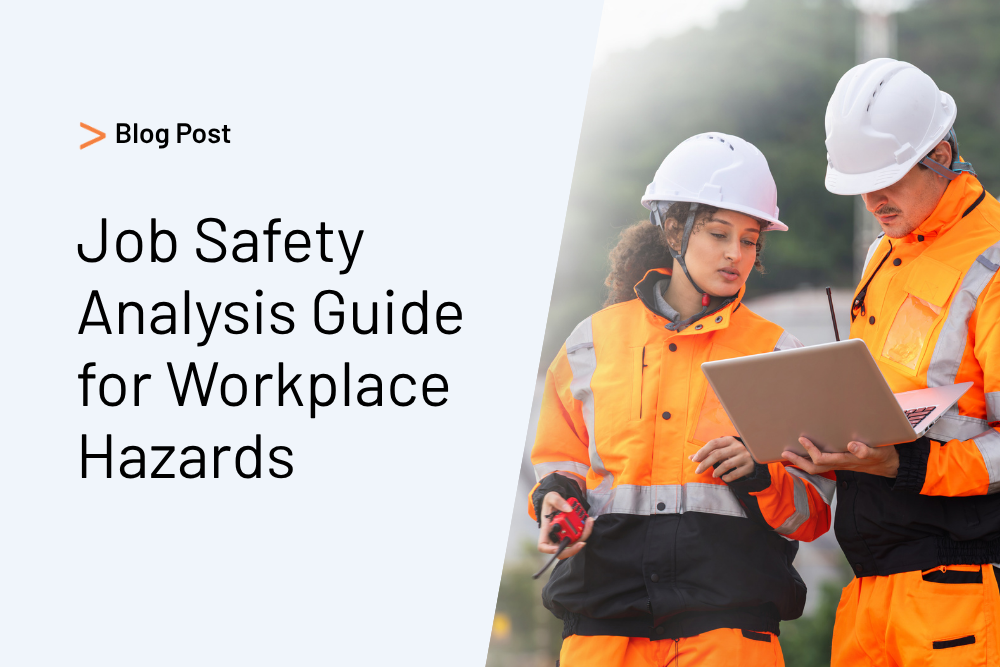
Every workplace, no matter how well-organized, carries some level of risk. Machinery malfunctions, environmental hazards, human error, and unexpected conditions can turn a routine task into a serious incident. This is where a Job Safety Analysis (JSA) becomes one of the most valuable tools in an organization's safety program. By systematically breaking down tasks into individual steps and identifying the hazards associated with each one, a JSA helps businesses prevent injuries before they happen rather than reacting after the fact.
This guide explores what a Job Safety Analysis is, why it matters, how to conduct one effectively, and the common pitfalls organizations should avoid. Whether you're a safety manager building a new program or a supervisor refining an existing one, this article will give you a practical, thorough understanding of JSAs and how to put them to work.
What Is a Job Safety Analysis (JSA)?
A Job Safety Analysis is a structured process used to identify hazards associated with specific job tasks and to determine the safest way to perform that work. Rather than looking at safety in broad, general terms, a JSA zooms in on a single job or task, breaks it into its basic steps, and evaluates each step for potential hazards. Once hazards are identified, the analysis outlines specific controls or procedures to eliminate or reduce the risk.
JSAs are proactive rather than reactive. Instead of waiting for an incident to occur and then investigating what went wrong, a JSA anticipates what could go wrong and addresses it in advance. This makes it a cornerstone of any effective occupational health and safety program, particularly in industries like construction, manufacturing, oil and gas, utilities, warehousing, and healthcare, where workers regularly perform physically demanding or hazardous tasks.
JSA vs. Job Hazard Analysis (JHA)
Many organizations use the terms Job Safety Analysis (JSA) and Job Hazard Analysis (JHA) interchangeably, and for practical purposes, they are essentially the same process. Both involve breaking a job into steps, identifying hazards at each step, and developing controls. The Occupational Safety and Health Administration (OSHA) tends to use the term "Job Hazard Analysis" in its official guidance, while many industries and companies prefer "Job Safety Analysis." Regardless of the name used, the methodology and goals remain consistent: identify hazards, assess risk, and implement controls before work begins.
Why JSA Matters
The value of a JSA extends beyond regulatory compliance. When done correctly, it becomes a living document that improves communication, builds a culture of safety awareness, and gives workers a clear understanding of the risks associated with their tasks. A well-executed JSA can:
- Reduce the frequency and severity of workplace injuries
- Improve worker engagement in safety planning
- Serve as a training tool for new employees
- Provide documentation for regulatory compliance
- Identify inefficiencies in job procedures that may also pose safety risks
- Create a reference point for incident investigations
Organizations that treat JSAs as a checkbox exercise rather than a genuine safety tool often miss these benefits. The most successful safety programs treat the JSA as an evolving document, updated whenever conditions, equipment, or procedures change.
Key Components of a Job Safety Analysis
Every effective JSA is built around three core components. Understanding these components is essential before attempting to conduct or improve a JSA program.
Breaking Down Job Steps
The first component involves dividing the job into a sequence of steps, listed in the order they are performed. Each step should describe what the worker does, not how they do it. For example, "lift the panel from the pallet" is a step, while "using proper lifting technique" is a hazard control, not a step itself. Steps should be specific enough to identify distinct hazards but not so granular that the analysis becomes unwieldy. Most jobs can be broken into 10 or fewer major steps.
Identifying Potential Hazards
For each step, the analysis identifies the hazards a worker might be exposed to. This includes physical hazards (falls, cuts, crush injuries), chemical hazards (exposure to fumes, corrosive substances), ergonomic hazards (repetitive motion, awkward postures), environmental hazards (heat, cold, noise), and even psychological or fatigue-related hazards in high-stress roles. The goal is to think through what could realistically go wrong at each stage of the task, drawing on past incidents, near misses, and the knowledge of workers who perform the job regularly.
Determining Preventive Measures
Once hazards are identified, the final component involves determining how to eliminate or control them. This typically follows the hierarchy of controls: elimination, substitution, engineering controls, administrative controls, and personal protective equipment (PPE), in that order of preference. Elimination and substitution are the most effective because they remove the hazard entirely, while PPE is considered the last line of defense because it relies on human behavior and does not address the hazard at its source.
When Should You Conduct a JSA?
Not every task requires a full JSA, but certain situations make one essential.
New or Modified Tasks
Whenever a new job, process, or piece of equipment is introduced, a JSA should be conducted before workers begin performing the task. This ensures that hazards are identified and controlled from the outset, rather than discovered through trial and error.
High-Risk Jobs
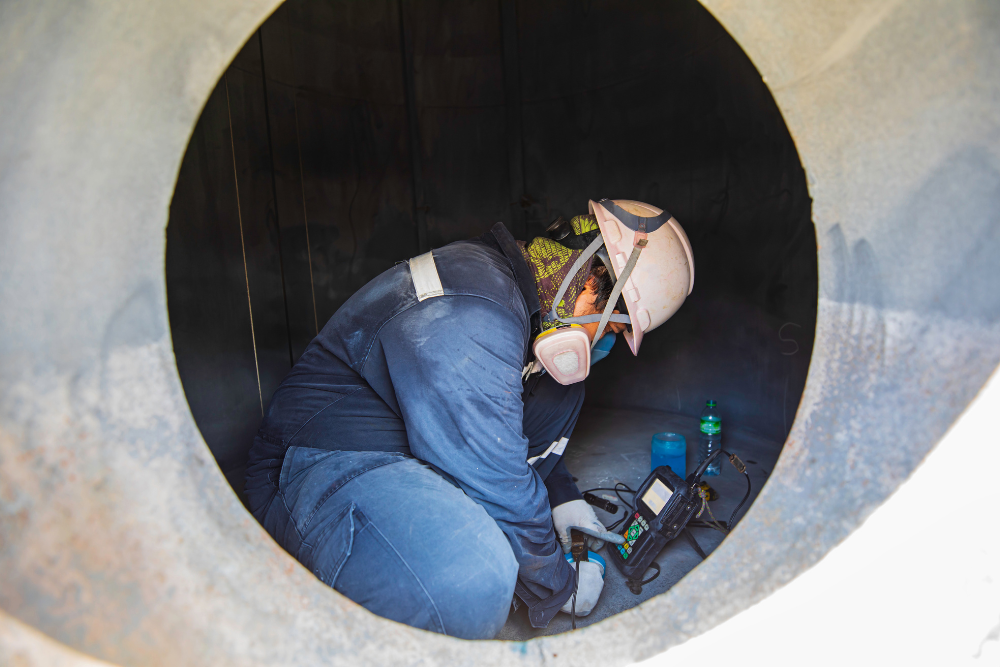
Tasks with a history of injuries, tasks involving heavy machinery, confined spaces, working at heights, or exposure to hazardous chemicals should always have a documented JSA. These are the jobs where the consequences of an oversight are most severe, making thorough analysis non-negotiable.
After Incidents or Near Misses
If an injury or near miss occurs during a task, it's a strong signal that the existing JSA (if one exists) failed to identify or adequately control a hazard. Conducting or revising a JSA after such an event helps prevent recurrence and demonstrates a commitment to continuous improvement.
Step-by-Step Guide to Conducting a JSA
Conducting a JSA doesn't require complicated tools, but it does require a methodical approach. Below is a practical, step-by-step process that safety teams and supervisors can follow.
Step 1: Select the Job
Start by prioritizing which jobs need a JSA. Focus first on tasks with the highest injury rates, the highest potential severity, or those that are new or recently changed. Trying to create a JSA for every single task in a facility at once is overwhelming; instead, build a prioritized list and work through it systematically.
Step 2: Break the Job into Steps
Observe the job being performed, ideally by an experienced worker, and document the sequence of steps involved. Steps should be written in the order they naturally occur and should describe actions, not techniques. It's often helpful to involve the worker who performs the task daily, since they understand the nuances that an outside observer might miss.
Step 3: Identify Hazards for Each Step
For each step, ask a series of guiding questions: Can the worker be struck by, caught in, or caught between objects? Could they slip, trip, or fall? Is there exposure to harmful substances, extreme temperatures, or excessive noise? Could repetitive motion or awkward posture lead to strain? Are there electrical, mechanical, or environmental hazards present? Documenting the answers to these questions for every step produces a comprehensive hazard list.
Step 4: Determine Preventive Measures
For each identified hazard, determine the most effective control using the hierarchy of controls. Where possible, eliminate the hazard entirely by redesigning the task. If elimination isn't feasible, consider substitution, engineering controls like guarding or ventilation, administrative controls like rotating workers or providing training, and finally PPE. Document the specific control measures clearly so they can be communicated to workers.
Step 5: Review and Implement
Once the JSA is complete, review it with the workers who perform the task to confirm accuracy and gather feedback. Implement the identified controls, provide any necessary training, and make the JSA accessible to workers, such as posting it at the job site or including it in onboarding materials. Finally, establish a schedule to review and update the JSA periodically or whenever conditions change.
Who Should Be Involved in a JSA?
A JSA is most effective when it's a collaborative effort rather than something developed in isolation by a single person.
Supervisors and Safety Managers
Supervisors and safety managers typically lead the JSA process, ensuring it follows a consistent methodology and aligns with regulatory requirements. They also have the authority to implement recommended controls, such as purchasing new equipment or revising procedures.
Frontline Workers
Workers who perform the task daily bring invaluable, firsthand knowledge of the hazards involved. They often know about risks that aren't obvious to an outside observer, such as a piece of equipment that behaves unpredictably under certain conditions, or a step that's frequently rushed due to production pressure. Involving frontline workers also increases buy-in, since employees are more likely to follow safety procedures they helped develop.
Safety Committees
In larger organizations, safety committees can play a role in reviewing completed JSAs, ensuring consistency across departments, and tracking trends across multiple analyses. This oversight helps identify systemic issues that might not be visible when JSAs are reviewed in isolation.
Common Mistakes to Avoid When Conducting a JSA
Even organizations with good intentions can undermine their JSA program through avoidable mistakes.
Treating it as a one-time exercise. A JSA is not a "set it and forget it" document. Equipment changes, new hires, process modifications, and lessons learned from incidents should all trigger a review and update.
Writing steps too broadly or too narrowly. Steps that are too broad ("assemble the unit") fail to reveal specific hazards, while steps that are too granular make the document cumbersome and difficult to use. Aim for a balance that captures distinct, hazard-relevant actions.
Skipping worker input. JSAs developed exclusively by management, without input from the people who actually perform the task, often miss real-world hazards and generate resistance from workers who feel the process doesn't reflect reality.
Defaulting to PPE as the primary control. PPE is important, but relying on it as the first and only control ignores more effective options like elimination, substitution, or engineering controls. A strong JSA should exhaust higher-level controls before falling back on PPE.
Failing to communicate the JSA to workers. A completed JSA that sits in a file cabinet or a folder on a shared drive provides little protection. Workers need to be trained on the JSA's findings and have easy access to it at the job site.
Not updating after incidents. If an incident or near miss occurs during a task with an existing JSA, failing to revisit and revise that JSA is a missed opportunity to prevent recurrence.
JSA Tools and Templates
Paper-Based vs. Digital
Traditionally, JSAs were completed on paper forms, and many organizations still use this method, particularly in remote or field-based work where digital access is limited. However, digital JSA tools and mobile apps are increasingly popular because they allow for easier updates, centralized storage, real-time access across teams, and integration with broader safety management systems. Digital tools also make it easier to track completion rates, flag overdue reviews, and generate reports for audits or regulatory inspections.
What to Include in a JSA Template
A solid JSA template should include the job title and location, the date of the analysis and the names of participants, a column for each job step, a column for hazards associated with each step, a column for recommended controls, and space for required PPE or training. Many templates also include a sign-off section where workers acknowledge they've reviewed and understand the analysis.
Benefits of Implementing Job Safety Analysis
Organizations that consistently apply JSAs across their operations tend to see measurable improvements in safety performance. These benefits include fewer recordable injuries and reduced workers' compensation costs, improved regulatory compliance and audit readiness, stronger safety culture and worker engagement, more efficient job procedures identified through the analysis process, and better onboarding and training materials for new employees. Beyond the numbers, JSAs send a clear message to employees: their safety is a priority, and the organization is willing to invest time and resources into protecting them.
JSA and Regulatory Compliance
While OSHA does not mandate JSAs for every employer, it strongly recommends them as a best practice and requires hazard analysis for certain high-risk operations, such as those involving hazardous chemicals or confined spaces. Many industry-specific regulations and standards, including those in construction and oil and gas, effectively require documented hazard analyses as part of broader safety management systems. Maintaining thorough, up-to-date JSAs also provides valuable documentation in the event of an OSHA inspection or an incident investigation, demonstrating that the organization took reasonable steps to identify and control workplace hazards.
Final Thoughts
A Job Safety Analysis is more than a compliance formality; it's a practical, proven method for identifying hazards before they cause harm. By breaking jobs into steps, identifying risks at each stage, and implementing appropriate controls, organizations can meaningfully reduce injuries and build a stronger culture of safety. The process works best when it's collaborative, regularly updated, and genuinely integrated into how work gets done, rather than treated as paperwork to satisfy an auditor. Companies that invest the time to do JSAs well often find the benefits extend far beyond safety metrics, improving efficiency, communication, and employee trust across the organization.
Frequently Asked Questions
How is a Job Safety Analysis different from a general risk assessment?
A general risk assessment typically looks at hazards across an entire workplace, process, or project at a broad level, evaluating overall risk exposure and prioritizing areas for improvement. A Job Safety Analysis, by contrast, focuses narrowly on a single job or task, breaking it into discrete steps and examining the specific hazards present at each one. Think of a risk assessment as the wide-angle view of safety across an organization, while a JSA is the close-up, step-by-step examination of how a particular task is performed. Both tools are valuable and often used together: a broader risk assessment can help identify which jobs are high priority for a detailed JSA, and the findings from multiple JSAs can feed back into the overall risk assessment to highlight patterns or systemic issues. Organizations that rely solely on general risk assessments often miss task-specific nuances, such as the exact sequence of hand movements required to operate a machine safely, which is precisely the level of detail a JSA is designed to capture.
How often should a JSA be reviewed or updated?
There's no single universal timeframe that applies to every JSA, but there are clear triggers that should prompt a review regardless of how much time has passed. A JSA should be revisited whenever the job procedure changes, new equipment or tools are introduced, the work environment changes (such as a new facility layout or the introduction of new materials), an incident or near miss occurs during the task, or new workers begin performing the job and provide feedback that suggests the analysis needs adjustment. Beyond these triggers, many organizations also set a standard review cycle, commonly annually for lower-risk tasks and more frequently, such as quarterly or semi-annually, for high-risk jobs. The key principle is that a JSA should be treated as a living document rather than a static one. An outdated JSA that no longer reflects how work is actually performed can be worse than having no JSA at all, because it creates a false sense of security while failing to address current hazards.
Who is responsible for conducting and approving a Job Safety Analysis?
Responsibility for a JSA is typically shared across several roles rather than resting with a single individual. Supervisors or safety managers usually lead the process, ensuring that the analysis follows a consistent methodology, aligns with company policy, and meets any applicable regulatory requirements. However, the most effective JSAs are developed collaboratively, with direct input from the workers who perform the task regularly, since they often have firsthand knowledge of hazards or workarounds that aren't visible to an outside observer. In many organizations, a safety committee or safety department reviews and formally approves completed JSAs to ensure quality and consistency across different departments or job sites. For particularly high-risk tasks, such as those involving confined spaces, working at heights, or hazardous energy control, additional sign-off from a safety professional or plant manager may be required before the JSA is considered final. Ultimately, while the safety team often facilitates the process, successful JSAs depend on genuine collaboration between management and frontline employees.
What should be done if a JSA identifies a hazard that cannot be fully eliminated?
Not every hazard can be completely eliminated, and a good JSA process accounts for this reality rather than pretending otherwise. When a hazard cannot be removed entirely, the next step is to work through the hierarchy of controls to reduce the risk as much as reasonably possible. This might mean substituting a less hazardous material or process, implementing engineering controls such as machine guarding, ventilation systems, or noise dampening, introducing administrative controls like job rotation, additional training, or stricter procedural steps, and finally, requiring appropriate personal protective equipment as a supplementary layer of protection. It's also important to clearly document why full elimination wasn't feasible and what combination of controls is being used instead, since this demonstrates due diligence and provides a record for future review. In some cases, residual risk may remain even after controls are applied; when this happens, organizations should ensure workers are fully informed of the remaining risk, properly trained on the control measures in place, and given a clear process for reporting any new hazards or near misses related to that task. Continuous monitoring is essential for hazards that can't be fully eliminated, since conditions or equipment wear can change the level of risk over time.
Can a Job Safety Analysis help during an incident investigation, and how?
Yes, a well-documented JSA can be one of the most valuable resources during an incident investigation. When an injury or near miss occurs, investigators typically want to understand exactly what happened, why it happened, and whether existing safety measures were adequate or were bypassed. A JSA that was already in place for the task provides a clear baseline for comparison: investigators can examine whether the incident occurred at a step the JSA identified as hazardous, whether the recommended controls were actually being followed at the time of the incident, and whether the hazard that caused the incident was something the JSA failed to anticipate. If the controls outlined in the JSA were being followed and an incident still occurred, this suggests the JSA itself may need to be revised to address a previously unidentified hazard or an underestimated risk. If the controls were not being followed, the investigation may point toward gaps in training, supervision, or safety culture rather than a flaw in the JSA itself. In either case, having a documented JSA transforms the investigation from a purely reactive exercise into one that's grounded in a proactive safety framework, making it easier to identify root causes and implement corrective actions. It also serves as documentation of due diligence, which can be important for regulatory compliance and, in some cases, legal considerations following a workplace incident.
SafetyIQ brings incidents, inspections, training, journey management, lone worker safety and fatigue into one mobile app. Tell us about your crews and sites for tailored pricing.
Safety insights, straight to your inbox
New guides, monthly safety topics and SafetyIQ updates for EHS and operations leaders. Unsubscribe anytime.


Get a demo built around your sites, your teams, and the way your people work.
EHS, journey, and fatigue management software for field-heavy teams.

.png)

.png)