
August Workplace Safety Topics
August sits at an odd intersection on the safety calendar. It's the hottest month of the year across most of the country, the peak of Atlantic hurricane season is ramping up, wildfire smoke is drifting into places that never used to see it, school buses are back on the road, and employees are quietly running on fumes after a summer with fewer routines and more distractions. For EHS managers, HR teams, and safety professionals, August isn't a slow month — it's one of the more hazard-dense stretches of the year, just spread across a wider variety of risks than, say, winter ice or a single seasonal campaign.
This guide breaks down the workplace safety topics that matter most in August, organized so a safety team can turn it directly into a month-long communication plan — including a week-by-week topic table you can lift straight into a calendar or newsletter series.
Why August Deserves Its Own Safety Focus
December (holiday stress and travel), August doesn't have one dominant hazard — it has several converging at once. Heat stress builds cumulatively over the summer, meaning the risk in August is often higher than in June even though the calendar says "later in the season," because workers have already been exposed to weeks of heat load.
Hurricane season, which runs June through November, historically peaks in late August and September. Wildfire smoke, once a regional West Coast concern, now regularly affects air quality across large swaths of North America during August. And back-to-school season creates a measurable spike in traffic incidents, both for commuting employees and for anyone operating a vehicle for work.
Layered on top of all of that is a quieter, less visible risk: fatigue and mental health strain. Employees often return from summer vacations to a backlog of work, parents are managing new school-year logistics, and the informal support structures that exist during the school year (routines, childcare, predictable schedules) are still resettling. A comprehensive August safety plan has to hold both the physical hazards and this less visible strain at the same time.
Heat Stress and Hydration
Recognizing the Signs of Heat-Related Illness
Heat exhaustion and heat stroke exist on a spectrum, and workplace training often underemphasizes how quickly one can progress into the other. Heat exhaustion typically presents as heavy sweating, weakness, dizziness, nausea, and a fast but weak pulse. Left unaddressed, it can progress to heat stroke — a medical emergency marked by a body temperature above 103°F, hot and dry or damp skin, confusion, and potentially loss of consciousness.

The critical training point for supervisors is that heat stroke can develop in minutes once the body's cooling mechanisms fail, which means "wait and see" is the wrong response to any worker showing confusion or collapse in a hot environment. Call emergency services immediately and begin active cooling while waiting.
Practical Heat Mitigation for Indoor and Outdoor Workers
Outdoor workers — construction crews, landscaping teams, delivery drivers, agricultural workers — carry the most obvious heat exposure, and mitigation there is fairly well established: scheduled water breaks (not just water access, but structured breaks that actually get taken), shaded or air-conditioned rest areas, acclimatization protocols for new or returning workers, and adjusted work-rest cycles tied to heat index rather than a fixed schedule.
Indoor workers are often overlooked in heat planning, but warehouses, kitchens, manufacturing floors, and poorly ventilated back-of-house spaces can reach dangerous heat indexes in August, especially in facilities where HVAC wasn't designed for sustained high outdoor temperatures. A heat illness prevention plan should explicitly cover both populations, not just the ones working outside.
Severe Weather and Hurricane Preparedness
Business Continuity Before the Storm
For organizations in hurricane-prone regions, August is past the point of "if" and into "when." Business continuity planning at this stage should already be finalized rather than starting from scratch: an evacuation plan with clear roles, a communication tree that doesn't rely solely on one channel (cell networks and email both fail during major storms), and a plan for securing or shutting down equipment, chemicals, and inventory that could become hazards if a facility floods or loses power. Organizations outside classic hurricane zones shouldn't skip this section — remnants of tropical storms increasingly bring severe flooding and wind damage well inland, and August is when that risk window is widest.
Employee Communication During Active Weather Events
A strong severe weather plan fails without a communication system employees actually trust and check. This means testing mass notification systems before they're needed, establishing a clear policy on when remote or hybrid work kicks in ahead of a storm, and giving employees explicit guidance on what to do if a warning is issued mid-shift — shelter-in-place instructions, safe zones within the building, and how leadership will confirm when it's safe to resume normal operations.
Wildfire Smoke and Air Quality
Monitoring Air Quality Index and Adjusting Work
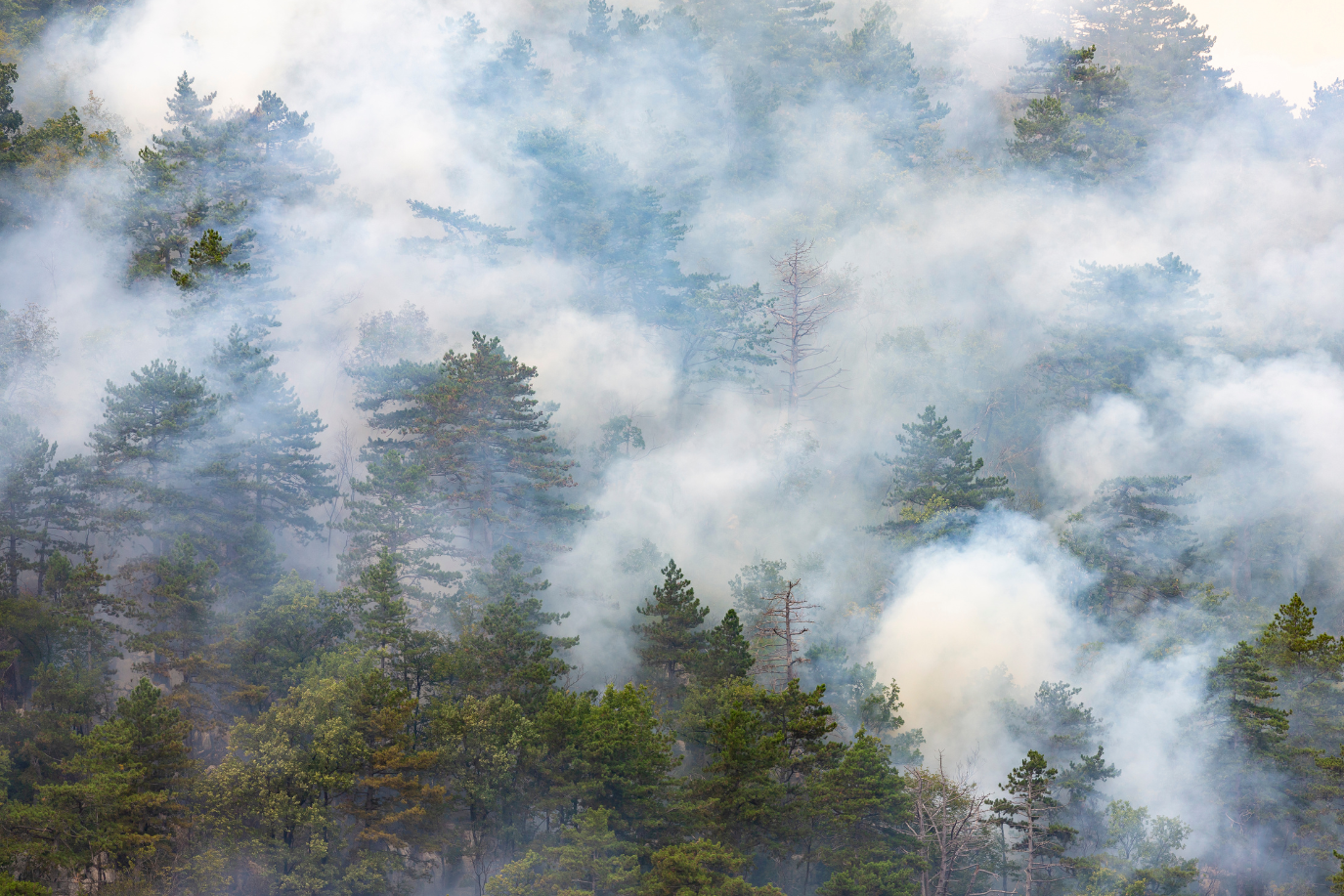
Wildfire smoke has become a genuine cross-country workplace hazard in August, not just a regional West Coast issue. Fine particulate matter (PM2.5) in smoke can travel hundreds of miles from the actual fire, meaning a facility can face hazardous air quality with no visible fire anywhere nearby. Safety teams should build a simple protocol tied to the Air Quality Index (AQI): thresholds for when outdoor work should be limited, when N95 respirators should be provided and required, and when outdoor work should stop entirely. This should be a written trigger-based policy, not a judgment call made fresh every time smoke rolls in.
Protecting Vulnerable Employees
Employees with asthma, cardiovascular conditions, or pregnancy face elevated risk from smoke exposure even at AQI levels considered "moderate" for the general population. A well-designed policy gives these employees a clear, low-friction way to request accommodations — additional breaks, indoor work reassignment, or respiratory protection — without requiring them to disclose a specific diagnosis to a supervisor.
Back-to-School Traffic and Driving Safety
Commuting Risk During the School Transition
Traffic patterns shift noticeably when schools resume in August — school buses reappear on routes, crossing guards and reduced speed zones return, and parent drop-off traffic clusters heavily around the morning commute window. For any organization with employees commuting during these hours, or with a fleet of vehicles on the road, a brief seasonal reminder about school zone speed limits, bus stop laws, and increased pedestrian activity is a low-cost, high-value addition to an August safety communication.
Fleet and Delivery Driver Safety
Organizations that operate delivery vehicles, service trucks, or any kind of fleet should treat the return of school traffic as a trigger for a refresher, not just a passive reminder. This includes reviewing defensive driving basics, confirming vehicle inspections are current heading into the fall, and reinforcing distraction-free driving policies, since school zones combine lower speed limits with a higher density of unpredictable pedestrian movement.
August Safety Topic Calendar
Rather than trying to cover every hazard in a single communication, many EHS teams find it more effective to spread August's safety themes across the weeks of the month, giving each topic focused attention. The table below offers a sample structure that can be adapted to a specific organization's calendar and risk profile.
Wellness, Fatigue, and Immunization Awareness
Managing End-of-Summer Fatigue
By August, many employees are running on a summer's worth of disrupted routines, travel, and in many cases, less sleep. Fatigue doesn't announce itself the way a physical injury does, but it's a well-documented contributor to workplace incidents, particularly for roles involving machinery, driving, or repetitive attention-heavy tasks. Simple interventions — encouraging employees to actually use remaining PTO before a year-end crunch, normalizing conversations about workload, and training supervisors to recognize signs of burnout — belong in an August safety plan even though fatigue isn't a single, dramatic hazard the way a hurricane or heat stroke is.
National Immunization Awareness Month
August is recognized as National Immunization Awareness Month in the United States, making it a natural, low-pressure time to remind employees about workplace-relevant vaccinations — flu shots ahead of the fall season, and any role-specific immunizations relevant to healthcare, food service, or laboratory environments. Many employers use this month to promote on-site flu shot clinics or share reminders about insurance-covered immunization benefits before the fall rush.
Common Workplace Hazards That Spike in August
A few additional risks tend to cluster in this specific month and are worth including in a broader safety communication, even though they don't each warrant a full section on their own. Insect and pest exposure — wasps, ticks, and mosquitoes — peaks in late summer for any employees working outdoors, and basic protective measures (repellent, protective clothing, tick checks) are worth a reminder. Dehydration-related fatigue and reduced alertness compound with heat stress to increase incident risk on job sites and in vehicles alike. Facilities running air conditioning at maximum capacity for weeks on end also see a rise in HVAC-related maintenance issues, which can create indoor air quality problems if filters and systems aren't inspected mid-summer rather than only at seasonal changeover.
August Safety Topics: Frequently Asked Questions
What are the most important workplace safety topics to cover in August?
The topics that matter most in August cluster around a few converging seasonal risks rather than a single dominant hazard.
Heat stress and hydration should be the anchor topic, since cumulative summer heat exposure often makes August riskier than earlier summer months even though temperatures may be similar, and both outdoor and indoor workers need coverage.
Severe weather and hurricane preparedness deserve attention in any region touched by tropical weather systems, since late August is historically near the peak of hurricane season activity.
Wildfire smoke and air quality have become a near-nationwide concern rather than a regional one, and a written AQI-based response protocol is increasingly considered a baseline expectation rather than an optional add-on.
Back-to-school traffic safety is a smaller but genuinely useful seasonal reminder for any organization with commuting employees or a vehicle fleet, given the sudden return of school buses, crossing guards, and pedestrian traffic. Finally, employee wellness and fatigue management round out the list — less visible than the physical hazards above, but a real contributor to incident rates heading into the fall.
Organizations don't need to cover all of these with equal intensity every year; reviewing the previous year's incident data and regional risk profile helps prioritize which topics deserve the most communication and resources in a given August.
How can employers effectively communicate heat safety guidelines to both indoor and outdoor workers?
Effective heat safety communication starts by acknowledging that indoor and outdoor workers face different exposure patterns and need somewhat different messaging, even though the underlying physiology of heat illness is the same.
For outdoor workers, communication should be specific and operational: exact water break schedules, the location of shaded or air-conditioned rest areas, and a plain-language explanation of the warning signs that mean a worker should stop and seek help immediately rather than pushing through. This is most effective when delivered as a toolbox talk or a short in-person briefing rather than a written policy alone, since heat illness recognition benefits from workers actually practicing what symptoms to look for in themselves and coworkers.
For indoor workers, the messaging often needs to correct a misconception first — that indoor work is inherently safe from heat — before it can be useful; this means sharing actual temperature and humidity data from the facility if it's been measured, and giving employees a clear channel to report an area that feels dangerously hot rather than assuming HVAC is working as designed.
Across both groups, supervisor training matters as much as employee-facing communication, since supervisors are the ones positioned to notice early signs of heat illness in real time and to make the call to pull someone from a task. Repetition also matters more for heat safety than for many other topics, since risk builds cumulatively over the summer — a single training in June isn't enough coverage for an August heat wave, and short recurring reminders tend to outperform one comprehensive session delivered once at the start of the season.
What should a business continuity plan for hurricane season include, and when should it be finalized?
A solid hurricane season business continuity plan should be substantially finalized well before August, ideally by early summer, since storm systems can develop and strengthen with only days of warning once hurricane season is active. At minimum, the plan should identify clear roles and decision-makers — who has the authority to call an evacuation or closure, and who is responsible for each major continuity task, from securing the physical facility to communicating with employees and customers. It should include a facility-specific hazard assessment covering flood risk, power loss, and the safe shutdown or securing of any equipment, chemicals, or inventory that could become dangerous if the building loses power or takes on water.
Communication planning deserves particular attention: relying on a single channel like email is a common and avoidable failure point, since cellular networks, internet service, and email servers can all go down simultaneously during a major storm, so redundant channels (text alert systems, a designated call tree, and a pre-agreed check-in method) are worth the investment.
The plan should also address remote or hybrid work triggers — at what forecast threshold does the organization shift to remote work preemptively, rather than waiting until conditions make commuting unsafe — and a clear process for confirming it's safe to return to normal operations after a storm passes, since resuming operations too early is itself a safety risk if there's storm damage, downed power lines, or contaminated floodwater on-site. Finally, the plan should be tested, not just written; a tabletop exercise or even a live test of the notification system before hurricane season peaks in August and September surfaces gaps that are much cheaper to find in a drill than during an actual event.
How should employers respond to poor air quality from wildfire smoke, even if the fire itself is far away?
The key point employers often miss is that wildfire smoke is a genuine hazard at a distance — fine particulate matter can travel hundreds of miles from the actual fire and still pose a real respiratory risk, meaning a facility with no visible smoke or fire nearby can still be experiencing hazardous air quality. The most effective response is a written, trigger-based protocol tied to the Air Quality Index rather than a case-by-case judgment call, since AQI conditions can change quickly and inconsistently applied decisions create both safety and fairness problems.
A typical protocol sets specific AQI thresholds: below a certain level, normal outdoor work continues; at a moderate-to-unhealthy threshold, N95 or better respiratory protection is provided and outdoor work time is reduced; at a hazardous threshold, outdoor work stops and operations move indoors or pause entirely. Employers should also build in a straightforward accommodation process for employees with asthma, cardiovascular conditions, pregnancy, or other conditions that increase sensitivity to smoke exposure, since these employees can experience meaningful symptoms even at AQI levels the general population tolerates without an adjusted policy.
Practically, this means having a stock of properly fitted N95 respirators on hand before smoke season arrives rather than trying to source them during an active air quality event, when supply can tighten quickly. Employers should also monitor AQI using a reliable local source — many regions now have real-time monitoring apps or government air quality websites — and communicate current conditions and any resulting work adjustments to employees each morning during active smoke events, rather than assuming yesterday's conditions still apply.
What role does employee fatigue and burnout play in August workplace safety, and how can employers address it?
Fatigue is one of the least visible but most consistently documented contributors to workplace incidents, and August tends to be a particularly vulnerable month for it. By this point in the year, many employees have accumulated a summer's worth of disrupted sleep schedules, travel, and reduced routine, and the return of the school year often adds new logistical stress for parents managing changed schedules, childcare gaps, and new before-and-after-school routines.
Fatigue affects reaction time, judgment, and attention in ways that are directly relevant to safety, particularly for roles involving machinery operation, driving, or repetitive tasks that require sustained focus. Employers can address this on a few levels. At the policy level, actively encouraging employees to use remaining vacation time before a year-end crunch — rather than letting it pile up — helps prevent the kind of late-year burnout that compounds an already tiring summer.
At the supervisor level, training managers to recognize behavioral signs of fatigue or burnout (increased errors, irritability, disengagement) and to have a low-pressure conversation about workload rather than only addressing it after an incident occurs makes a meaningful difference.
At the cultural level, normalizing conversations about workload and stress, rather than treating them as topics only raised in a formal HR setting, tends to surface problems earlier when they're easier to address. None of these interventions eliminate fatigue as a risk factor entirely, but together they reduce both the likelihood that fatigue reaches a dangerous level and the likelihood that an employee experiencing it feels unable to say so before it results in an incident.
This article is a general planning resource. Specific heat, air quality, and severe weather thresholds should be confirmed against current OSHA guidance and local/regional regulations, since requirements and recommended action levels can vary by state and industry.




See how SafetyIQ helps simplify EHS management and builds a stronger safety culture.

.png)

.png)