

> Biotech & Pharma
Safety software for biotech and pharmaceuticals
Give your teams the visibility and control needed to maintain safe, compliant, and high-quality operations across labs, cleanrooms, and manufacturing sites.

> Built for biotech and pharma
Stay Ahead of Risks That Threaten Quality and Productivity
SafetyIQ helps teams detect issues earlier, streamline documentation, and maintain inspection-ready operations across all departments. From research to commercial manufacturing, your entire organization gains the clarity needed to prevent setbacks and maintain compliance without slowing down innovation.
Boost Inspection Readiness
Maintain complete traceability and organized digital records that make audits faster and more predictable.
Limit Lab and Process Disruptions
Identify emerging hazards or deviations early across R&D, QC labs, aseptic production, or packaging areas.
Unify Reporting & Documentation
Standardize how teams log activities, track findings, and complete corrective actions without relying on manual paperwork.
> The platform
Three connected suites, one app your crews will actually use
EHS Software Suite
Unify health, risk, safety and more in one connected system to streamline compliance, track performance and reduce risk.
Journey Management Suite
Designed for teams on the move, SafetyIQ helps you manage journey plans and lone worker safety.
Fatigue Management Suite
Track alertness, predict fatigue risk and optimize rosters using data-driven insights to keep teams safe and productive.

> Built for the field
Works wherever your crews do
Full offline functionality
Capture audits, incidents and inspections at remote sites with no signal. Data syncs automatically once crews reconnect.
Mobile-first and easy to use
Built for phones and tablets, with guided workflows that operators, supervisors and executives can use without training overload.
One system for field and office
Shared visibility across teams and sites, instant alerts for corrective actions and one source of truth for safety communication.
> FAQs
Biotech and Pharmaceuticals Safety FAQs
How Does Safety Software Reduce Compliance Risks in Pharmaceutical Manufacturing?
+
Safety software centralizes critical compliance activities—from incident reporting and investigation to corrective/preventive action (CAPA) tracking—into a single, auditable platform. Rather than scattered spreadsheets and email chains, everything is documented with timestamps, version control, and automatic audit trails. For pharmaceutical manufacturers, this means regulatory inspectors see organized, complete documentation proving systematic risk management. The software supports GMP requirements by requiring proper approvals, standardized procedures, and training verification before personnel perform critical tasks. Real-time dashboards also alert managers when safety metrics drift, allowing proactive intervention before issues become regulatory findings.
What Is the Difference Between Pharmaceutical Manufacturing Quality Standards (GMP) and Standard Manufacturing Practices?
+
Good Manufacturing Practice (GMP) represents the minimum regulatory standard for pharmaceutical manufacturing facilities in the United States, established by the FDA under 21 CFR Parts 210 and 211. GMPs are mandatory legal requirements—failure to meet them constitutes a regulatory violation that can result in warning letters, facility closure, or criminal prosecution. Standard manufacturing practices, by contrast, refer to general quality approaches used in non-pharmaceutical industries and may be significantly less stringent than GMP requirements. The key distinction lies in risk tolerance and regulatory oversight. A pharmaceutical manufacturer operating under GMP cannot tolerate defects at any meaningful level because even small batches of contaminated medication could harm many patients. GMPs address contamination prevention through stringent environmental controls, including cleanroom classifications (ISO Class 5-8 depending on operations), environmental monitoring, and personnel training. GMPs require documented validation that every process produces consistent results—manufacturers must prove their procedures work as intended before scaling to production. GMP also emphasizes product traceability and recall capability. Every pharmaceutical batch is tracked from raw material receipt through finished product distribution, with detailed records documenting every step. If contamination is discovered, manufacturers must be able to identify affected product quickly. By contrast, standard manufacturing practices often lack this traceability. Additionally, GMP requires independent quality units with authority to reject batches regardless of financial pressure—a safeguard absent from standard manufacturing. The investment in GMP compliance is substantial, but it reflects a non-negotiable commitment to patient safety.
How Do Regulatory Agencies Identify Safety Signals in Approved Pharmaceutical Products?
+
Identifying safety signals—patterns suggesting a drug causes previously unknown adverse effects—requires sophisticated surveillance systems and statistical methods. The FDA's MedWatch program and FDA Adverse Event Reporting System (FAERS) collect adverse event reports from healthcare providers, patients, and pharmaceutical manufacturers. The challenge is distinguishing real signals from background noise—a medication used by millions of people will inevitably accumulate reports of heart attacks, strokes, and cancers simply through coincidence. Regulators use statistical signal detection methods, such as Proportional Reporting Ratios (PRR) and Bayesian approaches, which compare the frequency of reported adverse events to what would be expected by chance. However, statistical significance alone doesn't prove causality—reviewers must evaluate biological plausibility (does the drug's mechanism make this adverse effect plausible?), temporal relationship (does the effect occur within a timeframe consistent with drug exposure?), and dose-response relationship (do higher doses produce more frequent effects?). The FDA also uses electronic health record and insurance claims data through its Sentinel system, enabling detection of safety signals at population level without relying only on voluntary reporting. Post-market epidemiological studies, published research, and international regulatory agency communications supplement passive surveillance. Ultimately, signal detection combines technology with expert human judgment—biostatisticians, pharmacologists, and epidemiologists evaluating whether detected patterns represent real safety concerns warranting regulatory action.
What Are the Key Differences Between Compounding Pharmacies and Pharmaceutical Manufacturers Regarding Safety Regulation?
+
Compounding pharmacies prepare individualized medications by combining ingredients for specific patients—for example, creating an antibiotic suspension at a dose appropriate for a particular child, or preparing a topical cream with specific ingredients for a patient's unique needs. Pharmaceutical manufacturers, by contrast, mass-produce standardized medications at identical potencies for broad distribution. These different functions trigger different regulatory frameworks. Pharmaceutical manufacturers operate under stringent FDA oversight, meeting the GMP standards described previously. The FDA inspects manufacturing facilities, reviews manufacturing processes, and maintains ongoing surveillance of product quality. Compounding pharmacies have historically been regulated primarily by state pharmacy boards, because compounding was considered the practice of pharmacy rather than manufacturing. This regulatory gap became tragically apparent in 2012, when contaminated steroid injections from the New England Compounding Center (NECC) caused a fungal meningitis outbreak that sickened more than 750 people and killed 64. Following the outbreak, Congress passed the Drug Quality and Security Act of 2013, which created a category of "outsourcing facilities" that register with the FDA and follow current good manufacturing practice requirements. Traditional compounding for individual patients remains primarily a state-pharmacy-board responsibility with more limited FDA involvement. This creates an ongoing tension: how much federal oversight is appropriate for compounding without disrupting access to individualized medications that manufacturers don't produce?
What Specific Biosafety Protocols Are Required When Conducting Research With Dangerous Biological Agents?
+
Biosafety addresses risks from working with biological agents—bacteria, viruses, fungi, and toxins that might cause human disease. The CDC and NIH describe four biosafety levels (BSL-1 to BSL-4) based on associated risk. BSL-1 covers agents not known to consistently cause disease in healthy adults, such as non-pathogenic strains of E. coli—work proceeds in standard laboratories with basic precautions. BSL-2 covers agents associated with human disease of moderate hazard, such as hepatitis B virus—work occurs with restricted access, biosafety cabinets for procedures that can create aerosols, and appropriate personal protective equipment. BSL-3 covers agents that can cause serious or potentially lethal disease through inhalation, such as Mycobacterium tuberculosis—work requires controlled-access laboratories with directional airflow, work inside biosafety cabinets, and respiratory protection. BSL-4 covers dangerous agents with a high risk of life-threatening disease for which vaccines or treatments are usually unavailable, such as Ebola and Marburg viruses—work requires the highest containment, typically full-body positive pressure suits with supplied air or Class III biosafety cabinets. Each level requires specific engineering controls and administrative procedures. Needle sticks, broken equipment, or spills require immediate response procedures to prevent exposures. Institutional Biosafety Committees (IBCs) review proposed work with biological agents, assess risk, and require modifications if safety protocols are inadequate. Beyond facility-based containment, biosafety requires extensive personnel training. Researchers must understand containment principles, know procedures for their specific organism, and recognize when incidents require reporting. Medical surveillance programs monitor worker health, and vaccination is offered where appropriate—for example, hepatitis B vaccination for workers with potential exposure. Ultimately, biosafety depends on engineering controls combined with disciplined adherence to procedures by well-trained personnel who understand the rationale behind the rules.
How Do Pharmaceutical Companies Balance the Need for Rapid Drug Development With Rigorous Safety Testing?
+
This tension defines modern pharmaceutical development. Patients with serious diseases—cancer, Alzheimer's, heart failure—urgently want access to new treatments, and delays can cost lives. Simultaneously, safety cannot be compromised: releasing an unsafe drug harms patients and undermines trust in pharmaceutical innovation. Regulators have developed mechanisms that attempt to balance speed and safety. Accelerated approval pathways allow drugs for serious conditions to reach patients based on surrogate endpoints (markers reasonably likely to predict benefit) rather than clinical endpoints (actual patient outcomes), with manufacturers required to conduct confirmatory studies after approval. Breakthrough Therapy Designation fast-tracks drugs showing substantial improvement over existing options, allowing more frequent regulatory interactions. Adaptive trial designs enable researchers to analyze accumulating data during trials, potentially stopping early if efficacy becomes clear or if futility becomes apparent. Rolling review allows companies to submit completed sections of an application incrementally rather than all at once. However, these mechanisms don't eliminate safety requirements—they redistribute where safety evaluation occurs. A drug receiving accelerated approval must have robust post-market surveillance. An adaptive trial must have pre-specified stopping rules and independent oversight. These approaches can accelerate timelines without reducing rigor if implemented properly. Companies that prioritize speed excessively—hiding safety data, manipulating analyses, failing to investigate safety signals—ultimately damage their reputation and face regulatory consequences more serious than delays would have caused.
What Are the Most Common Root Causes of Pharmaceutical Manufacturing Contamination, and How Can Companies Prevent Them?
+
Contamination represents one of the greatest manufacturing risks in pharmaceuticals. Microbial contamination (bacteria, fungi, endotoxins) can render products unsafe or ineffective. Chemical contamination from cross-contamination during multi-product manufacturing can introduce unintended active ingredients or excipients. Particulate contamination from equipment degradation or environmental ingress can create physical hazards. Environmental contamination affecting water, air, or equipment can propagate across multiple batches. Root causes of contamination typically involve breakdowns in environmental controls, equipment maintenance, or personnel compliance. Environmental controls—cleanroom classifications, HVAC systems, air handling—require sophisticated equipment and continuous monitoring. If HVAC systems malfunction, fail to maintain pressure differentials, or have inadequate air changes per hour, contamination can enter production areas. Equipment degradation is another common cause—equipment can shed particles or develop microbial biofilms if not properly maintained. Personnel are a frequent contamination source—improper gowning, failure to follow hand hygiene, touching contact surfaces, or eating and drinking in production areas introduces contamination. Preventing contamination requires multiple layered approaches. Environmental monitoring programs test air and surfaces, detecting contamination before it affects product. Alert and action limits are established—when results approach alert limits, facilities investigate before reaching levels that affect product quality. Equipment maintenance programs include preventive maintenance, calibration, and periodic replacement of worn components. Personnel training emphasizes contamination prevention: proper gowning procedures, aseptic technique, and understanding why rules matter beyond mere compliance. Contamination investigations often reveal that written procedures weren't being followed, which highlights the importance of safety culture: when personnel understand how contamination affects patients, they're more motivated to follow procedures consistently. The most successful manufacturers combine rigorous environmental controls and equipment maintenance with a strong safety culture where every employee understands their role in preventing contamination.
> Explore more industries
Related industries

Manufacturing >
Keep assembly and processing teams alert through repetitive, high-tempo production work.

Chemicals >
Build readiness in chemical handling and processing, where rigid safety standards apply.
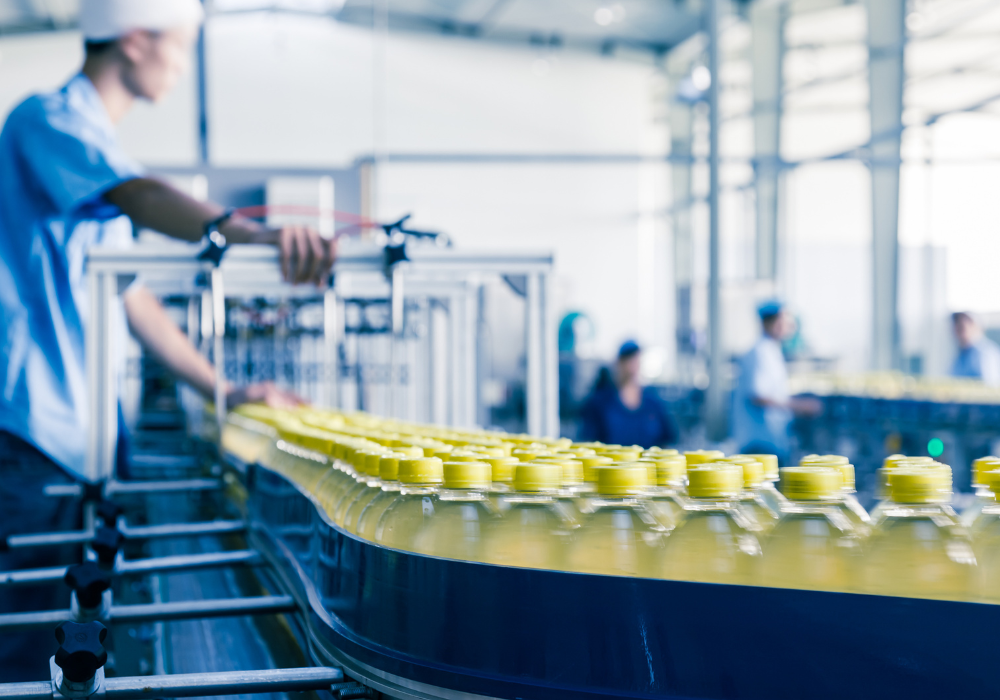
Food & Beverage >
Support safer shifts in food production and storage, where sanitation and timing are critical.
> Biotech & Pharma
See SafetyIQ set up for biotech and pharma
Tell us where your people work and the risks they face. We'll show you SafetyIQ configured for your biotech and pharma sites, crews and systems.
Book my free demo
Get a demo built around your sites, your teams, and the way your people work.
EHS, journey, and fatigue management software for field-heavy teams.

.png)

.png)