
What Is Process Safety Management?
What is process safety management? Learn how leading EHS professionals manage process safety programs, prevent major incidents, and build proactive safety cultures.
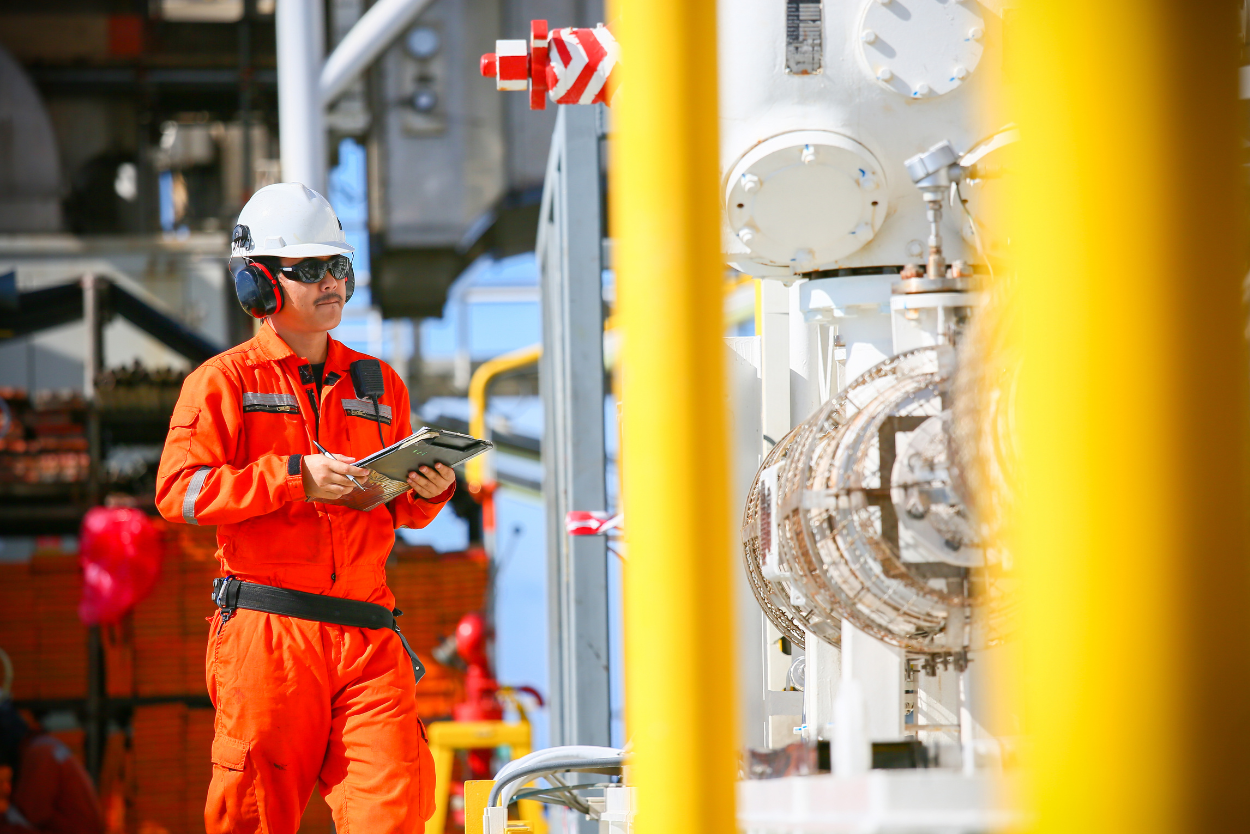
Every day, industrial facilities across the United States handle hazardous chemicals, pressurized systems, and complex processes that demand unwavering attention to safety. Process safety—the discipline that prevents catastrophic incidents in these environments—isn't just a regulatory requirement. It's a strategic investment in protecting your workforce, your community, and your organization's reputation.
But managing process safety effectively requires more than good intentions. It demands a systematic approach rooted in proven practices, clear communication, and the ability to track and respond to risk across your entire operation. This guide explores what process safety truly means, why it matters, and how leading safety professionals are transforming their programs to prevent incidents before they happen.
What Is Process Safety?
Process safety is the discipline of preventing major incidents in facilities that handle hazardous chemicals, energy, or materials. Unlike occupational safety—which focuses on slips, falls, and day-to-day injuries—process safety addresses the risks of fires, explosions, toxic releases, and catastrophic events that could affect workers, surrounding communities, and the environment.
The distinction matters. A slipped disk on a warehouse floor might affect one person. A loss of containment in a chemical reactor can affect thousands. Process safety is about preventing those catastrophic scenarios through rigorous management of equipment, procedures, and people.
The Scope of Process Safety
Process safety applies across industries where hazardous conditions exist:
- Chemical manufacturing – where reactions, pressures, and temperatures demand constant vigilance
- Oil and gas – where extraction and refining operations carry inherent risks
- Pharmaceutical production – where reactive materials and strict tolerances create unique hazards
- Food and beverage processing – where pressurized systems and thermal processes must be controlled
- Utilities and energy – where power generation and distribution systems operate at scale
- Water treatment facilities – where chemical addition and pressure management are critical
In each of these environments, process safety isn't an afterthought—it's foundational to operations.
Why Process Safety Management Matters
The consequences of inadequate process safety are stark. The chemical plant explosion in West Texas in 2013. The fertilizer facility disaster in Texas City. The refinery fires that have plagued industrial corridors for decades. These aren't isolated incidents—they're warnings about what happens when process safety systems fail.
But the case for process safety goes beyond preventing disasters. Strong process safety programs deliver measurable business value:
Regulatory Compliance
The EPA's Process Safety Management (PSM) standard under 29 CFR 1910.119 mandates specific safety practices for facilities handling threshold quantities of hazardous chemicals. OSHA enforces these requirements rigorously. Non-compliance leads to citations that can reach hundreds of thousands of dollars—and criminal liability in severe cases.
Operational Continuity
Unplanned shutdowns cost money. A loss of containment event forces facility evacuation, production halts, investigation timelines, and lengthy restart procedures. Process safety prevents these costly interruptions.
Workforce Confidence
Employees who trust that their employer takes process safety seriously show higher engagement, lower turnover, and greater willingness to report hazards. This creates a reinforcing cycle: better safety culture drives better hazard identification, which strengthens safety further.
Community Relations
Industrial facilities exist within communities. A strong process safety program demonstrates accountability to neighbors and reduces the anxiety that comes with living near hazardous operations.
Key Elements of Process Safety Management
Effective process safety management isn't a single initiative—it's a system of interconnected practices. The OSHA PSM standard defines 14 required elements. Let's explore the critical ones.
Process Safety Information
You cannot manage what you don't understand. Process safety information is the foundation: detailed documentation of equipment specifications, operating procedures, hazard assessments, and design basis.
This includes:
- Equipment data – design pressures, materials of construction, design temperatures, relief settings
- Process flow diagrams – showing all equipment, instrumentation, and connections
- Piping and instrumentation diagrams (P&IDs) – the technical blueprint of your process
- Standard operating procedures – detailed, validated instructions for starting up, operating, and shutting down processes
- Safety data sheets – hazard information for all materials handled
- Equipment inspection and maintenance records – ensuring equipment remains fit for service
The challenge: this information often lives in multiple systems, outdated documents, and institutional memory. EHS leaders struggle to maintain a single source of truth, which creates blind spots.
Hazard Analysis
Before you can prevent process hazards, you must understand them. Hazard analysis methodologies like HAZOP (Hazard and Operability), LOPA (Layer of Protection Analysis), and What-If analysis systematically examine what could go wrong and why.
A rigorous hazard analysis identifies:
- Deviations from normal operating conditions
- Potential causes of those deviations
- Consequences if controls fail
- Existing safeguards and their vulnerabilities
- Recommendations for additional protective measures
Mechanical Integrity
Equipment fails. Corrosion, vibration, fatigue, and age all degrade equipment integrity. Mechanical and safety integrity is the program that ensures equipment remains fit for its intended service.
This requires:
- Regular audits and inspections, and testing based on equipment-specific risk
- Maintenance procedures and preventive schedules
- Documentation of inspection results
- Corrective action protocols when issues are found
- Spare parts management for critical equipment
Management of Change
Facilities aren't static. Processes are modified, equipment is upgraded, staffing changes, and procedures are updated. Each change introduces risk. Management of change (MOC) is the discipline of evaluating modifications before implementation to ensure they don't create new hazards or degrade existing safeguards.
An effective MOC program requires:
- Pre-change hazard assessment
- Impact analysis on procedures, training, and documentation
- Review and approval before implementation
- Communication to all affected parties
- Documentation and verification post-implementation
Incident Investigation
When something goes wrong—near misses, minor incidents, or catastrophic events—investigation is essential. But investigation must go deeper than assigning blame. Root cause analysis examines the sequence of events and underlying system failures.
Effective incident investigation:
- Documents what happened in detail
- Identifies root causes (not just immediate causes)
- Recommends systemic improvements
- Assigns accountability for corrective actions
- Closes the loop by verifying that recommendations are implemented
Training and Competency
Knowledge decays. Employees turn over. New procedures replace old ones. Continuous training ensures that everyone who interacts with hazardous processes understands the risks and knows how to operate safely.
Process safety training must cover:
- Process-specific hazards and controls
- Standard operating procedures
- Proper use of equipment and safety devices
- Emergency response procedures
- Recognition of abnormal conditions
Common Challenges in Process Safety Management
Despite decades of guidance and standards, many organizations struggle with process safety. Here's why:
Information Fragmentation
Process safety documentation is scattered. P&IDs live in engineering. SOPs are in a shared drive that hasn't been updated since 2019. Hazard analyses sit in old notebooks. Inspection records are on paper. This fragmentation means critical information is inaccessible when decisions need to be made.
Competing Priorities
Process safety competes for budget and attention with production, cost reduction, and compliance with other standards. When pressure mounts to meet production targets, safety initiatives get deferred—even critical ones.
Regulatory Complexity
OSHA's PSM standard is prescriptive, but it doesn't provide a step-by-step roadmap. Organizations must interpret requirements, design their own systems, and demonstrate compliance. This complexity creates uncertainty about whether current practices actually meet the standard.
Knowledge Loss
Experienced process safety professionals retire. Institutional knowledge walks out the door. Successors inherit vague documentation and unwritten practices. Over time, critical understanding erodes.
Siloed Decision-Making
Engineering makes design changes without coordinating with operations. Operations implements procedures without input from maintenance. Safety reviews hazards in isolation from operational reality. When teams don't communicate, process safety suffers.
Building a Stronger Process Safety Program
Strengthening process safety requires intentional action across several fronts:
Start with a Process Safety Baseline
Conduct a comprehensive assessment of your current program against OSHA PSM requirements. Document gaps honestly. Prioritize based on risk. This creates a roadmap for improvement.
Centralize Critical Information
Consolidate process safety information into a system that all stakeholders can access. This should include:
- Current P&IDs and process flow diagrams
- Valid and updated SOPs
- Completed hazard analyses and recommendations
- Equipment specifications and maintenance histories
- Inspection and testing records
- Training records and competency assessments
When this information lives in a centralized, accessible location, decision-making improves and compliance becomes demonstrable.
Implement Structured Decision-Making
Use formal methodologies for hazard identification, change evaluation, and incident investigation. Don't rely on informal meetings and individual expertise. Documented, systematic processes ensure consistency and accountability.
Build a Reporting Culture
Create psychological safety for reporting hazards, near misses, and concerns. Anonymous reporting channels help. Recognition programs for hazard reporters reinforce the message that speaking up is valued. Investigation practices that focus on system improvements rather than punishment build trust.
Invest in Training and Competency
Allocate budget for process safety training as a non-negotiable operational expense. Use competency assessments to identify gaps. Refresh training regularly, especially when procedures change.
Embrace Continuous Improvement
Process safety isn't a destination—it's a discipline. Regular audits, management reviews, and metrics tracking identify opportunities for improvement. Lessons learned from near misses and incidents drive incremental enhancements.
The Role of Technology in Process Safety
Modern EHS software platforms are transforming how organizations manage process safety. Rather than relying on scattered documents and spreadsheets, leading organizations use integrated systems that:
- Centralize documentation – making process safety information accessible to everyone who needs it
- Streamline workflows – automating hazard analysis, change management, and incident investigation
- Enable real-time visibility – showing compliance status, outstanding corrective actions, and equipment status at a glance
- Facilitate communication – ensuring decisions and insights are shared across teams
- Generate compliance evidence – maintaining audit trails and documentation that demonstrate compliance with regulatory requirements
SafetyIQ, for example, helps EHS teams unify their process safety programs by consolidating information, enabling collaboration, and providing visibility into the health of their programs. When hazard analyses, maintenance records, and incident investigations are integrated, risk assessment becomes more accurate and decision-making improves.
Process safety is non-negotiable for any organization handling hazardous materials or operating complex industrial processes. The investment in building a strong process safety program pays dividends: prevented incidents, protected workers, regulatory compliance, and community confidence.
The path forward requires clarity about hazards, systematic management of controls, and a culture where safety is never compromised for convenience or cost. Organizations that commit to process safety—and invest in the systems, training, and culture to support it—demonstrate that they understand what's truly at stake.
Frequently Asked Questions About Process Safety
What's the difference between process safety and occupational safety?
Process safety and occupational safety are complementary but distinct disciplines. Occupational safety focuses on preventing day-to-day injuries—slips, falls, ergonomic injuries, repetitive strain, and similar hazards that affect individuals. These are managed through personal protective equipment, housekeeping standards, ergonomic assessments, and incident reporting. Occupational safety is important, but it typically affects individuals.
Process safety, by contrast, addresses catastrophic hazards that could result in loss of containment of hazardous chemicals or energy, fires, explosions, or toxic releases. These incidents can affect multiple people, surrounding communities, and the environment. Process safety is managed through technical controls, operational procedures, equipment reliability, and hazard management. The consequences of failure are qualitatively different—not one person hurt, but potentially dozens or hundreds affected.
Many organizations conflate the two. They track leading indicators, report injury rates, and conduct safety training—all important for occupational safety. But process safety requires additional rigor: detailed hazard analysis, mechanical integrity programs, management of change, and incident investigation rooted in system failures, not individual mistakes. Both are essential, but they require different management approaches.
What are the 14 elements of OSHA's Process Safety Management standard?
OSHA's Process Safety Management (PSM) standard, codified in 29 CFR 1910.119, requires 14 specific elements for facilities handling threshold quantities of hazardous chemicals. These elements are:
- Process Safety Information – Documentation of equipment specifications, process flow, hazard data, and equipment design bases
- Hazard Analysis – Systematic examination of processes to identify hazards and recommend protective measures
- Operating Procedures – Clear, detailed procedures for normal operations, startup, shutdown, and emergency situations
- Training – Process-specific training ensuring employees understand hazards and safe operating practices
- Contractors – Safety practices for outside contractors working on or near hazardous processes
- Pre-Startup Safety Review – Verification that new or modified processes meet safety specifications before startup
- Mechanical Integrity – Programs ensuring equipment remains fit for service through inspection, maintenance, and testing
- Hot Work Permits – Control of ignition sources near flammable materials
- Management of Change – Formal evaluation of modifications before implementation
- Incident Investigation – Systematic investigation of incidents and near misses to identify root causes
- Emergency Planning and Response – Procedures for responding to catastrophic releases or other emergencies
- Compliance Audits – Regular evaluation of program compliance with PSM requirements
- Trade Secrets – Protection of confidential process information while maintaining transparency for safety purposes
- Documentation and Records – Maintaining records demonstrating compliance with each element
Organizations handling threshold quantities of covered chemicals must have documented programs addressing all 14 elements. OSHA inspectors routinely cite facilities for gaps in these elements.
What is a Process Safety Information (PSI) system and why is it important?
Process Safety Information (PSI) is the technical foundation of any process safety program. It consists of comprehensive, accurate, current documentation describing the hazardous processes, equipment, materials, and operating conditions in your facility.
PSI typically includes:
- Piping and instrumentation diagrams (P&IDs) – schematic drawings showing all equipment, connections, control points, and instrumentation
- Process flow diagrams (PFDs) – simplified representations of material flows and major equipment
- Standard operating procedures (SOPs) – detailed step-by-step instructions for operating processes
- Equipment specifications – design pressure, design temperature, materials of construction, relief device settings, and other design parameters
- Safety data sheets (SDS) – hazard information for all chemicals handled
- Maintenance and inspection records – documentation of equipment condition and repair history
- Equipment failure history – records of past failures and lessons learned
Why is PSI critical? Because process safety management begins with understanding your processes. Hazard analysis cannot proceed without accurate PSI. Management of change requires current P&IDs. Incident investigation depends on understanding what the process should have been doing. Regulatory compliance audits review PSI to verify that facilities understand their hazards.
The challenge: PSI becomes outdated. Equipment is modified without updating drawings. Procedures are changed informally. Inspection records get lost. Organizations that maintain current, accessible PSI have more effective process safety programs. Those that don't have blind spots that create risk.
How do you conduct an effective Process Hazard Analysis?
A Process Hazard Analysis (PHA) is a systematic, disciplined examination of your process to identify hazards and assess the effectiveness of existing controls. OSHA doesn't mandate a specific methodology, but several are widely used.
Common PHA methodologies:
HAZOP (Hazard and Operability Study) – The most rigorous approach. A multidisciplinary team systematically examines each segment of the process, considering what deviations from normal operation could occur, what could cause those deviations, and what the consequences might be. Guide words like "more," "less," "reverse," and "as well as" prompt systematic thinking.
What-If Analysis – Less formal than HAZOP but often effective. Subject matter experts brainstorm "what if" scenarios and the team discusses potential consequences and controls.
Checklist Analysis – Using industry-standard checklists of common hazards to prompt discussion. Effective but less thorough than HAZOP.
Fault Tree Analysis – Starting with an undesired event and working backward to identify combinations of failures that could cause it. Useful for analyzing complex systems or specific incident scenarios.
Regardless of methodology, effective PHA requires:
- Multidisciplinary team – Operations staff who know the process, engineers who understand design, maintenance staff who know equipment reliability, and safety professionals who understand hazards
- Current process information – up-to-date P&IDs, equipment specifications, and operating procedures
- Structured documentation – clear recording of hazards identified, causes, consequences, existing controls, and recommendations
- Follow-up discipline – recommendations must be tracked, implemented, and verified. A PHA without follow-up is merely an academic exercise
Timing matters. PHAs should be conducted when processes are new or significantly modified. They should also be updated periodically—every three to five years is typical—to capture lessons learned and changes in operations or equipment.
What happens during an incident investigation in a process safety program?
When an incident occurs—whether a minor near-miss or a catastrophic release—investigation is essential. But process safety investigation isn't about assigning blame; it's about understanding system failures.
The investigation process typically includes:
Initial response and stabilization – First priority is stopping the incident, protecting people, and containing hazards. Investigation cannot proceed until the situation is stable.
Scene documentation – Before anything is changed, the scene is documented with photographs, measurements, and notes. This preserves evidence about what happened.
Evidence collection – Equipment damage, instrument readings, control system data, material samples, and other physical evidence are collected and preserved. This evidence tells the story of what occurred.
Witness interviews – People present during the incident are interviewed. Accounts are documented, though investigators recognize that eyewitness testimony is imperfect and must be corroborated by physical evidence.
Timeline development – A detailed chronological sequence of events is constructed. What was the operator doing? What alarms went off and in what order? What control actions were taken? This timeline, supported by control system logs and instrument data, shows the progression of the incident.
Root cause analysis – The investigation goes beyond immediate causes ("the operator didn't notice the high pressure alarm") to systemic factors. Why wasn't the operator paying attention? Was the alarm design poor? Had training gaps? Was the procedure unclear? Did equipment fail? Were there competing priorities that pushed safety aside?
Corrective action development – Based on root cause findings, recommendations are made to prevent recurrence. These might include design changes, procedure modifications, additional training, or process changes. The goal is systemic improvement, not just fixing this one incident.
Documentation and communication – The investigation report documents findings and recommendations. Lessons learned are shared across the organization so that other facilities learn from this incident.
Follow-up verification – Critical step often overlooked: tracking whether corrective actions are implemented and effective. Without verification, lessons are not learned.
Effective incident investigation creates a learning culture where near-misses and incidents drive continuous improvement rather than blame and defensiveness.
SafetyIQ brings incidents, inspections, training, journey management, lone worker safety and fatigue into one mobile app. Tell us about your crews and sites for tailored pricing.
Safety insights, straight to your inbox
New guides, monthly safety topics and SafetyIQ updates for EHS and operations leaders. Unsubscribe anytime.

Get a demo built around your sites, your teams, and the way your people work.

.png)

.png)