
Legacy Equipment Controls: Safety Risks
Aging machine controls create real safety hazards, from failing e-stops to arc flash risk. Learn how to find legacy equipment risk and engineer it out.
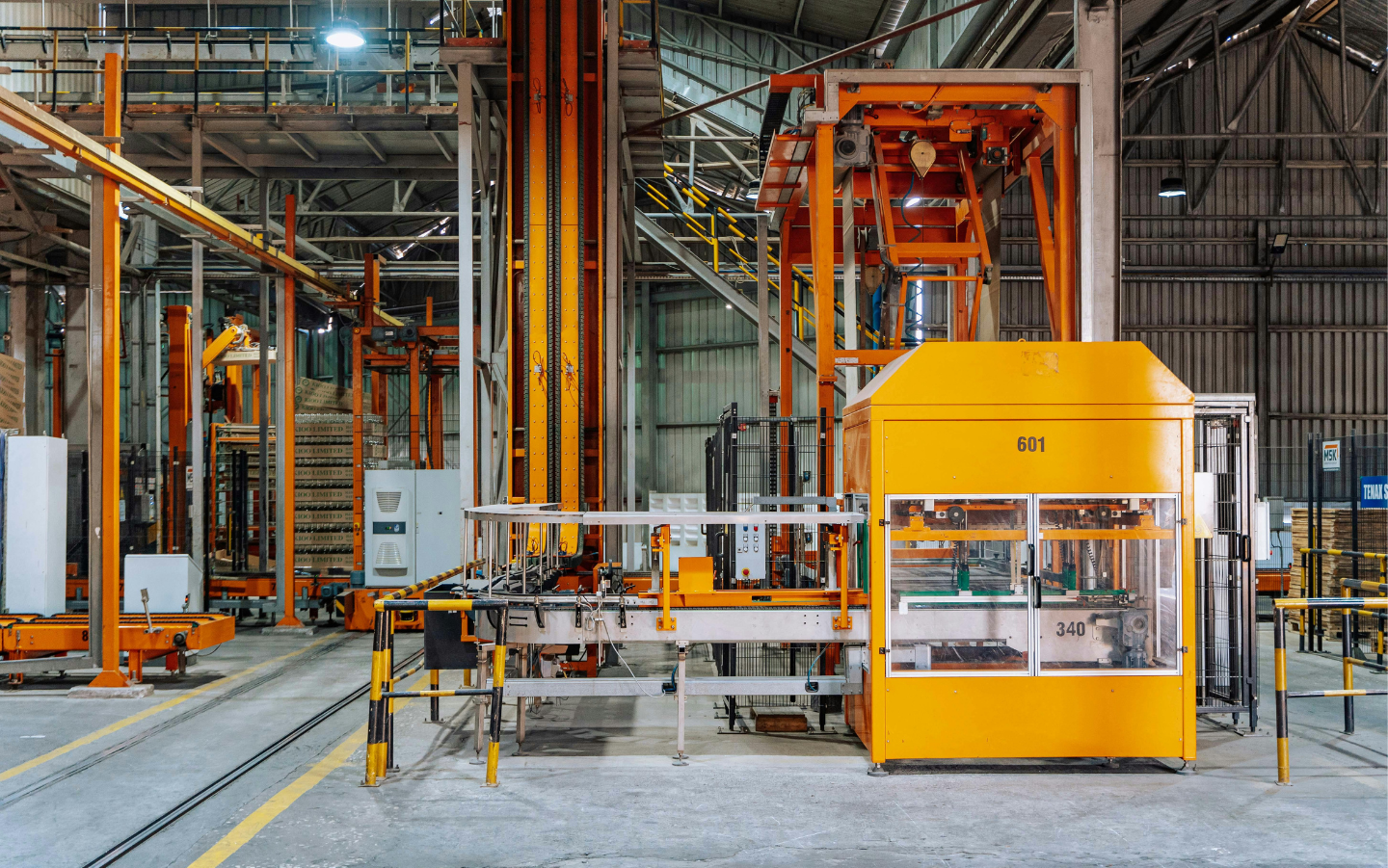
Walk the floor of almost any plant that has been running for a few decades and you will find it: the machine everyone calls reliable, controlled by a panel full of components that went out of production before half the workforce was born. The drive still spins, the heaters still heat, and production keeps shipping, so the equipment never makes it onto the capital plan. What rarely gets asked is a harder question. Is this machine still safe to operate, maintain, and troubleshoot in 2026?
For a growing number of manufacturers, the honest answer is no. Legacy control systems are not just a maintenance headache or an efficiency drag. They are a quiet, compounding safety liability, and because the risk builds gradually, it almost never appears on a hazard register until something goes wrong. This article breaks down why aging controls put people at risk, how to surface that risk with the safety data you already collect, and why control system modernization deserves a place in your safety strategy, not just your engineering budget.
Why Old Controls Are a Safety Problem, Not Just a Maintenance Problem
Most plants think about aging equipment in terms of downtime and repair cost. The safety dimension hides one layer deeper, in how the equipment fails and what people have to do to keep it running.
A machine designed and wired in the 1980s was built to the safety expectations of the 1980s. Standards for emergency stop circuits, safety interlocks, guarding integration, and control reliability have advanced dramatically since then, and a legacy panel that was perfectly compliant when installed may fall far short of what current consensus standards expect from a safety-related control system. Functional safety concepts such as monitored dual-channel e-stop circuits, safety-rated relays, and defined performance levels simply did not exist in the original design.
The second problem is failure behavior. Modern control architectures are designed to fail to a safe state and to tell you clearly what went wrong. Aging relay logic, obsolete drives, and undocumented field modifications often do neither. They fail intermittently, mysteriously, and sometimes dangerously, and every mystery failure pulls a technician into close contact with energized equipment to chase it.
That points to the third and least appreciated problem: exposure hours. Unreliable equipment gets touched constantly. Every breakdown means another lockout, another panel opened, another troubleshooting session under pressure to get the line running. Even when every procedure is followed perfectly, the laws of probability are simple: the more often people interact with hazardous energy, the more opportunities exist for something to go wrong. Aging controls manufacture those opportunities daily.
The Specific Hazards Hiding in Legacy Panels
When safety professionals audit older equipment closely, the same categories of risk show up again and again.
Emergency stops and interlocks that would not pass scrutiny today. Single-channel e-stop circuits with no monitoring, stop functions that merely pause the program instead of removing power, interlock switches that have been jumpered out during some long-forgotten breakdown, and guard switches that can be defeated with a zip tie. On legacy machines, the gap between the e-stop button being present and the e-stop function being trustworthy can be enormous. OSHA's machine guarding requirements still apply in full to a forty-year-old machine, and so does the obligation to control hazardous energy during service under the lockout/tagout standard.
Arc flash and electrical exposure from aging drive systems. Old DC drive systems are a particular concern. They run hot, their components drift and fail with age, replacement parts are increasingly scarce, and diagnosing them frequently means working in or near an energized cabinet. Every additional hour of live troubleshooting is an additional hour of arc flash and shock exposure, the exact exposure NFPA 70E exists to minimize.
Alarm blindness and missing diagnostics. Legacy systems either tell operators nothing or tell them everything through a wall of nuisance alarms that everyone has learned to silence. Either way, the result is the same: abnormal conditions, such as a climbing melt pressure, a failed thermocouple reading, or a motor pulling abnormal current, go unnoticed until they become incidents instead of alerts.
Obsolete parts and improvised repairs. When the correct component can no longer be purchased, maintenance teams do what resourceful maintenance teams have always done: they adapt. Substitute parts, bypassed circuits, hand-drawn schematic corrections taped inside the door. Each improvisation is rational in the moment and each one moves the machine further from any documented, validated safe state.
Tribal-knowledge operation. Eventually only one or two veterans truly understand the machine's quirks, the startup sequence that avoids the pressure spike, and the breaker that trips if you look at it wrong. When those people retire, the knowledge leaves, and the next person learns the quirks the hard way.
Finding Legacy Risk in the Data You Already Have
The encouraging news is that legacy control risk is highly visible if you know where to look, and most of the evidence is already sitting in your safety and maintenance records.
Start by cross-referencing your incident and near-miss reports against your equipment list. Aging machines tend to announce themselves through clusters: repeated minor injuries during jam clearing, near-misses during troubleshooting, recurring unexpected startup or stored energy surprises, and a lockout/tagout frequency far above comparable equipment. Pull your work order history for the same assets and look at the ratio of reactive to planned maintenance; a machine that is constantly worked on reactively is a machine that is constantly creating exposure.
This is where a modern safety management platform earns its keep. Capturing inspections, near-misses, and equipment-related observations digitally, and then trending them by asset, turns scattered anecdotes into an unmistakable pattern you can put in front of leadership. [SAFETYIQ LINK GOES HERE — suggested anchor: "safety management software" or "digital inspection and near-miss tracking"] When the data shows that one extrusion line accounts for a third of your maintenance-related near-misses, the conversation about that machine changes completely.
Round out the picture with a focused legacy-controls audit: verify that every e-stop actually removes energy, test interlocks for defeat, confirm schematics match reality, check arc flash labeling and incident energy studies against the current installation, and inventory which control components are obsolete. Score each machine on both likelihood and consequence, and you have a defensible risk ranking instead of a gut feeling.
Engineering the Hazard Out Through Control Modernization
The hierarchy of controls is clear about what to do with a hazard you have identified: eliminate or engineer it out before relying on procedures and PPE. For legacy equipment, that means modernization, replacing obsolete drives, relay logic, and operator interfaces with current, safety-rated control architecture.
A well-executed retrofit attacks every hazard category at once. Safety circuits are rebuilt to current standards with monitored e-stops and properly integrated interlocks. Aging DC drives are converted to modern AC drives, which run cooler, fail more predictably, diagnose themselves, and dramatically reduce the live troubleshooting that drives electrical exposure. Real diagnostics replace mystery failures, so technicians arrive knowing what failed instead of opening an energized cabinet to find out. And documentation is regenerated to match the machine as it actually exists.
Plastics processors offer a vivid example, because extrusion lines are exactly the kind of equipment that runs for decades on original controls while handling high temperatures, high melt pressures, and rotating machinery. Specialist firms now build pre-engineered extruder control system upgrades that replace legacy drives, PLCs, and operator interfaces on existing lines, bringing modern safety circuits, zone temperature monitoring, alarm diagnostics, and DC-to-AC drive conversions to machines that would otherwise keep running 1970s-era controls indefinitely. The production case for these retrofits usually leads the conversation, but the safety case rides along with it: fewer breakdowns means fewer exposure hours, and modern protective functions catch the pressure spike before it becomes a blowout.
The same logic applies across stamping, converting, packaging, and process equipment. The question is not whether the old machine can keep running. It usually can. The question is how much human exposure you are willing to spend keeping it running.
Making the Business Case to Leadership
Safety professionals often struggle to compete for capital against throughput projects, but legacy control modernization is unusual in that it does not have to be sold on safety alone. The same project that rebuilds the e-stop circuit also cuts unplanned downtime, stabilizes quality, shrinks the spare parts problem, and reduces dependence on retiring experts. Frame the proposal that way: lead with the documented risk pattern from your incident and maintenance data, quantify the exposure hours and downtime the legacy system generates, and present modernization as the single intervention that addresses both. Few capital requests can honestly claim to protect people and production in the same line item. This one can.
The Bottom Line
Every plant has at least one machine running on borrowed time and obsolete controls, and the longer it runs, the more invisible the risk becomes. Surface that risk with the data you already collect, verify it with a focused audit, and then do what the hierarchy of controls has always demanded: engineer the hazard out. Modern control systems will not eliminate every risk on your floor, but they remove an entire class of failures, exposures, and improvisations that procedures alone can never fully contain.
Frequently Asked Questions
Are old machines automatically out of compliance with OSHA?
No. OSHA standards generally do not include grandfather clauses, but they also do not require equipment to be replaced simply because of its age. A legacy machine must still meet current OSHA requirements for machine guarding, control of hazardous energy, and electrical safe work practices, and that is where age becomes a problem in practice. Original single-channel e-stops, defeated interlocks, missing documentation, and energized troubleshooting on obsolete drives are the conditions that generate citations and injuries. Consensus standards such as ANSI B11 and NFPA 79 also evolve, and while they are not law, OSHA can reference them as evidence of recognized hazards under the General Duty Clause. The practical takeaway is that compliance is judged on the machine's current condition and the exposure it creates, not on what was acceptable the year it was installed.
How do I know if a control system upgrade is worth it versus replacing the machine?
Look at the mechanical core first. If the base machine, such as the frame, barrel, gearbox, and screw of an extruder, remains in sound condition, a controls and drive retrofit typically delivers most of the benefit of a new machine at a fraction of the cost and downtime, because the mechanical platform often outlives its electronics by decades. Replacement makes more sense when the mechanical systems themselves are worn out, when the machine can no longer meet product requirements at any control level, or when parts of the base machine are also unsupportable. A focused audit comparing retrofit cost against replacement cost, lost production during each option, and the risk reduction achieved usually makes the answer obvious within a day of analysis.
What should a legacy equipment safety audit actually check?
Concentrate on five areas. First, stop functions: physically verify that every e-stop and guard interlock removes hazardous energy rather than merely pausing the program, and confirm none have been bypassed. Second, electrical condition: check arc flash studies and labeling against the installation as it exists today, and inventory obsolete drives and components that force live troubleshooting. Third, documentation: compare schematics to actual wiring and flag undocumented modifications. Fourth, exposure history: pull lockout/tagout frequency, reactive work orders, near-misses, and injuries for the asset to quantify how often people interact with it under pressure. Fifth, knowledge risk: identify how many people can safely operate and troubleshoot the machine. Scoring each machine across these five areas produces a ranked modernization list that stands up to both leadership and an OSHA inspector.
SafetyIQ brings incidents, inspections, training, journey management, lone worker safety and fatigue into one mobile app. Tell us about your crews and sites for tailored pricing.
Safety insights, straight to your inbox
New guides, monthly safety topics and SafetyIQ updates for EHS and operations leaders. Unsubscribe anytime.



Get a demo built around your sites, your teams, and the way your people work.
EHS, journey, and fatigue management software for field-heavy teams.

.png)

.png)