
Lean Manufacturing Explained with Core Principles
What is lean manufacturing? Learn the core lean principles, the 8 wastes, key tools like 5S and kaizen, and how to implement lean in your facility.
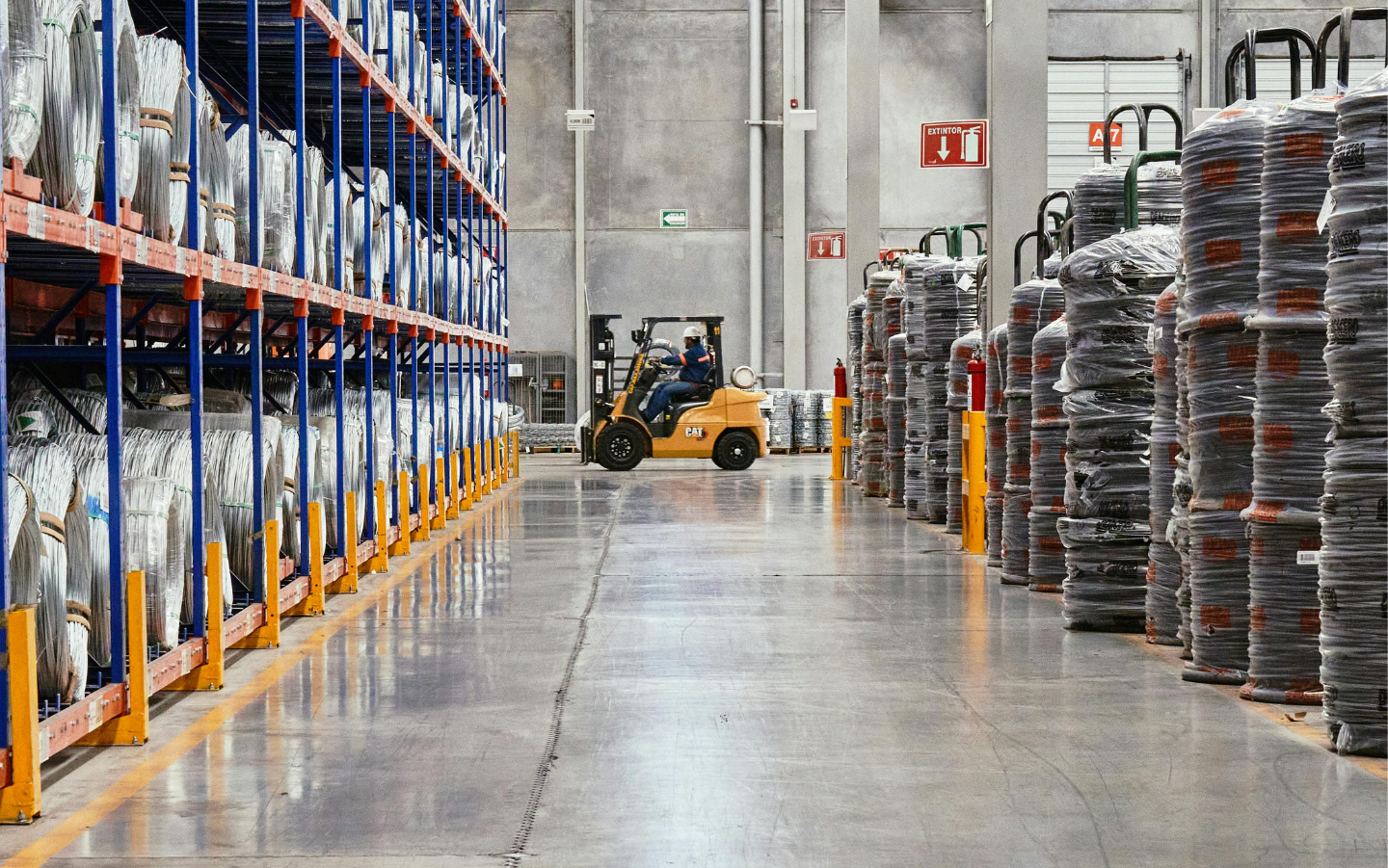
Walk through any high-performing factory and you will notice the same things: clean, organized workstations, materials arriving exactly where and when they are needed, visual boards showing the status of production at a glance, and operators who can stop the line the moment something goes wrong. None of that happens by accident. It is the visible result of lean manufacturing, a management philosophy that has reshaped industrial operations around the world for more than half a century.
Yet for every plant that has transformed itself with lean, there are several where the effort stalled, the banners faded, and the old habits crept back. The difference almost never comes down to the tools. It comes down to whether leadership understood what lean actually is, why it works, and what it demands of an organization. This article covers all of it: what lean manufacturing means, where it came from, the principles and wastes at its core, the most important tools in the lean toolkit, the role of lean management in manufacturing and safety cultures, and a realistic path for implementing it in your own operation.
What Is Lean Manufacturing?
At its simplest, lean manufacturing is a systematic approach to identifying and eliminating waste, defined as any activity that consumes resources without creating value for the customer. Everything in lean flows from that single idea. If the customer would not willingly pay for an activity, lean treats that activity as a target for reduction or removal.
That definition is deceptively simple, because acting on it forces an organization to answer hard questions. What does the customer actually value? Which of our processes contribute to that value, and which exist only because of how we have always done things? How much of our lead time is spent actually transforming material versus waiting, moving, inspecting, and reworking? In most factories that have never examined themselves this way, genuine value-adding time accounts for a tiny fraction of total lead time, often in the low single digits. Lean exists to attack everything else.
The roots of lean trace to the Toyota Production System, developed in postwar Japan by Taiichi Ohno, Shigeo Shingo, and the Toyoda family. Facing scarce capital, limited space, and a small domestic market, Toyota could not afford the massive batch-and-queue production runs of American automakers. Instead, the company engineered a system built on producing only what was needed, when it was needed, in the amount needed, while empowering every worker to surface and solve problems.
Western researchers studying Toyota's dramatic quality and productivity advantages popularized the term lean in the late 1980s, most famously through the book The Machine That Changed the World, and the methodology has since spread far beyond automotive into aerospace, food processing, pharmaceuticals, healthcare, construction, and even software development.
A common misconception is that lean manufacturing simply means cutting costs or running with fewer people. That framing misses the point and frequently sabotages implementations. Lean is fundamentally about increasing the ratio of value to effort, shortening the time between customer order and delivery by removing the friction in between. Cost reduction is a byproduct of a faster, smoother, more capable system, not the goal pursued directly at the expense of people and quality.
The Five Core Lean Principles in Manufacturing
In their landmark work, James Womack and Daniel Jones distilled the Toyota approach into five principles that remain the backbone of every serious lean transformation.
1. Define value from the customer's perspective. Value is whatever the customer is willing to pay for, expressed in terms of a specific product with specific capabilities at a specific price and time. Internal convenience, departmental tradition, and accounting allocations do not define value. The customer does.
2. Map the value stream. A value stream is the complete sequence of actions, both value-adding and non-value-adding, required to bring a product from raw material to the customer. Mapping it end to end, typically through value stream mapping, exposes where material sits idle, where information loops back, and where waste hides. Most organizations are genuinely shocked the first time they see their full value stream on one page.
3. Create flow. Once waste is visible, the goal is to make value-creating steps flow smoothly with minimal interruption, ideally one piece at a time. That often means breaking up departmental silos, relocating equipment into product-focused cells, shrinking batch sizes, and balancing work so no station starves or chokes the next.
4. Establish pull. Instead of pushing product downstream based on forecasts, a pull system produces only in response to actual downstream consumption. Kanban signals, supermarkets, and tightly capped work-in-process inventory are the classic mechanisms. Pull prevents the overproduction that batch systems generate by design.
5. Pursue perfection. Lean is not a project with an end date. As flow improves and inventory buffers shrink, new problems surface, and each round of improvement reveals the next. Organizations that internalize this principle build continuous improvement, kaizen, into daily work rather than treating it as an occasional event.
The Eight Wastes Lean Manufacturing Targets
Taiichi Ohno originally identified seven wastes, and modern practice adds an eighth. The common acronym DOWNTIME makes them easy to remember:
- Defects — products or work that fail to meet specification, triggering scrap, rework, warranty claims, and lost customer trust.
- Overproduction — making more, sooner, or faster than the next process or customer requires. Ohno considered this the worst waste because it generates and conceals all the others.
- Waiting — operators idle while machines cycle, machines idle while waiting for material, orders sitting in queues between departments.
- Non-utilized talent — failing to engage the knowledge, skills, and ideas of the people who run the process every day.
- Transportation — unnecessary movement of materials and product between locations, which adds handling, damage risk, and lead time but no value.
- Inventory — raw material, work-in-process, and finished goods beyond what the system actually needs, tying up cash and hiding problems behind buffers.
- Motion — wasted movement by people: reaching, bending, searching, walking for tools and parts that should be at point of use.
- Extra processing — doing more work than the customer requires, from redundant inspections and approvals to over-engineered tolerances.
Training every employee to see these eight wastes in their own work area is one of the highest-leverage moves a manufacturer can make, because waste that nobody recognizes can never be eliminated.
Essential Lean Tools and Methods
Lean manufacturing comes with a rich toolkit. The tools matter, but each exists to solve a particular problem, and grabbing tools at random is the most common way implementations fail. Here are the ones nearly every transformation relies on.
5S workplace organization. Sort, Set in Order, Shine, Standardize, and Sustain. 5S creates a clean, visually organized workplace where abnormalities are instantly obvious, tools have homes, and time is never lost searching. It is usually the first step in a lean journey because it builds discipline and makes every subsequent improvement easier to see and hold.
Value stream mapping (VSM). A pencil-and-paper diagnostic that documents material and information flow for a product family, quantifies lead time versus processing time, and provides the blueprint for designing the future state.
Kaizen. Continuous, incremental improvement carried out by the people who do the work, both as daily habit and as focused multi-day kaizen events that attack a specific problem with a cross-functional team.
Kanban. Visual pull signals, traditionally cards or empty containers, that authorize production or material movement only when downstream consumption creates a need, capping inventory and synchronizing flow.
Standardized work. The current best-known method for a task, documented with its sequence, timing, and standard work-in-process. Standards are the baseline that makes improvement measurable; without them, every gain evaporates.
SMED (Single-Minute Exchange of Die). A structured method for slashing changeover times by converting internal setup steps to external ones and streamlining what remains. Fast changeovers are what make small batches and flexible scheduling economically possible.
Total Productive Maintenance (TPM). Engaging operators in routine equipment care while maintenance focuses on planned and predictive work, driving toward zero unplanned downtime measured through overall equipment effectiveness (OEE).
Jidoka and poka-yoke. Jidoka means building in quality by giving machines and operators the ability to stop immediately when an abnormality occurs. Poka-yoke devices mistake-proof processes so errors are physically prevented or instantly detected rather than discovered downstream.
Lean Management in Manufacturing: Why Culture Decides Everything
The tools above are the visible ten percent of lean. The decisive ninety percent is lean management in manufacturing leadership behavior, and it is where most failed implementations actually failed.
Traditional management improves results by directing people harder. Lean management improves results by improving processes, and it assigns leaders a different job: go to the gemba, the real place where work happens, observe the process directly, ask questions, and develop people's problem-solving ability rather than dispensing answers. Daily tiered accountability meetings, leader standard work, visual management boards, and structured problem-solving methods such as A3 thinking and PDCA give this philosophy a repeatable operating rhythm.
Lean management also redefines the response to problems. In a traditional plant, a surfaced problem invites blame, so problems stay hidden until they explode. In a lean plant, surfacing a problem is treated as a contribution, because every exposed problem is an improvement opportunity. Toyota's famous andon cord, which any operator can pull to stop the line, only works because management genuinely thanks the puller. Build that psychological safety and the workforce hands you thousands of improvements a year. Skip it, and the most elegant kanban system in the world will quietly rot.
This is also why lean cannot be delegated to a continuous improvement department while executives carry on as before. When leadership measures supervisors purely on output, schedules override standard work, and maintenance is deferred to hit a monthly number, employees learn instantly what actually matters, and it is not lean.
The Measurable Benefits of Going Lean
Manufacturers that implement lean seriously and stick with it report consistent, compounding gains. Typical results documented across industries include lead time reductions of 50 to 90 percent, inventory reductions of 30 to 70 percent, productivity improvements of 25 to 50 percent, quality defect reductions of 50 percent or more, and significant floor space recovered as inventory and clutter disappear. Cash flow improves because money is no longer buried in stockpiles, and on-time delivery climbs because shorter, more predictable lead times make promises easier to keep.
The less quantifiable benefits are arguably larger. Safer, more organized workplaces reduce injuries. Employees who are asked to think, not just produce, engage more deeply and stay longer. And an operation that can reliably deliver quality product in days instead of weeks wins business that competitors with bloated lead times simply cannot touch.
How to Implement Lean Manufacturing: A Realistic Roadmap
There is no universal recipe, but successful transformations tend to follow a recognizable arc.
Phase 1: Build understanding and commitment. Educate the leadership team first, not the shop floor. Visit lean plants, read deeply, and agree on why the organization is pursuing lean, framed around customers and growth rather than headcount cuts. Make an explicit commitment that no one will lose their job as a result of an improvement, or improvement ideas will dry up immediately.
Phase 2: Diagnose with a value stream map. Pick one important product family and map its current state from order to delivery. Quantify lead time, inventory, quality, and delivery performance to establish the baseline, then design a future state with specific, dated targets.
Phase 3: Stabilize the basics. Implement 5S, standardized work, and basic visual management in the pilot area. Address chronic equipment downtime with TPM fundamentals. Flow cannot survive on an unstable foundation.
Phase 4: Create flow and pull in the pilot. Rearrange the pilot value stream for flow, reduce batch sizes using SMED, connect processes with kanban, and level the schedule. Expect problems to surface in volume; that is the system working, not failing.
Phase 5: Spread and sustain. Expand value stream by value stream, install daily management routines, develop internal coaches, and tie improvement work to strategy through policy deployment. Audit relentlessly, because entropy never sleeps.
Most organizations see meaningful pilot results within three to six months, but a culture-deep transformation is honestly a three-to-five-year journey, and the leaders who acknowledge that up front are the ones who finish it.
The Bottom Line
Lean manufacturing endures because it is built on a truth that never goes out of date: customers pay for value, and everything else is cost, delay, and risk. The companies that win with lean are not the ones with the most consultants or the prettiest boards. They are the ones whose leaders changed how they manage, whose employees were taught to see waste and trusted to eliminate it, and who kept improving long after the initial enthusiasm faded. Start with one value stream, respect your people, and let results build the momentum.
Lean Manufacturing Frequently Asked Questions
What is lean manufacturing?
Lean manufacturing is a production philosophy and management system focused on maximizing customer value while systematically eliminating waste, meaning any activity that consumes time, money, or effort without creating something the customer would pay for. Developed from the Toyota Production System in postwar Japan and popularized worldwide in the 1990s, lean organizes work around five principles: defining value from the customer's perspective, mapping the value stream, creating smooth flow, producing to actual demand through pull systems, and pursuing perfection through continuous improvement. In practice, a lean operation features short lead times, low inventories, visual management, standardized work, and a workforce actively engaged in solving problems. Lean is not a cost-cutting program or a set of tools to install; it is an operating system and culture that changes how a company manages daily work and improvement.
What is 5S lean manufacturing?
5S is the foundational workplace organization method within lean manufacturing, named for five Japanese terms translated as Sort, Set in Order, Shine, Standardize, and Sustain. Sort removes everything from the work area that is not needed for current work. Set in Order gives every remaining tool, part, and document a clearly labeled home, positioned for efficient use. Shine cleans the area thoroughly and turns cleaning into inspection, so leaks, wear, and abnormalities are caught early. Standardize establishes the rules, schedules, and visual cues that keep the first three S's in place across shifts and people. Sustain builds the discipline and audit habits that prevent backsliding. 5S matters because a visually organized workplace makes abnormalities obvious within seconds, eliminates time wasted searching, improves safety, and creates the stable foundation that flow, pull, and standardized work all depend on. It is usually the first method deployed in a lean implementation.
What does lean manufacturing mean?
The term lean was coined by researcher John Krafcik and popularized by the MIT study published as The Machine That Changed the World, which compared Toyota's production system to Western mass production. Lean was chosen because Toyota's system achieved more with less of everything: less inventory, less floor space, less capital, fewer defects, and shorter lead times, while delivering greater variety and quality. So lean manufacturing literally means producing without excess, an operation trimmed of activities that add cost but not value. Importantly, lean does not mean understaffed, fragile, or cheap. A genuinely lean operation is more robust than a traditional one because problems surface immediately and get solved at the root rather than being buried under inventory buffers. The meaning is best summarized as a relentless focus on shortening the timeline from customer order to delivery by removing waste at every step.
How do you implement lean manufacturing?
Successful implementation follows a deliberate sequence rather than a tool blitz. Start by educating and aligning the leadership team, including a public commitment that improvements will not cost anyone their job. Select one significant product family and create a current-state value stream map to expose where time and inventory accumulate, then design a future state with measurable targets. Stabilize the pilot area with 5S, standardized work, and basic equipment reliability before attempting flow, because flow collapses on an unstable foundation. Next, rearrange processes for continuous flow, shrink batch sizes through quick changeover techniques, and connect operations with pull signals such as kanban. Install daily management routines, visual boards, tiered meetings, and structured problem solving, so gains are held and improvement becomes habitual. Finally, expand value stream by value stream while developing internal lean coaches. Expect visible pilot results in three to six months and plan for a multi-year cultural transformation.
What are lean principles in manufacturing?
The five lean principles, articulated by James Womack and Daniel Jones, are the conceptual framework behind every lean tool. First, specify value strictly from the end customer's point of view, for a specific product at a specific price and time. Second, identify the value stream, the complete chain of actions required to deliver that product, and expose every step that creates no value. Third, make the value-creating steps flow, moving product continuously in small quantities instead of large batches that sit in queues. Fourth, let the customer pull value, producing only in response to real downstream demand rather than forecasts. Fifth, pursue perfection, treating improvement as endless because removing one layer of waste always reveals the next. Supporting these five are two cultural pillars drawn from Toyota: continuous improvement, or kaizen, and respect for people, which holds that the workers closest to the process are its most qualified improvers.
SafetyIQ brings incidents, inspections, training, journey management, lone worker safety and fatigue into one mobile app. Tell us about your crews and sites for tailored pricing.
Safety insights, straight to your inbox
New guides, monthly safety topics and SafetyIQ updates for EHS and operations leaders. Unsubscribe anytime.



Get a demo built around your sites, your teams, and the way your people work.
EHS, journey, and fatigue management software for field-heavy teams.

.png)

.png)