
Ethanol Safety Guide: SDS, Hazards, and Safe Handling
Ethanol hazards include fire risks, vapor exposure, and chemical irritation. Explore ethanol SDS information, labeling requirements, and essential workplace safety practices.
Ethanol is one of the most commonly used chemicals in industrial workplaces, laboratories, healthcare facilities, and manufacturing environments. While many people associate ethanol with alcoholic beverages, industrial ethanol is widely used as a solvent, disinfectant, fuel additive, and manufacturing component. Because it is highly flammable and can present health risks with prolonged exposure, organizations must implement proper safety procedures when handling ethanol.
Understanding ethanol hazards, reviewing ethanol SDS (Safety Data Sheet) information, and implementing effective workplace safety measures are essential for protecting workers. Employers must ensure that employees understand how to store, handle, label, and respond to ethanol-related hazards.
This guide explains ethanol hazards, key information found in ethanol SDS documentation, proper labeling practices, and the safety measures organizations should follow to reduce workplace risks.
What Is Ethanol?
Ethanol, also known as ethyl alcohol, is a clear, colorless liquid that evaporates quickly and has a characteristic odor. It is widely used in industrial processes because it dissolves many substances and evaporates without leaving residue.
Industrially, ethanol is used in several applications. It is commonly used in pharmaceuticals, cleaning products, cosmetics, chemical manufacturing, laboratory testing, and fuel production. In many workplaces, ethanol serves as a solvent for inks, coatings, adhesives, and disinfectants.
Despite its common use, ethanol presents several hazards that must be managed carefully. It is highly flammable, produces combustible vapors, and can cause irritation or health effects with excessive exposure. Because of these risks, safety programs must address both fire prevention and worker exposure.
Understanding ethanol hazards and implementing appropriate safety measures helps organizations prevent accidents and maintain compliance with workplace safety regulations.
Ethanol Hazards in the Workplace
Ethanol presents multiple workplace hazards that safety professionals must evaluate and control. These hazards involve fire risks, chemical exposure, and environmental factors.
Flammability Risks
Ethanol is classified as a highly flammable liquid. It has a relatively low flash point, meaning it can ignite easily when exposed to heat, sparks, or open flames.
Ethanol vapors can travel along surfaces and ignite when they encounter an ignition source. This means fires can occur even when the chemical is not directly near a spark or flame.
In environments where ethanol is used in large quantities, vapor accumulation can create explosive atmospheres if ventilation is insufficient.
Facilities must ensure that ignition sources such as open flames, hot equipment, and electrical sparks are controlled in areas where ethanol is stored or handled.
Vapor Exposure
Ethanol evaporates quickly, which means vapors may accumulate in confined or poorly ventilated spaces. Workers exposed to high concentrations of ethanol vapor may experience symptoms such as dizziness, headaches, or respiratory irritation.
While ethanol is not considered highly toxic compared to some industrial chemicals, prolonged or repeated exposure can affect the nervous system and lead to fatigue or impaired coordination.
Ventilation systems help control vapor levels and reduce worker exposure.
Skin and Eye Irritation
Direct contact with ethanol can irritate the skin and eyes. Repeated skin exposure may lead to dryness, redness, or irritation.
If ethanol splashes into the eyes, it can cause burning sensations, redness, and temporary visual disturbance.
Personal protective equipment such as safety goggles and chemical-resistant gloves helps prevent these types of exposure.
Understanding Ethanol SDS (Safety Data Sheet)
The ethanol SDS is one of the most important documents for understanding chemical hazards and safety procedures. Safety Data Sheets provide standardized information that helps workers and employers identify risks and implement appropriate controls.
Under OSHA’s Hazard Communication Standard, employers must ensure that Safety Data Sheets are readily accessible to workers who may be exposed to hazardous chemicals.
Key Sections of an Ethanol SDS
Safety Data Sheets follow a standardized format with 16 sections that provide detailed information about chemical hazards and safe handling practices.
The SDS typically includes sections covering chemical identification, hazard classification, safe handling instructions, and emergency response procedures.
Hazard Identification
The hazard identification section explains the risks associated with ethanol. This includes its classification as a highly flammable liquid and potential health hazards related to exposure.
Workers can review this section to understand the primary dangers of ethanol and the precautions required to prevent accidents.
First Aid Measures
The SDS includes detailed instructions for responding to chemical exposure. This section explains what to do if ethanol is inhaled, ingested, or comes into contact with the skin or eyes.
Having clear first aid procedures helps organizations respond quickly to workplace incidents.
Fire-Fighting Measures
Because ethanol is highly flammable, the SDS provides important information about fire hazards and appropriate extinguishing methods.
Firefighting instructions typically recommend alcohol-resistant foam, carbon dioxide, or dry chemical extinguishers.
Handling and Storage
The handling and storage section outlines best practices for working with ethanol safely. This includes recommendations for ventilation, proper containers, and separation from ignition sources.
Organizations should incorporate SDS guidance into their workplace safety procedures.
Ethanol Labeling Requirements
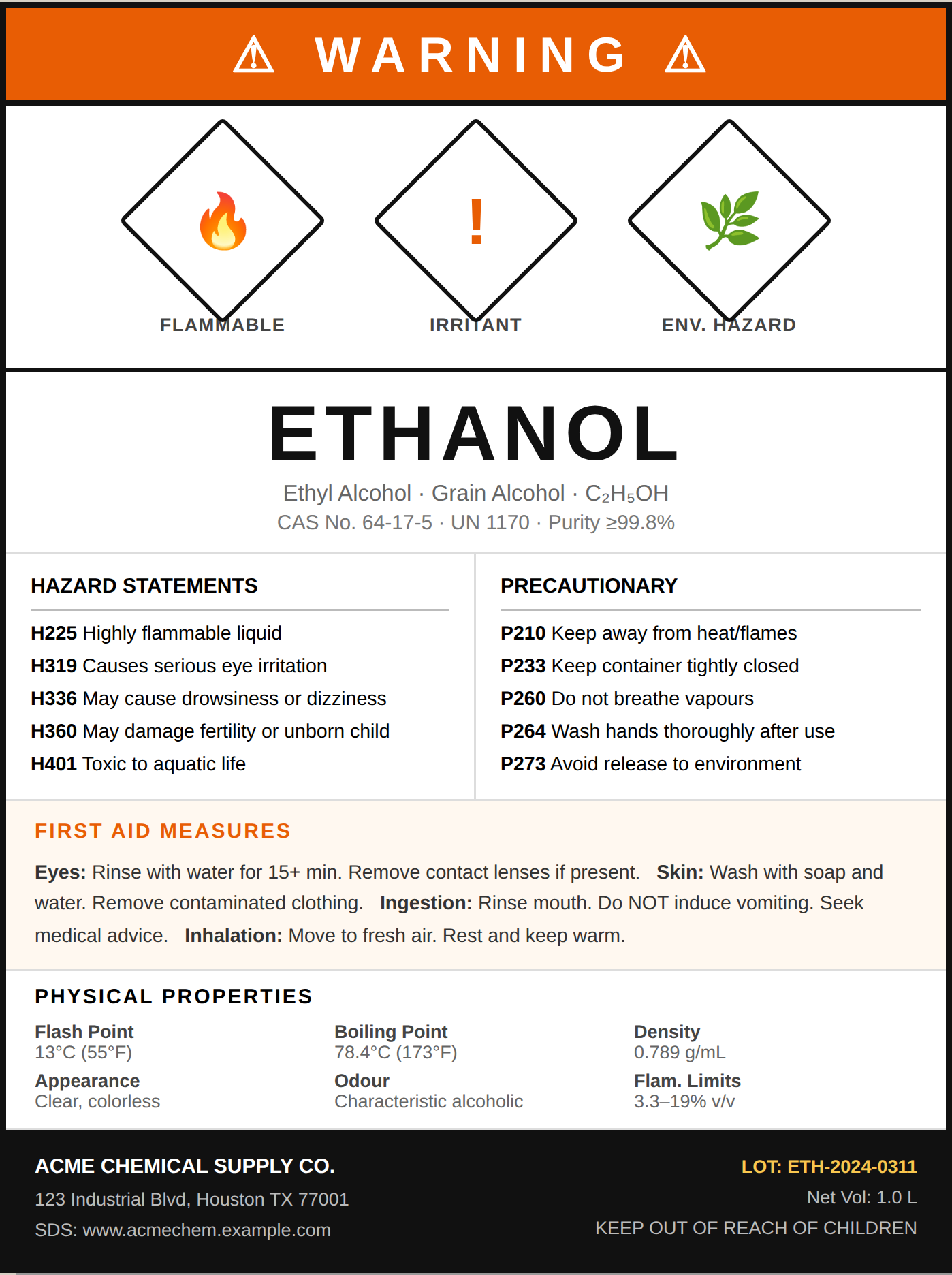
Proper labeling is essential for communicating chemical hazards and preventing accidents. Ethanol containers must be labeled according to OSHA’s Hazard Communication Standard and the Globally Harmonized System (GHS).
Required Label Elements
Ethanol hazard labels typically include several standardized elements designed to quickly communicate chemical risks.
The signal word used on ethanol labels is usually “Danger”, indicating that the chemical presents serious hazards.
Labels must also include hazard statements such as “Highly flammable liquid and vapor.” These statements clearly describe the dangers associated with the chemical.
GHS Pictograms
Ethanol labels often include GHS pictograms to visually communicate hazards. The most common symbol used for ethanol is the flame pictogram, which indicates flammable substances.
These symbols help workers quickly recognize hazards even if they are unfamiliar with the chemical.
Precautionary Statements
Precautionary statements on labels provide instructions for safe handling, storage, and emergency response. These statements may include guidance such as keeping ethanol away from heat sources, using proper ventilation, and wearing appropriate protective equipment.
Proper labeling ensures workers can quickly identify hazards and follow safe handling procedures.
Safe Handling Practices for Ethanol
Organizations that use ethanol must establish clear safety procedures to reduce risks and protect workers.
Ventilation and Engineering Controls
Adequate ventilation is essential when working with ethanol. Exhaust ventilation systems help remove vapors from work areas and reduce the risk of inhalation exposure or fire hazards.
Engineering controls such as closed systems and vapor recovery equipment can further reduce exposure risks.
Personal Protective Equipment
Workers handling ethanol should use appropriate personal protective equipment. Safety goggles protect the eyes from splashes, while gloves prevent skin contact.
In environments where vapor concentrations may exceed recommended exposure limits, respiratory protection may be necessary.
Employers should conduct hazard assessments to determine appropriate protective equipment.
Fire Prevention Measures
Because ethanol vapors ignite easily, workplaces must implement strict fire prevention measures.
This includes eliminating open flames, controlling static electricity, and ensuring electrical equipment meets safety standards for flammable environments.
Proper storage and grounding procedures are also important when transferring ethanol between containers.
Safe Storage of Ethanol
Proper storage practices help prevent fires, spills, and exposure incidents.
Ethanol should be stored in tightly sealed containers made from compatible materials. Containers should be clearly labeled and placed in designated flammable liquid storage areas.
Flammable liquid cabinets are commonly used to reduce fire risks and protect chemical containers.
Storage areas should remain cool and well ventilated to prevent vapor buildup. Ethanol should also be stored away from oxidizing chemicals and other incompatible substances.
Organizations should implement inventory management procedures to ensure ethanol is stored safely and used before expiration or degradation occurs.
Emergency Response and Spill Management
Even with proper safety procedures, spills and exposure incidents can occur. Organizations must prepare workers to respond effectively.
If ethanol is spilled, the area should be isolated and ignition sources should be removed immediately. Workers should wear appropriate protective equipment before attempting cleanup.
Absorbent materials designed for flammable liquids can be used to contain and collect spilled ethanol. Contaminated materials must be disposed of according to hazardous waste regulations.
In the event of exposure, workers should follow first aid instructions provided in the ethanol SDS and seek medical attention if symptoms occur.
Emergency preparedness training helps ensure workers respond quickly and safely.
Frequently Asked Questions About Ethanol Safety
What are the main hazards associated with ethanol?
Ethanol presents several workplace hazards, primarily related to flammability and exposure to vapors. It is classified as a highly flammable liquid that can ignite easily when exposed to sparks, heat, or open flames.
Ethanol vapors can accumulate in enclosed spaces and create explosive atmospheres if ventilation is insufficient. Workers exposed to high vapor concentrations may experience dizziness, headaches, or respiratory irritation.
Additionally, ethanol can irritate the skin and eyes if direct contact occurs. These hazards make it essential for organizations to implement proper safety procedures, ventilation systems, and protective equipment when handling ethanol.
What information is included in an ethanol SDS?
An ethanol SDS contains detailed information about the chemical’s hazards, handling procedures, and emergency response measures. Safety Data Sheets follow a standardized format that includes sections on hazard identification, safe handling practices, first aid measures, and fire-fighting instructions.
The SDS also includes information about exposure controls, personal protective equipment, and chemical stability. This information helps employers and workers understand how to safely store and handle ethanol while minimizing risks.
Organizations are required to make Safety Data Sheets accessible to employees who may work with hazardous chemicals.
Why is ethanol considered a flammable hazard?
Ethanol is considered highly flammable because it produces vapors that ignite easily when exposed to heat or sparks. Its relatively low flash point means that even moderate temperatures can produce vapors capable of ignition.
When ethanol vapors mix with air in certain concentrations, they can create explosive conditions. This is why ethanol must be stored and handled in areas where ignition sources are carefully controlled.
Fire prevention measures such as grounding equipment, eliminating sparks, and maintaining proper ventilation are essential for reducing fire risks.
What personal protective equipment should be used when handling ethanol?
Personal protective equipment helps prevent chemical exposure when handling ethanol. Workers should typically wear safety goggles to protect the eyes and chemical-resistant gloves to prevent skin contact.
Protective clothing such as lab coats or chemical-resistant garments may also be used depending on the level of exposure risk.
In environments where ethanol vapors may accumulate, respiratory protection may be required. Employers should conduct hazard assessments to determine the appropriate PPE for specific tasks.
How should ethanol be stored safely in the workplace?
Ethanol should be stored in tightly sealed containers made from compatible materials and kept in designated flammable liquid storage areas. These storage areas are designed to reduce fire risks and protect workers from exposure.
Flammable liquid cabinets are often used to store ethanol safely. Storage areas should remain cool, well ventilated, and free from ignition sources.
Ethanol should also be kept away from oxidizing agents and incompatible chemicals that could cause dangerous reactions.
Why is proper labeling important for ethanol safety?
Proper labeling ensures that workers can quickly identify chemical hazards and understand how to handle substances safely. Ethanol labels communicate important information about flammability risks and safety precautions.
Labels typically include signal words, hazard statements, pictograms, and precautionary instructions. These elements help workers recognize risks and follow safe handling procedures.
Clear labeling is also required under OSHA’s Hazard Communication Standard and helps organizations maintain regulatory compliance.
SafetyIQ brings incidents, inspections, training, journey management, lone worker safety and fatigue into one mobile app. Tell us about your crews and sites for tailored pricing.
Safety insights, straight to your inbox
New guides, monthly safety topics and SafetyIQ updates for EHS and operations leaders. Unsubscribe anytime.



Get a demo built around your sites, your teams, and the way your people work.
EHS, journey, and fatigue management software for field-heavy teams.

.png)

.png)