
Common Danger Signs in the Workplace: OSHA & ANSI Z535
A complete guide to danger signs in the workplace. Covers OSHA requirements, ANSI Z535 standards, sign types, placement best practices, and common FAQs.
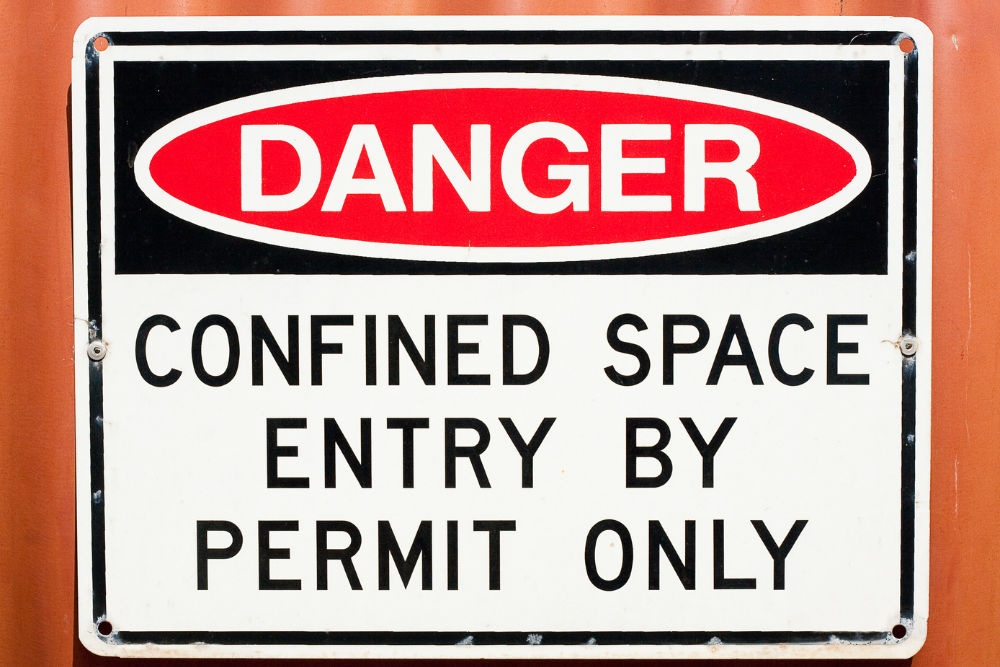
Danger signs are one of the most visible and fundamental components of any workplace safety program. They communicate risk at a glance, without a conversation, a training session, or a written procedure. When someone approaches a hazardous area, a clearly placed danger sign can be the difference between a safe outcome and a serious injury.
Despite their simplicity, danger signs are governed by detailed standards. Getting them wrong: wrong color, wrong wording, or wrong placement, can undermine the very protection they are designed to provide.
What Are Danger Signs and Why Do They Matter?
Danger signs indicate that a hazardous condition exists that will result in serious injury or death if not avoided. This distinguishes them from warning or caution signs, which communicate lower levels of risk. Workers need to understand that difference intuitively - the visual language of safety signage only works when it is applied consistently and correctly.
The Role of Danger Signs in a Safety Program
Danger signs are not a substitute for hazard elimination or engineering controls. In the hierarchy of controls, signage sits below elimination, substitution, and engineering controls. But in real-world workplaces, not every hazard can be fully engineered away. Danger signs communicate residual risk to anyone who may encounter it, including contractors, visitors, and new workers who may be unfamiliar with site-specific hazards.
They also serve a legal function. Employers have a duty to communicate known hazards. Failure to post appropriate danger signs in hazardous areas can constitute a regulatory violation and significantly increase liability in the event of an incident.
OSHA and ANSI Standards for Danger Signs
In the United States, workplace safety signage is governed primarily by OSHA regulations and ANSI Z535 standards. Understanding both is essential for any organization building a compliant signage program.
OSHA Requirements
OSHA's general industry standards under 29 CFR 1910.145 specify requirements for accident prevention signs and tags. Under these standards, danger signs must use a specific color scheme: red as the primary color, black as the secondary color, and white for the message panel. The word "DANGER" must appear in the header. These requirements apply to permanent signs in general industry settings.
ANSI Z535 Standards
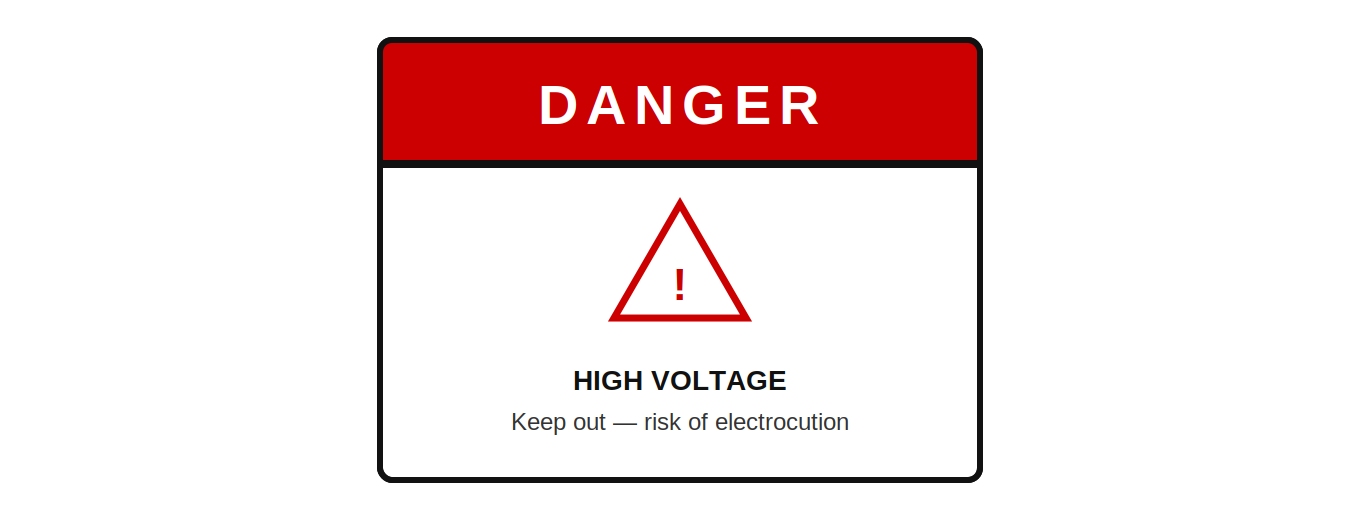
The ANSI Z535 series provides more detailed and updated guidance on safety sign design, including specific requirements for signal words, safety colors, symbols, and the format of hazard messages. Under ANSI Z535.2, a compliant danger sign includes a signal word panel with the word "DANGER" in white text on a red background, a safety symbol or pictogram where appropriate, and a hazard message that describes the specific risk and the action required to avoid it.
Here is an example of a standard ANSI-compliant workplace danger sign:
Types of Workplace Danger Signs
Electrical Hazard Signs
Electrical danger signs are among the most common in industrial, construction, and facility management environments. They are required wherever exposed electrical components, high-voltage equipment, or live circuits present a risk of electrocution or arc flash. These signs must clearly identify the voltage level where applicable and specify the action required, such as keeping out, wearing appropriate personal protective equipment, or de-energizing equipment before work begins.
Confined Space Signs
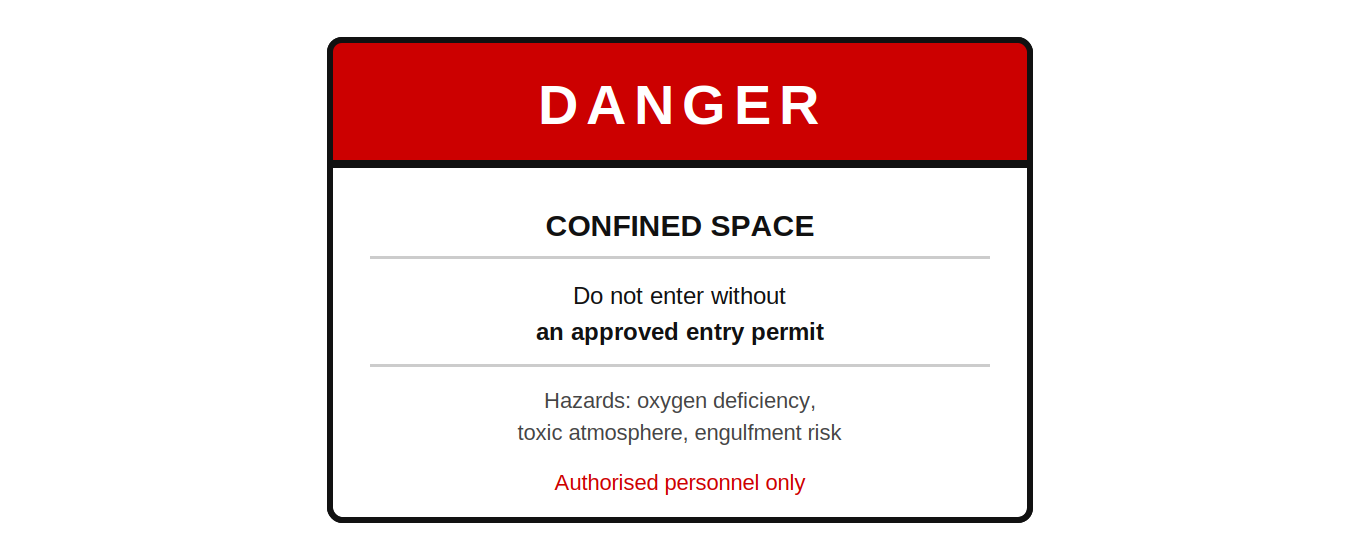
Confined spaces - tanks, vessels, silos, manholes, and similar enclosed areas - present multiple hazards including oxygen deficiency, toxic atmospheres, and engulfment. Danger signs for confined spaces must clearly communicate that entry is restricted, that a permit is required, and that entry without authorization is prohibited. In many jurisdictions, confined space danger signage is a legal requirement regardless of whether the space is actively in use.
Chemical and Toxic Substance Signs
Workplaces that store or use hazardous chemicals require danger signs that identify the specific hazard present — whether it is a toxic, flammable, corrosive, or reactive substance. These signs are often used in conjunction with GHS (Globally Harmonized System) hazard labels, which provide standardized pictograms and signal words for chemical hazards. The combination of a fixed danger sign at the entry point to a storage area and GHS labels on individual containers creates a layered communication system that gives workers the information they need at every point of potential exposure.
Here is an example of a confined space danger sign used at worksite entry points:
Best Practices for Workplace Danger Sign Placement
Visibility and Positioning
A danger sign that cannot be seen clearly is not performing its function. Signs must be positioned at eye level where possible, facing the direction of approach, and far enough in advance of the hazard to give a person adequate time to stop and respond. In areas with multiple approach routes, signs must be placed at every entry point — not just the primary one.
Lighting is a critical and often overlooked factor. In low-light environments, signs must be illuminated or use photoluminescent materials that remain visible when ambient lighting fails. Regular inspections should confirm that signs remain legible, undamaged, and unobstructed.
Maintenance and Review
Safety signs degrade over time. Fading, physical damage, and changes to the workplace can all reduce their effectiveness. A formal sign inspection and maintenance program should be part of every organization's safety management system. Signs should be reviewed whenever a significant change occurs in the workplace — a new piece of equipment installed, a process changed, or a new hazard identified. Outdated signs that no longer reflect current conditions can be more dangerous than no sign at all, because they erode trust in the signage system as a whole.
Frequently Asked Questions About Workplace Danger Signs
What Is the Difference Between a Danger Sign, a Warning Sign, and a Caution Sign?
These three signal words represent different levels of hazard severity and are not interchangeable. A danger sign indicates the highest level of risk — a hazardous situation that, if not avoided, will result in death or serious injury. The word "will" is significant here: danger signs are used when injury or death is the expected outcome if the hazard is not avoided, not merely a possibility. A warning sign indicates a hazardous situation that, if not avoided, could result in death or serious injury. The distinction between "will" and "could" reflects a lower probability of the most severe outcome, though the potential consequences remain serious. A caution sign indicates a hazardous situation that, if not avoided, may result in minor or moderate injury. Caution signs are also sometimes used to warn against unsafe practices that do not involve a direct physical hazard. Understanding and applying these distinctions correctly is important because workers learn to calibrate their response to the level of urgency communicated by the signal word. When danger signs are used for lower-level hazards, their impact is diluted — workers may begin to treat them as routine rather than as urgent alerts requiring immediate attention.
What Are the OSHA Requirements for Danger Signs in the Workplace?
OSHA's requirements for danger signs in general industry are set out in 29 CFR 1910.145. The standard requires that danger signs use red as the predominant color, with black and white used for lettering and borders. The signal word "DANGER" must appear in the header of the sign. Signs must be used only in areas where an immediate hazard exists that presents a risk of death or serious injury. OSHA also requires that signs be legible and understandable to all employees who may encounter them, which has implications for multilingual workplaces. In construction, the relevant standard is 29 CFR 1926.200. It is worth noting that OSHA's signage standards predate the more detailed ANSI Z535 standards, and many safety professionals recommend following ANSI Z535 as it provides more comprehensive and up-to-date guidance. Where OSHA and ANSI requirements overlap, OSHA requirements represent the legal minimum, while ANSI compliance represents current best practice.
How Often Should Workplace Danger Signs Be Inspected and Replaced?
There is no single regulatory requirement specifying a fixed inspection interval for danger signs, but best practice is to include sign inspections as part of a regular workplace inspection program — typically monthly or quarterly depending on the environment and the severity of the hazards involved. In harsh environments such as outdoor worksites, chemical processing facilities, or areas with heavy vehicle traffic, signs may degrade more quickly and require more frequent inspection. The key criteria for replacement are legibility, physical integrity, and relevance. A sign that has faded to the point where the signal word or hazard message is no longer clearly readable must be replaced immediately. A sign that has been physically damaged — torn, bent, obscured by other materials, or painted over — must also be replaced. Signs that no longer accurately reflect the current hazard in an area — for example, because a piece of equipment has been removed or a process has changed — should be taken down or updated as soon as the change occurs. Leaving inaccurate signs in place is a compliance risk and undermines the credibility of the broader signage system.
Can Danger Signs Be Used as a Substitute for Physical Barriers or Engineering Controls?
No. Danger signs are an administrative control and sit low in the hierarchy of controls. They communicate the existence of a hazard but do not remove or reduce it. A danger sign on an unguarded machine does not make that machine safer — it only informs workers that a risk exists. The hierarchy of controls requires that organizations first attempt to eliminate the hazard, then substitute it with a less hazardous alternative, then apply engineering controls such as guarding, interlocks, or ventilation, before relying on administrative controls like signage. In practice, danger signs are most appropriately used in conjunction with other controls — for example, a danger sign at the entry to an electrical room that is also locked, or a danger sign on a confined space that also requires a permit-to-work before entry is authorized. Using signage as a primary or sole control for a serious hazard is not only poor safety practice — it may also constitute a regulatory violation if a more effective control was reasonably practicable.
How Should Organizations Manage Danger Signs in Multilingual Workplaces?
In workplaces where employees speak different languages, the effectiveness of text-based danger signs may be limited for workers who do not read English fluently. This is a significant safety issue, particularly in industries such as construction, agriculture, food processing, and manufacturing, which often employ multilingual workforces. Organizations should address this in several ways. First, use pictograms and symbols wherever possible — a well-designed hazard symbol communicates risk without relying on language and is recognized across cultures. ANSI Z535 and ISO 7010 both provide standardized symbol libraries for common workplace hazards. Second, where text is essential, consider providing signs in multiple languages, particularly the languages most commonly spoken in your workforce. This may require custom sign production, but the cost is minimal compared to the risk of a serious injury resulting from a misunderstood hazard message. Third, reinforce signage with training. Workers should be trained to recognize and respond to workplace danger signs as part of their onboarding and ongoing safety training. Training provides an opportunity to explain not just what a sign means, but why the hazard exists and what specific actions are required. SafetyIQ's training management module makes it easy to assign, track, and document this training across multilingual workforces, ensuring every worker has the knowledge they need to stay safe.
Workplace danger signs are a small but critical part of a broader safety program. Used correctly and maintained consistently, they protect workers, demonstrate compliance, and reinforce a culture of safety awareness across every level of the organization.
SafetyIQ brings incidents, inspections, training, journey management, lone worker safety and fatigue into one mobile app. Tell us about your crews and sites for tailored pricing.
Safety insights, straight to your inbox
New guides, monthly safety topics and SafetyIQ updates for EHS and operations leaders. Unsubscribe anytime.



Get a demo built around your sites, your teams, and the way your people work.
EHS, journey, and fatigue management software for field-heavy teams.

.png)

.png)