
Methanol Hazards, Labels, and Workplace Safety
Methanol hazards pose serious risks in the workplace. Understand methanol hazard labels, flammability dangers, exposure risks, and essential safety procedures for safe handling and storage.
Methanol is a widely used industrial chemical found in manufacturing, laboratories, energy production, and chemical processing environments. While it serves as an important solvent and fuel component, methanol also presents significant workplace hazards if it is not handled properly. Workers who handle methanol may face risks related to toxicity, fire hazards, and chemical exposure, making proper safety procedures essential for any organization that stores or uses this substance.
Understanding methanol hazards, proper labeling practices, and safe handling procedures helps organizations prevent serious workplace incidents. From OSHA hazard communication requirements to proper storage and ventilation practices, employers must ensure that workers understand the risks associated with methanol and how to protect themselves.
This guide explores methanol hazards, labeling requirements, and workplace safety practices that help organizations reduce risk and maintain compliance with safety regulations.
What Is Methanol?
Methanol, also known as methyl alcohol or wood alcohol, is a clear, colorless liquid commonly used in industrial and laboratory settings. It is highly flammable and toxic to humans when inhaled, ingested, or absorbed through the skin.
Methanol is widely used across several industries due to its versatility as a solvent and chemical feedstock. It is commonly used in the production of plastics, adhesives, paints, and fuels. In laboratories, methanol is often used as a solvent for chemical analysis and reactions. It is also used in windshield washer fluids, antifreeze solutions, and certain fuel applications.
Despite its usefulness, methanol poses significant health and safety risks. Even small amounts can cause severe health effects, including vision damage, neurological harm, and potentially fatal poisoning. Because of these risks, proper hazard identification and workplace safety procedures are critical whenever methanol is present.
Methanol Hazards in the Workplace
Methanol exposure presents several serious hazards that organizations must address through safety programs, training, and hazard communication.
Toxicity and Health Risks
Methanol is highly toxic to humans. Exposure can occur through inhalation of vapors, ingestion of liquid methanol, or skin absorption.
Once inside the body, methanol is metabolized into formaldehyde and formic acid. These compounds interfere with the body’s ability to use oxygen at the cellular level, which can cause severe health effects.
Common symptoms of methanol exposure include:
- Headaches
- Dizziness
- Nausea and vomiting
- Blurred vision
- Shortness of breath
- Confusion
In severe cases, methanol poisoning can lead to blindness, organ failure, or death. Even relatively small exposures can cause permanent damage to the optic nerve.
Because methanol poisoning symptoms may appear hours after exposure, workers may not immediately realize the severity of the incident. Prompt medical attention is critical whenever exposure is suspected.
Flammability Risks
Methanol is a highly flammable liquid with a low flash point. Vapors can ignite easily when exposed to sparks, flames, or static electricity.
Methanol fires are particularly dangerous because the flames may be nearly invisible in daylight conditions. Workers may not immediately recognize that a fire has started, increasing the risk of burns or other injuries.
Facilities storing methanol must control ignition sources and implement proper fire prevention measures.
Vapor Exposure
Methanol vapors can accumulate in poorly ventilated areas. Workers exposed to concentrated vapors may experience respiratory irritation, dizziness, and other neurological symptoms.
Proper ventilation systems and air monitoring programs are essential to prevent vapor accumulation in workplaces where methanol is used.
Methanol Hazard Labels and OSHA Requirements
Clear hazard communication is essential for protecting workers who handle methanol. OSHA’s Hazard Communication Standard requires employers to ensure that hazardous chemicals are properly labeled and that workers understand the risks associated with them.
OSHA Hazard Communication Standard
Under OSHA’s Hazard Communication Standard (29 CFR 1910.1200), employers must inform workers about chemical hazards through labeling, safety data sheets, and employee training.
Methanol is classified as a hazardous chemical under the Globally Harmonized System (GHS), which means containers must include specific hazard labels.
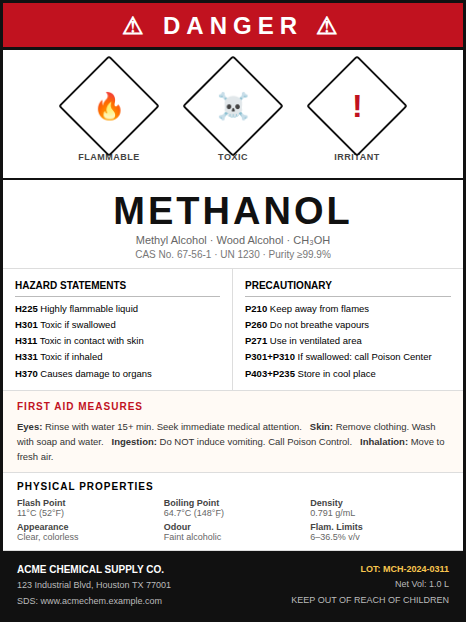
Methanol Hazard Label Elements
Methanol containers must include standardized label elements that clearly communicate the dangers of the chemical.
These labels typically include the following components:
Signal Word
Methanol labels use the signal word “Danger”, indicating that the chemical presents serious hazards.
Hazard Statements
Hazard statements describe the specific risks associated with methanol exposure. Common hazard statements include:
- Highly flammable liquid and vapor
- Toxic if swallowed
- Toxic in contact with skin
- Toxic if inhaled
- Causes damage to organs
These statements alert workers to the potential consequences of exposure.
Pictograms
Methanol labels may include several GHS hazard pictograms, such as:
- Flame symbol for flammability
- Skull and crossbones for acute toxicity
- Health hazard symbol for organ damage
These visual warnings help workers quickly recognize chemical hazards.
Precautionary Statements
Precautionary statements provide guidance on safe handling, storage, and emergency response.
Examples include recommendations to keep the chemical away from heat sources, use appropriate personal protective equipment, and avoid breathing vapors.
Proper labeling ensures that workers can quickly identify methanol hazards and take appropriate precautions.
Safe Handling Practices for Methanol
Organizations that work with methanol must implement safety procedures to minimize exposure risks and prevent incidents.
Proper Ventilation
Adequate ventilation is one of the most important controls for methanol safety. Local exhaust ventilation systems help remove vapors from the air and reduce the risk of inhalation exposure.
Ventilation systems should be designed to maintain methanol vapor concentrations below occupational exposure limits.
Personal Protective Equipment
Workers handling methanol should wear appropriate personal protective equipment to prevent skin contact and inhalation.
Common protective equipment includes chemical-resistant gloves, protective eyewear, and laboratory coats or chemical-resistant clothing. In environments where vapor exposure is possible, respiratory protection may also be required.
Employers should ensure that PPE is selected based on hazard assessments and manufacturer recommendations.
Avoiding Ignition Sources
Because methanol is highly flammable, it must be kept away from heat sources, sparks, and open flames.
Facilities should implement strict controls to prevent ignition sources near methanol storage or use areas. Electrical equipment in these environments may need to meet explosion-proof standards.
Static electricity control measures should also be implemented when transferring methanol between containers.
Safe Storage of Methanol
Proper storage procedures are critical for preventing fires, spills, and chemical exposure.
Storage Containers
Methanol should be stored in tightly sealed containers designed for flammable liquids. Containers must be clearly labeled and kept in designated chemical storage areas.
Using incompatible containers can increase the risk of leaks or chemical reactions.
Flammable Liquid Storage Areas
Methanol should be stored in approved flammable liquid cabinets or storage rooms designed to control fire risks.
These storage areas help limit the spread of fire and provide additional protection for workers and facilities.
Temperature and Environmental Controls
Storage areas should remain cool and well ventilated to prevent vapor buildup. High temperatures can increase vapor pressure and raise the risk of ignition.
Organizations should also ensure that methanol is stored away from oxidizing agents and other incompatible chemicals.
Spill Response and Emergency Procedures
Despite careful handling, methanol spills can occur. Organizations must prepare workers to respond quickly and safely.
Immediate Response Actions
If a methanol spill occurs, workers should immediately isolate the area and eliminate potential ignition sources.
Spill response teams should wear appropriate protective equipment before attempting cleanup.
Spill Containment
Spill kits designed for flammable liquids should be available in areas where methanol is stored or used. Absorbent materials can help contain and control the spread of liquid.
Proper disposal procedures must be followed for contaminated materials.
Medical Response
If a worker is exposed to methanol, immediate medical attention is essential. Workers experiencing symptoms of poisoning should receive prompt evaluation and treatment.
Employers should ensure that emergency procedures are clearly documented and communicated to employees.
Training Workers on Methanol Safety
Worker education plays a critical role in preventing chemical incidents.
Employees who handle methanol must receive training that covers hazard identification, proper labeling, safe handling procedures, and emergency response.
Training programs should include information on reading chemical labels, understanding safety data sheets, and recognizing early symptoms of exposure.
Regular refresher training helps reinforce safety practices and ensures that employees remain aware of workplace hazards.
Organizations that prioritize chemical safety training create safer environments where workers understand both the risks and the procedures needed to prevent incidents.
Frequently Asked Questions About Methanol Safety
What are the main hazards associated with methanol?
Methanol presents several serious hazards, including toxicity, flammability, and vapor exposure risks. It is highly poisonous if swallowed, inhaled, or absorbed through the skin.
Once inside the body, methanol can cause damage to the nervous system and optic nerves. Severe exposure may result in blindness or death.
Methanol is also highly flammable, meaning vapors can ignite easily when exposed to sparks or heat sources. Because methanol flames can be difficult to see, fires may go unnoticed until they spread.
Proper safety procedures and hazard communication are essential for preventing methanol-related incidents.
What information must appear on a methanol hazard label?
Methanol hazard labels must include several standardized elements required by OSHA and the Globally Harmonized System (GHS).
These labels typically contain the signal word “Danger,” hazard statements describing toxicity and flammability risks, and pictograms that visually represent the hazards.
Labels must also include precautionary statements that provide guidance on safe handling, storage, and emergency response actions.
Proper labeling ensures that workers can quickly identify hazardous chemicals and understand the risks associated with them.
How can workers protect themselves when handling methanol?
Workers can protect themselves by following established safety procedures and using appropriate protective equipment.
Chemical-resistant gloves, eye protection, and protective clothing help prevent skin contact with methanol. In areas where vapors may accumulate, respiratory protection and proper ventilation systems may be required.
Workers should also avoid open flames, sparks, and static electricity sources when handling methanol due to its flammable nature.
Training and awareness are critical for ensuring that workers understand these safety precautions.
What should be done if someone is exposed to methanol?
If methanol exposure occurs, immediate action is required. Workers exposed to methanol vapors should move to fresh air as quickly as possible.
If methanol contacts the skin, the affected area should be rinsed thoroughly with water to remove the chemical.
Ingestion or severe exposure requires immediate medical attention, as methanol poisoning can cause serious health complications.
Emergency response procedures should always be followed, and medical professionals should evaluate any suspected exposure.
Why is methanol safety training important in workplaces?
Methanol safety training ensures that workers understand the risks associated with the chemical and know how to handle it safely.
Training programs, especially via the use of safety training tracking software, teach employees how to recognize hazard labels, interpret safety data sheets, and follow proper storage and handling procedures.
Workers who understand methanol hazards are more likely to follow safety protocols, report unsafe conditions, and respond appropriately during emergencies. Organizations that prioritize chemical safety training significantly reduce the risk of workplace incidents and improve overall safety performance.
SafetyIQ brings incidents, inspections, training, journey management, lone worker safety and fatigue into one mobile app. Tell us about your crews and sites for tailored pricing.
Safety insights, straight to your inbox
New guides, monthly safety topics and SafetyIQ updates for EHS and operations leaders. Unsubscribe anytime.



Get a demo built around your sites, your teams, and the way your people work.
EHS, journey, and fatigue management software for field-heavy teams.

.png)

.png)