Don't Ignore These 5 Critical Benefits of Robust Risk Management
Here are some key elements to effectively implement a workplace risk management program and gain the accruing benefits.
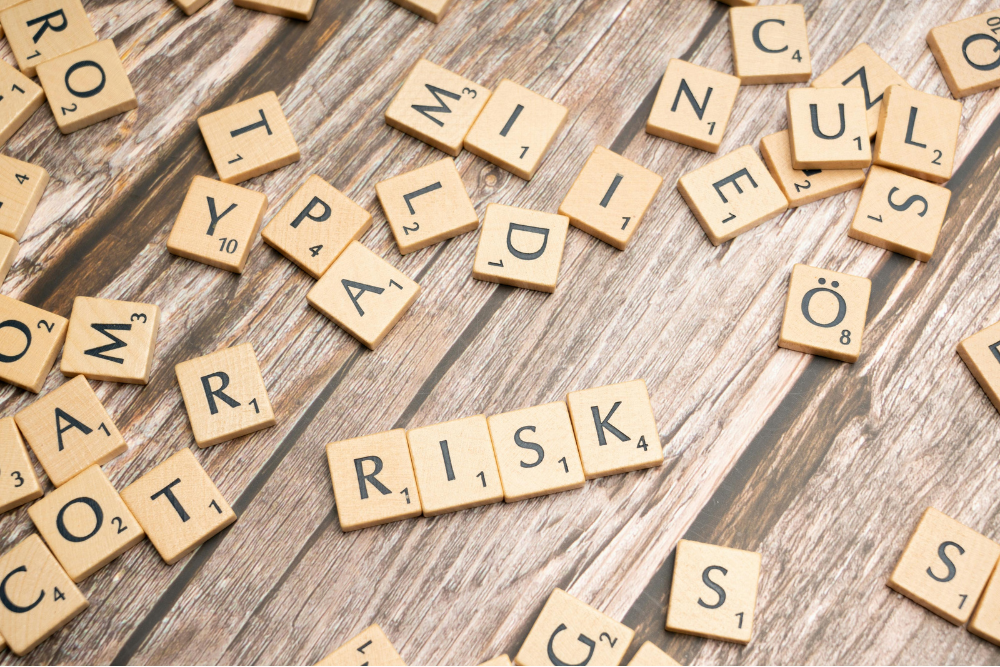
Did you know? 70% of workplace accidents are preventable? Yes!
But due to the lack of risk assessment expertise, many workplaces cannot prevent these incidents.
According to the International Labour Organization (ILO), over 2.78 million workers die from occupational accidents or work-related diseases each year. That's over 7,500 people every single day.
These alarming statistics reveal the tragic reality of unsafe work conditions globally.
But what if there was a way to turn this around?
With effective risk management, organizations can foster a culture of safety and demonstrate their commitment to protecting their most valuable asset - their people. By making worker health and safety a top priority backed up by concrete action plans, companies can build trust, boost morale, enhance productivity, and strengthen their reputation.
This comprehensive guide will explore the key benefits and practices of prioritizing workplace risk management. It also includes:
- The Critical Importance of Workplace Risk Management
- Common Workplace Hazards: Identifying and Mitigating Risks
- The Key Benefits of Effective Risk Management
- Implementing a Successful Risk Management Program
So, learn how risk management can lead to a safer work environment and build your reputation in the market!
Some Common Workplace Hazards
Before we discuss the benefits of managing risk at work, let's look at some common hazards that workplaces encounter and have to consider.
According to the Bureau of Labor Statistics, “construction, manufacturing, agriculture, forestry, fishing, and hunting have the highest rates of injuries and illnesses.”
Furthermore, the Bureau claims that there are several categories of common hazards among those that are most dangerous:
Manufacturing, construction, agriculture, healthcare, and other high-risk industries face a wide range of hazards that impact worker health and operational safety.
Physical hazards—such as high noise levels, radiation, extreme temperatures, poor lighting, clutter, spills, falling objects, and electrical dangers—often lead to slips, trips, falls, burns, electric shocks, and other serious injuries.
Chemical hazards arise from toxic vapors, flammable gases and liquids, corrosive substances, and ignitable dust, causing acute effects like burns, poisoning, respiratory distress, fires, or explosions, as well as chronic issues including cancer and long-term organ or lung damage. Ergonomic hazards, including repetitive motion, awkward postures, and high-exertion tasks, contribute to musculoskeletal disorders over time, especially among workers who lift, bend, or perform continuous repetitive tasks.
Biological hazards—from infectious agents, viruses, and bacteria—pose risks ranging from minor illness to life-threatening conditions for healthcare staff, farmworkers, and anyone exposed to animals or contaminated environments.
Finally, psychosocial hazards such as anxiety, attention issues, workplace violence, harassment, and extreme stress can disrupt teamwork, delay tasks, and create harmful work environments, impacting employees in high-pressure or hostile settings.
YOU CAN ALSO DOWNLOAD OUR FREE eBook “The Hazard ID Handbook” TO LEARN DIFFERENT WORKPLACE HAZARDS AND HOW TO IDENTIFY THEM.
Role of Risk Management in Creating a Safe Work Environment – [Benefits]
Implementing a comprehensive workplace risk management program provides numerous benefits for organizations and employees. By taking proactive steps to identify and mitigate occupational hazards, companies can achieve numerous advantages.
Here are the most prominent benefits of it:
1. Preventing Injuries and Fatalities
From 1992 to 2019, non-fatal workplace injuries decreased by 68.5%, while fatal injuries decreased only by 30%. This shows the significant role of risk management in reducing workplace injuries.
One of the most important benefits of risk management is protecting the health and safety of employees. Identifying and controlling hazards helps prevent workplace accidents, injuries, and deaths. Companies that implement risk management programs demonstrate a commitment to employee well-being by making safety a top priority. They take preventive action to reduce incidents before they occur.
Also, the National Safety Council’s Work to Zero initiative aims to eliminate workplace fatalities through the use of technology. They identified over one hundred relevant EHS technologies that could help mitigate both the situational and systemic risks.
2. Reducing Costs
Workplace accidents result in substantial direct and indirect costs through medical treatment, legal expenses, property damage, lost productivity, and more. Investing in proactive risk management significantly reduces these costs over the long term.
Companies with mature risk management programs can reduce costs in several ways:
- Implementing preventive measures to avoid accidents.
- Providing regular safety training and education for employees.
- Conducting regular safety audits and inspections to identify non-compliance.
- Making an investment in safety equipment to protect employees.
- Promoting a safety culture where every employee is aware of and responsible for safety.
- Conducting thorough risk assessments to identify and mitigate potential risks.
For instance, Palfinger, an international technology and mechanical engineering company, partnered with SafetyIQ to transform its safety strategy from reactive to proactive.
As a result of this partnership, Palfinger reduced workers’ compensation costs by $1 million in just 2 years. This was made possible by implementing a comprehensive solution that centralized data collection, which facilitated better visibility and control over safety metrics.
More importantly, the transformation of their safety processes involved the integration of predictive analytics. This allowed Palfinger to anticipate potential safety risks and take preventive measures before incidents occurred.
3. Improving Productivity
By making the workplace safer, risk management enhances workforce productivity and efficiency. Employees are able to focus on their work without injuries and disruptions. Streamlining processes to reduce risks also optimizes workflows.
Studies by NIOSH show that companies with effective risk management programs experience 20-40% higher productivity levels. Their employees take less sick leave and have higher engagement.
4. Ensuring Compliance
Implementing a risk management framework ensures companies meet all relevant health and safety regulations. Staying up-to-date on evolving safety standards and addressing gaps proactively avoids regulatory violations, which can lead to large fines and lawsuits.
Strong risk management practices also demonstrate to regulators and auditors that safety is a top priority. This builds confidence and trust in the organization.
5. Preserving Human Capital
Proactive risk management is fundamentally about ensuring the safety of employees, which is vital for any organization.
As per the report of the National Safety Council, workplace injuries cost U.S. businesses over $170 billion annually.
By adopting comprehensive risk management strategies, companies can significantly cut down on these costs, thereby preserving human capital. A compelling statistic that underscores this point is a study by the International Labour Organization. It found that for every dollar invested in workplace safety, businesses could see a return of up to $6.
In the context of preserving human capital, this means that investing in safety not only reduces costs associated with workplace injuries but also enhances the return on investment by up to six times.
Implementing a Successful Risk Management Program
A successful risk management program requires commitment and participation at all levels of an organization. Here are some key elements for effective implementation:
Leadership Commitment to Safety Culture
A successful risk management program begins from the top, where visible leadership is essential. This would mean a senior leader should be seen and walk their safety talk.
They should ensure that they visibly demonstrate their commitment to safety through clear and easily understandable safety policies. Also, they have clarity of the policies, provide the necessary resources, and, more significantly, lead from the front as an example.
Managers and supervisors may also use securing safety as a core value. These may reinforce the same by actively checking with workers or pushing for open communication of any safety issues.
Employee Involvement and Participation
Employees’ involvement in this process is key. Often, the employees have a far greater understanding of the common risks they face in their day-to-day activities before their leaders get them.
They should be allowed to participate in this program, which means they should even help identify the hazards and assess the risks. This may be done via the safety committees, where the frontline workers can express their concerns, giving them a sense of ownership over the outcomes.
Regular Safety Training and Development
Regular training is crucial because it helps workers understand their daily risks and how to deal with them effectively. This includes initial training before starting work and periodic training and meetings on identifying hazards, using safety gear, and emergency procedures. Training can also be tailored to specific job roles or high-risk areas.
Incentivizing Safe Work Practices
Incentivizing and rewarding safe behavior is an excellent way to complement a culture of safety. Recognition programs for individuals and teams who meet safety performance targets and those who report hazards are examples of programs that provide positive feedback.
Conversely, it's important to apply appropriate consequences for unsafe behavior to ensure compliance. Additionally, integrating safety goals into performance evaluations enhances the significance of workplace safety.
Risk Management Using Technology – SafetyIQ Integration
Managing risks at work has become easier due to tech innovations. Safety data management, virtual surveillance, training coordination, and the distribution of vital safety information to staff can all be managed by software tools.
Here’s a table summarizing the case studies of SafetyIQ’s effective risk assessment at workplace:
Across industries ranging from engineering and aerospace to energy and construction, companies are achieving measurable safety improvements with SafetyIQ.
Palfinger, a global leader in technology and mechanical engineering, reduced workers’ compensation costs by $1 million within two years by shifting from reactive to proactive safety management through SafetyIQ’s unified data-capture and process automation capabilities.
Vaya Space, known for its vortex-hybrid rocket engine technology, strengthened launch-site safety by turning previously latent safety data into actionable strategies using SafetyIQ’s comprehensive safety software. In the energy sector, Buru Energy improved organizational visibility and communication by integrating SafetyIQ with existing GPS devices, enabling real-time oversight of remote field staff.
Meanwhile, Shamrock Civil Engineering streamlined its business and operational requirements using SafetyIQ’s journey management system—an affordable, accurate solution that helped the team address critical issues like fatigue and safer travel for field crews.As a safety manager, you understand the critical importance of risk management in the workplace. Here are the key reasons why it’s essential to have a software solution like SafetyIQ for Workplace Risk Management to build a safer work environment:
- Efficiency and Productivity: With technology integration, processes that once took multiple steps, spread across different platforms, can be combined into a singular, streamlined operation.
- Improved User Experience: Users don’t have to juggle between multiple platforms or applications. They experience a unified interface where transitions are smooth and access to information is immediate.
- Cost Savings: With more efficient processes, businesses often find reduced operational costs.
- Enhanced Data Analysis: When technologies are integrated, data from different sources can be combined, offering a richer, more comprehensive view of information.
- Workplace Safety: The integration of technology is not just an added bonus—it’s often a game-changer when it comes to workplace safety.
With this software solution, you’re not just managing risks, you’re creating a safer, more efficient workplace.
FAQs - Get More Answers about Workplace Risk Management
Why is leadership commitment important for creating a strong safety culture?
Leadership commitment is essential because a successful risk management program starts from the top. Leaders must visibly demonstrate commitment through policies, allocating resources, leading by example, and reinforcing safety as a core value. This cascades down through the organization.
How can employees be involved in identifying and assessing risks?
Employees should participate in hazard identification and risk assessments via safety committees where they can express concerns. Their daily experience provides valuable insights before leadership recognizes risks. This gives them ownership over safety outcomes.
What are some of the direct and indirect costs of workplace accidents?
Direct costs include medical treatment, legal expenses, property damage, and workers’ compensation. Indirect costs include lost productivity, increased insurance premiums, and reputational damage. Studies estimate over $170 billion is lost annually in the US due to workplace injuries.
SafetyIQ brings incidents, inspections, training, journey management, lone worker safety and fatigue into one mobile app. Tell us about your crews and sites for tailored pricing.
Safety insights, straight to your inbox
New guides, monthly safety topics and SafetyIQ updates for EHS and operations leaders. Unsubscribe anytime.


Get a demo built around your sites, your teams, and the way your people work.
EHS, journey, and fatigue management software for field-heavy teams.

.png)

.png)