Safety Management Software
One Platform to Manage Safety Across Every Site, Team & Process
Incidents in one system. Audits in another. Hazards in a spreadsheet nobody trusts. When your safety program runs across disconnected tools, things get missed.
SafetyIQ brings incidents, audits, inspections, training, and hazard management into one connected platform so nothing falls through the cracks.
SafetyIQ brings incidents, audits, inspections, training, and hazard management into one connected platform so nothing falls through the cracks.
Get a demo and start your free trial to experience how predictable, proactive safety becomes when everything finally works together.
.png)
Trusted by Leading EHS Teams



Managing Safety Across Multiple Sites Shouldn't Feel Like Guesswork
When every site runs safety its own way, you end up with inconsistent data, patchy compliance, and no reliable way to compare performance or identify where the real risk is.
SafetyIQ standardizes how safety work gets done across your entire operation — without removing flexibility at the site level — giving leadership a consistent picture and field teams a system that actually works for them.
 Consistent Processes Across Every Location: Standardize inspections, incident reporting, and hazard management across all sites so your data is comparable and your compliance is uniform — regardless of who's managing each location.
- Works in the Field, Not Just the Office: SafetyIQ is mobile-first and fully functional offline, so field teams can report incidents, complete inspections, and log hazards from any device, anywhere — data syncs automatically when connectivity returns.
- Built for Every Role, From Field to Board: Workers get simple mobile workflows. Managers get real-time dashboards and corrective action tools. Directors get cross-site visibility and audit-ready reporting. Everyone works from the same system.

Mobile-First Access
Log incidents, complete inspections, and report hazards from any smartphone or tablet, directly from the field.

Full Offline Functionality
Work without signal on remote or underground sites and sync all data automatically once connectivity is restored.

Real-Time Dashboards
Get an instant view of incidents, open hazards, audit results, and compliance status across every site in one place.

Automated Workflows
Assign corrective actions, send deadline reminders, and escalate overdue tasks automatically — without manual follow-up.

Audit-Ready Reporting
Pull timestamped, structured compliance reports by site, team, or date range in seconds whenever an audit or investigation requires them.
.svg)
Quick Implementation
Get up and running quickly — not months — with a straightforward setup that requires no heavy IT involvement or lengthy onboarding.
Why EHS Teams Choose SafetyIQ's Safety Management Software
SafetyIQ is purpose-built for high-risk industries where a missed inspection, an unresolved hazard, or an incomplete record isn't just an admin problem — it's a safety risk. Here's what's included:
- Built for How Safety Teams Actually Work: Mobile-first, offline-capable, and easy enough for frontline workers to use without a training session — so adoption actually happens and data quality stays high.
- From Reactive to Proactive, Faster: SafetyIQ turns everyday safety activity into structured data, giving managers the visibility to spot patterns, close gaps, and prevent incidents before they happen — not after.
- One System Your Whole Organization Can Work From: From field workers logging hazards on a tablet to directors reviewing cross-site performance, everyone works from the same data — no silos, no blind spots, no version control issues.
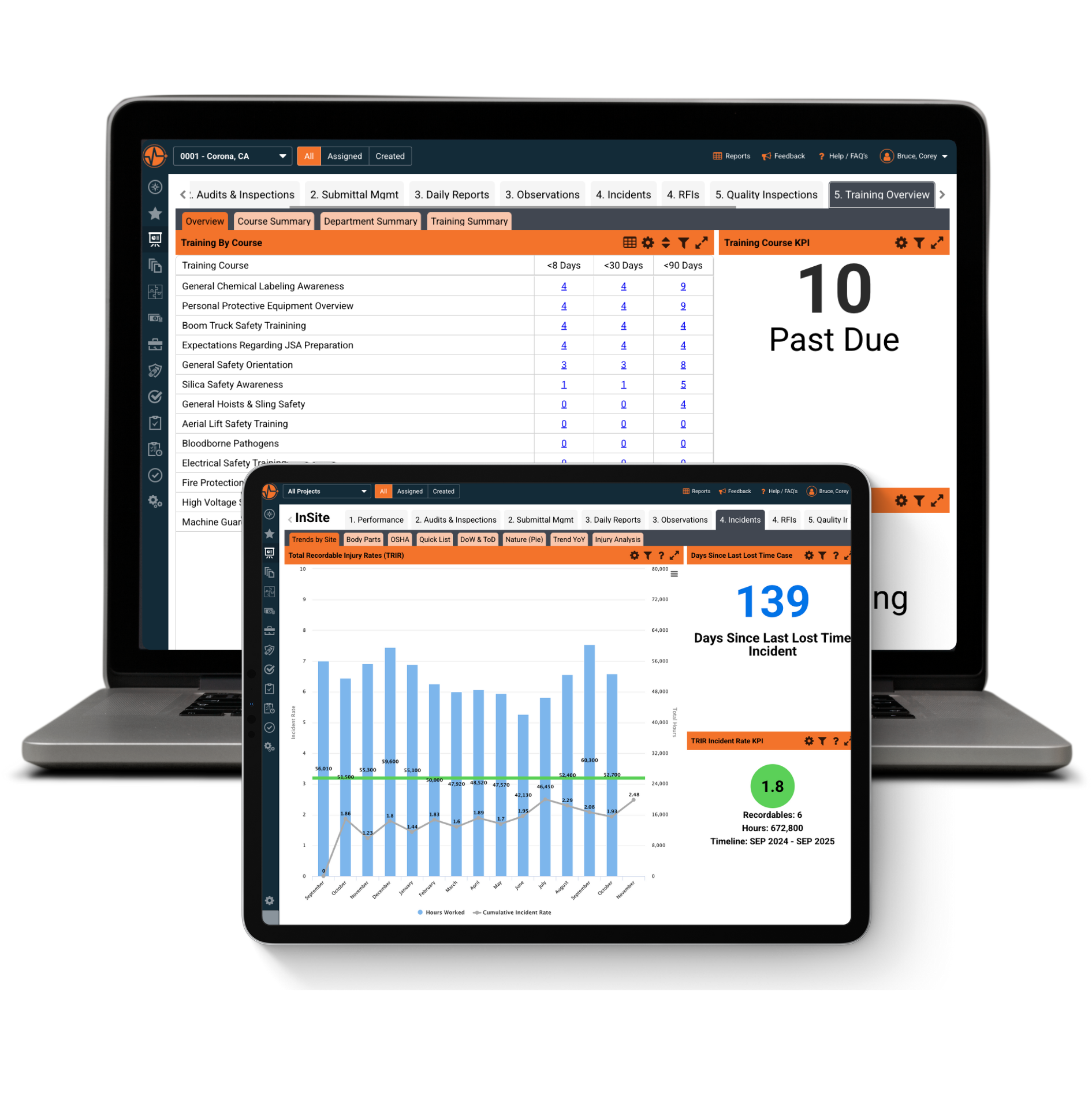
Connected Tools. Predictable Safety.
From managing incidents to protecting mobile workers, each SafetyIQ suite helps you stay ahead of risk and keep your teams safe — everywhere they work.
Audits & Inspections
Stay audit-ready year-round with fast, paper-free audits and inspections.
Popular Features
Conduct audits and inspections on desktop, tablet, or mobile.
Assign, track, and close out follow-ups without the email back-and-forth.
Tailor inspection forms for each site, department, or equipment type.
Document Management
Keep your documents organized, accessible, and compliant with a centralized system.
Popular Features
Upload, store, and manage all safety documents in one secure location.
Control access with permissions for teams, sites, or departments.
Track version history to ensure workers always use the latest procedures.
Incident Management
Simplify reporting, recording, and turn every incident into prevention.
Popular Features
Record incidents online or offline from any device in real time.
Track root causes, corrective actions, and outcomes in one dashboard.
Generate reports and spot trends to strengthen future safety practices.
Journey Management
Keep every journey safe from start to finish with real-time visibility and rapid response.
Popular Features
Score driver risks before travel and flag high-risk responses automatically.
Track trips, vehicles, and workers in real time, even in remote areas.
Instantly locate and assist employees during critical situations.
Training Tracking
Ensure workers stay compliant and job-ready with organized records, automated reminders, and clear visibility.
Popular Features
Track certifications, renewals, and required training in one place.
Automate reminders for expiring qualifications and upcoming courses.
Verify worker competency before tasks, audits, or high-risk activities.
Safety Observations
Encourage proactive safety by making it easy for anyone to record and share observations.
Popular Features
Capture near-misses and positive behaviors from any device.
Identify recurring risks and address them before incidents happen.
Empower every worker to take part in building a stronger safety culture.
Lone Worker
Keep remote and isolated employees connected, visible, and protected.
Popular Features
Monitor lone workers and track movement through GPS and satellite coverage.
Ensure safety with scheduled prompts and two-way communication.
Trigger escalation and dispatch help the moment an incident occurs.
Alertness Tracking
Test alertness fast to prevent fatigue-related risks before shifts begin.
Popular Features
Game-like assessment available on any device to gauge alertness.
Tracks individual patterns, ensuring results stay reliable and tamper-proof.
Identify impairment early and prevent costly errors and accidents.
Predictive Roster Analysis
Optimize schedules with data-driven insights that balance safety, productivity, and rest.
Popular Features
Analyze shifts, workloads, and rest cycles to predict fatigue before it occurs.
Design rosters that maintain productivity without compromising safety.
Get notified when employees are at risk and receive recommendations to adjust.
Achieve Compliance and Visibility Across Every Site
Most safety systems slow teams down. SafetyIQ was built to move with them — fast, flexible, and field-tested.
Whether online or offline, our software keeps operations running and decisions data-driven.
See What’s Happening Before It Becomes a Problem
Bring all your safety activity into focus. From audits and incidents to corrective actions, you’ll have instant visibility into what’s working, what’s not, and what needs your attention.
- Track every safety process in real time
- Eliminate blind spots with unified data and reporting
- Make decisions faster with clarity across your operations
Put Safety in Everyone’s Hands
Your people are the heart of every safety program. SafetyIQ helps them take ownership — reporting issues, completing checklists, and accessing training right from the field. When safety is simple, engagement follows.
- Simplify training, inspections, and feedback loops
- Enable mobile access for workers anywhere, even offline
- Turn awareness into action across every level of your team
Unite Every Location, Team, and Task
Connect field and office teams through one shared system. Whether you manage a single site or dozens, everyone works from the same data — keeping communication clear and performance consistent.
- Standardize how safety work gets done across sites
- Sync updates and tasks automatically between teams
- Ensure alignment between operations, leadership, and compliance
Know What’s Next — Not Just What Happened
See patterns before they turn into incidents. By combining data from audits, observations, and reports, you can predict risk and act early — turning hindsight into foresight.
- Detect trends across incidents and behaviors
- Identify root causes faster with real-time analytics
- Predict and prevent recurring issues with smarter insights
Build a Safety Culture That Keeps Getting Better
Turn everyday activity into measurable progress. Use data, automation, and feedback to refine your programs, strengthen accountability, and make safety part of how your organization grows.
- Measure performance and improvement over time
- Automate routine follow-ups and recurring tasks
- Empower teams to take initiative through visible results
What Modern Safety Teams Are Saying


Safety Management Software FAQs
What Is Safety Management Software and How Does It Work?
+
Safety management software is a digital platform that helps organizations manage their entire safety program in one place — replacing disconnected spreadsheets, paper forms, and manual processes with structured, automated workflows. It typically covers incident reporting, hazard management, audits and inspections, corrective actions, training records, and compliance documentation. SafetyIQ's safety management software connects all of these processes into a single system, giving safety managers and EHS directors real-time visibility into what's happening across every site, team, and process — so risks are identified and resolved before they become incidents.
How Does SafetyIQ's Health and Safety Software Help With Regulatory Compliance?
+
Regulatory compliance requires consistent documentation, timely action, and the ability to demonstrate that safety processes were followed. SafetyIQ automates the workflows that keep compliance on track — sending reminders before deadlines lapse, tracking corrective actions to closure, and storing every record with a full audit trail. When an inspection or regulatory review occurs, safety managers can pull up accurate, timestamped records in seconds rather than days. For organizations operating across multiple jurisdictions or industry-specific regulatory frameworks, having one system that applies consistent standards across every site significantly reduces compliance risk.
Can SafetyIQ's Health & Safety Software Handle Safety Management Across Multiple Sites?
+
Yes — multi-site visibility is one of the core strengths of SafetyIQ's EHS software. Safety directors can view incident trends, audit results, hazard status, and training compliance across every location from a single dashboard, without relying on site managers to manually consolidate and report up. At the same time, site-level teams work within the same system using processes configured for their specific environment, equipment, and regulatory requirements. This combination of standardization and flexibility is what makes SafetyIQ effective for organizations managing safety at scale.
Does SafetyIQ's Safety Tracking Software Work Offline & On Mobile Devices?
+
Yes. SafetyIQ is fully functional on mobile devices and works without an internet connection — which is essential for teams operating on remote sites, underground, or in areas where connectivity is unreliable. Workers can complete inspections, report incidents, log hazards, and capture safety observations entirely offline. All data entered offline is stored securely on the device and syncs automatically the moment connectivity is restored, with no manual action required. This means remote sites and field teams are never a gap in your compliance picture, and safety activity never stops just because the signal does.
How Does SafetyIQ's Safety Management Software Support Incident Prevention?
+
Most incidents don't happen without warning — they're preceded by near misses, unresolved hazards, and patterns that go unnoticed because the data isn't connected. SafetyIQ's safety management software surfaces those patterns by bringing incident reports, safety observations, audit findings, and hazard logs into one system where trends become visible. Safety managers can identify recurring risk areas, track whether corrective actions are being completed, and measure whether safety initiatives are actually working. Over time, this shift from reactive response to proactive prevention is what drives meaningful improvement in safety outcomes.
How Quickly Can Our Organization Get Started With SafetyIQ's EHS Software?
+
Most organizations are up and running with SafetyIQ's EHS software within days, not months. The platform is designed for fast deployment without heavy IT involvement — existing data can be imported, workflows configured to match your current processes, and users onboarded quickly with an interface built for everyday use. SafetyIQ's team works with you through implementation to ensure the system reflects your industry, your sites, and your reporting requirements from the start. Rather than a lengthy rollout that delays value, the goal is to get your team seeing real visibility and time savings as quickly as possible.
What Makes A Good Safety Management System For Field-Based Teams?
+
A good safety management system for field-based teams needs to work the way field workers actually operate — on the move, often in areas with poor connectivity, and without time for complicated workflows. The biggest failure point of most safety systems is that they're designed for office use, which means field teams work around them rather than with them. SafetyIQ is built mobile-first, meaning workers can report incidents, log hazards, complete inspections, and submit observations directly from their phone or tablet — in under a minute, at the point of work. When data is captured in the field in real time rather than recalled hours later from memory, its accuracy improves significantly, and so does your overall safety picture.
See how SafetyIQ helps simplify EHS management and builds a stronger safety culture.
Get Started Today

.png)

.png)